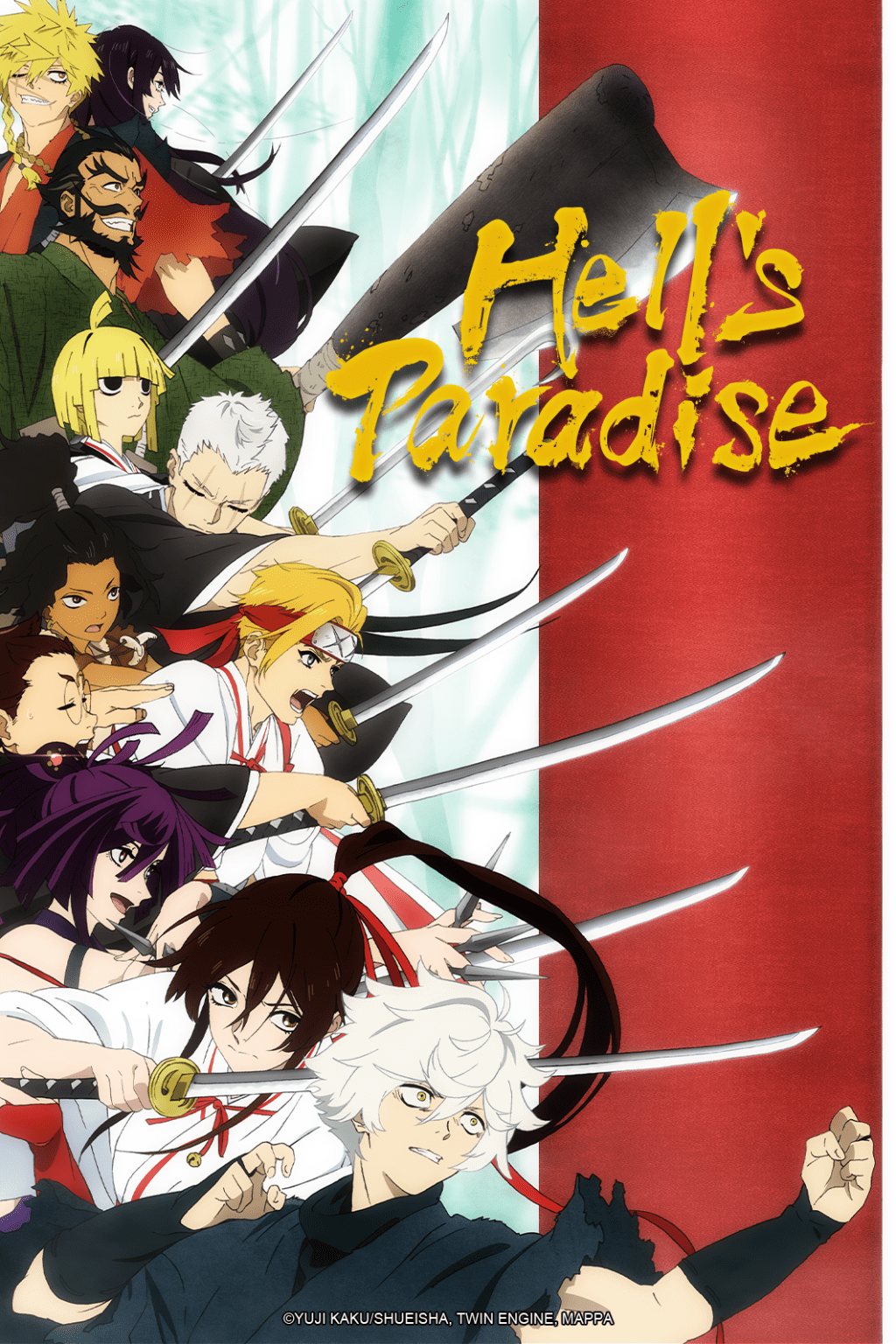
TL;DR: Hell’s Paradise (S1) is beautifully written, emotionally deep, and visually stunning—but also extremely violent, graphic, and mature. It explores love, redemption, and freedom through intense battles, disturbing imagery, and heavy philosophical themes. Strong parental discretion is advised, and it is best suited for older teens and adults.
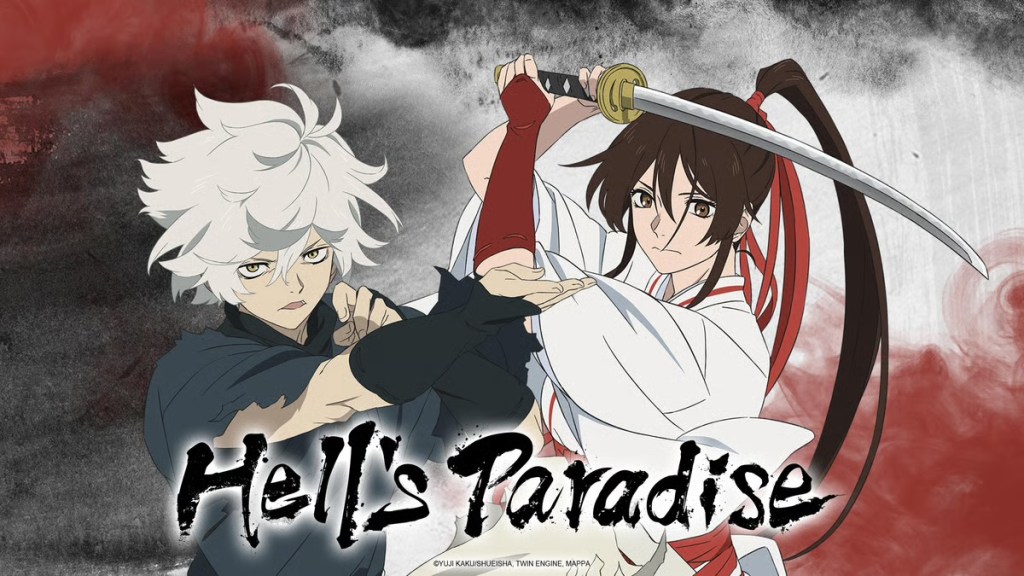
Section 1: Hell’s Paradise (Season 1; 13 Episodes) — At a Glance
Anime Summary | Taken Directly from MyAnimeList
Sentenced to death, ninja Gabimaru the Hollow finds himself apathetic. After leading a blood-soaked life, Gabimaru believes he deserves to die. However, every attempt to execute him inexplicably fails. Finally, Sagiri Yamada Asaemon, a fledgling member of a famed executioner clan, is asked to take Gabimaru’s life; yet Sagiri makes no move to kill him as requested.
Insisting that Gabimaru will not die because of his love for his wife, Sagiri instead offers him the chance to obtain a full pardon for his crimes. If he can travel to the island of Shinsekyo and obtain the Elixir of Life—which supposedly grants immortality—and bring it back for the shogun, then his freedom will be assured.
But of the many who have traveled to Shinsekyo in search of the mythical Elixir, not a single person has returned sound of mind, if at all. Though unaware of the numerous dangers ahead, Gabimaru decides to accept the offer—alongside ten other death row convicts—in hope that he and his wife may finally live in peace.
Genres & Themes
Action, Adventure, Gore, Historical, Nudity, Samurai, Sexual Intensity and Imagery, Shounen, Supernatural, Violence
MyAnimeList Rating
R-17+ | Violence and Profanity
The Anime Momma Rating
R-18+ | Violence, Sexual Intensity and Imagery
Section 2: Star Levels
Each category below is rated on a five-star scale:
⭐️ = very little present | ⭐️⭐️⭐️⭐️⭐️ = a lot present
- Action/Violence Level: ⭐️⭐️⭐️⭐️⭐️ (5/5)
- Addiction Level: ⭐️⭐️⭐️⭐️⭐️ (5/5)
- Blood/Gore Level: ⭐️⭐️⭐️⭐️⭐️ (5/5)
- Inappropriate, Heavy, or Mature Themes or Conduct: ⭐️⭐️⭐️⭐️☆ (4/5)
- Alternative Lifestyle Themes: ⭐️⭐️⭐️⭐️☆ (4/5)
- Level of Magical Elements: ⭐️⭐️⭐️⭐️⭐️ (5/5)
- Level of Romance: ⭐️⭐️⭐️⭐️☆ (4/5)
Section 3: Star Levels—Explained
Action/Violence Level
This is not a story about heroes. This anime follows a group of world-class criminals who have been sentenced to death but are offered a single chance at a pardon: they must travel to a mysterious, deadly island in search of the Elixir of Life. In exchange, they may earn their freedom… but there is a catch.
Each criminal is assigned a personal executioner known as a Yamada Asaemon—elite swordmasters whose job is to monitor them. If a criminal attempts to escape, refuses the mission, or disobeys orders, they are immediately beheaded. The tension between these two groups is constant.
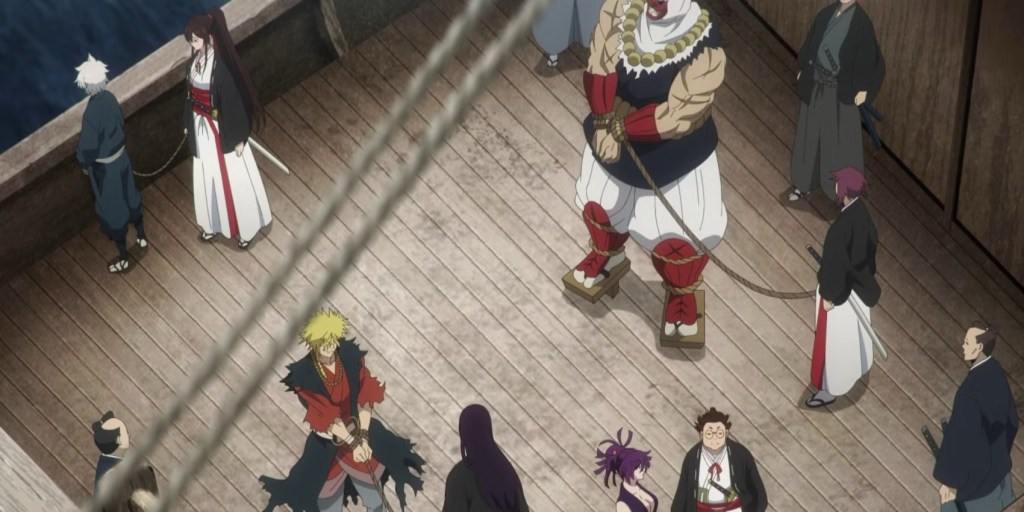
Our main character, Gabimaru, is an extraordinarily skilled assassin who uses a supernatural art known as Ninjutsu. His reputation is built on ruthless efficiency, and the series makes no attempt to hide how many lives he has taken. At multiple points, characters recount his past while he is shown seated among piles of bodies or skulls—a visual reminder of his violent history.
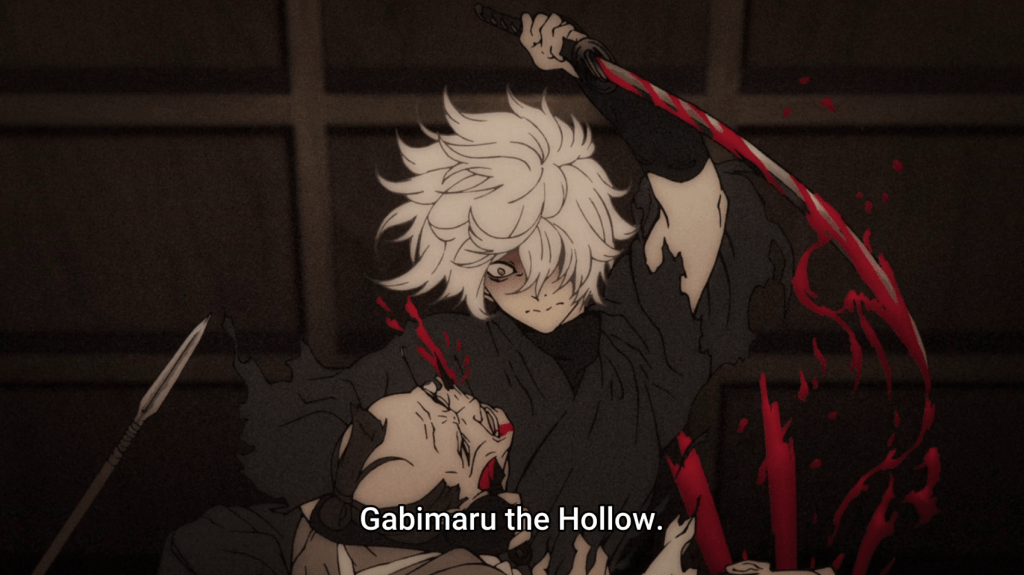
Gabimaru agrees to this mission not out of ambition, but because he wants to return to his wife and leave behind the life of killing that has defined him. His goal is not glory—it is peace.
Addictiveness Level
I was hooked from the very first episode and ended up binging all 13 episodes in a single night.
This series wastes no time pulling you into its mystery, emotional tension, and moral complexity. Every episode ends with just enough unanswered questions that it becomes incredibly difficult to stop watching.
That being said, I truly believe the biggest reason I was so entranced with this anime from the get-go is because of Gabimaru’s struggle to overcome his past. His exposure to the true, pure love he feels for his wife (and vice versa) makes him want to be better, and that is an extremely beautiful and powerful motivator.
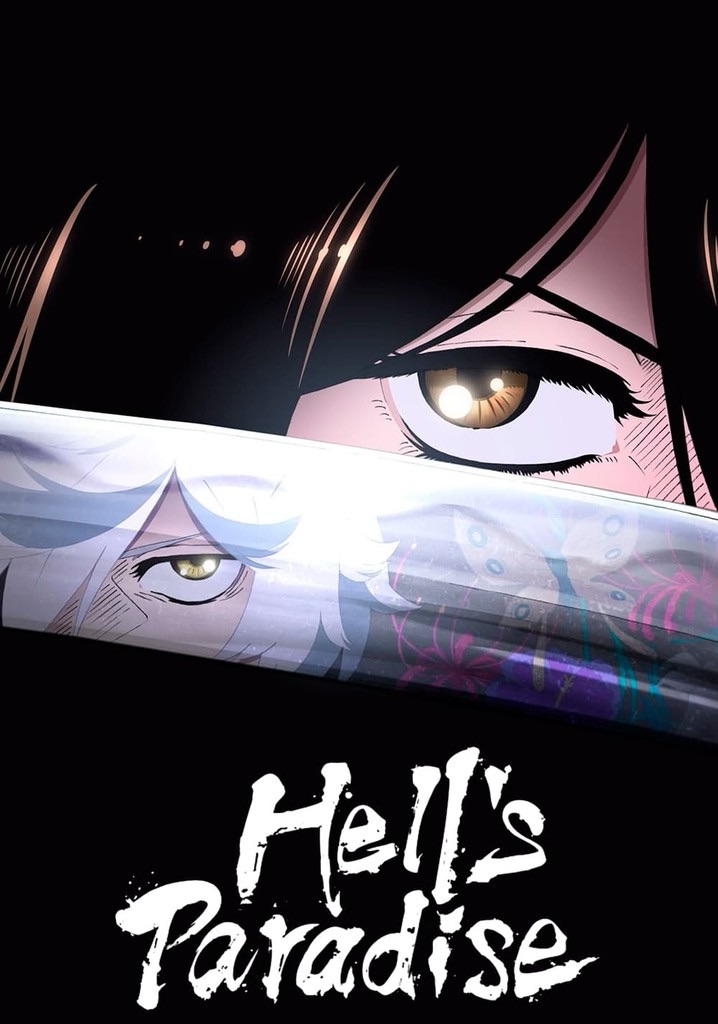
Blood/Gore Level
This series is extremely violent.
There are countless deaths, murders, and graphic encounters. Many of them are explicit, detailed, and unsettling. Listing them all would take pages, so here are the moments I believe parents and guardians should know about beforehand:
- Episode 1 introduces multiple historical execution methods—including boiling in oil and being torn apart by animals—shown on-screen with disturbing detail. I personally found these scenes hard to watch.
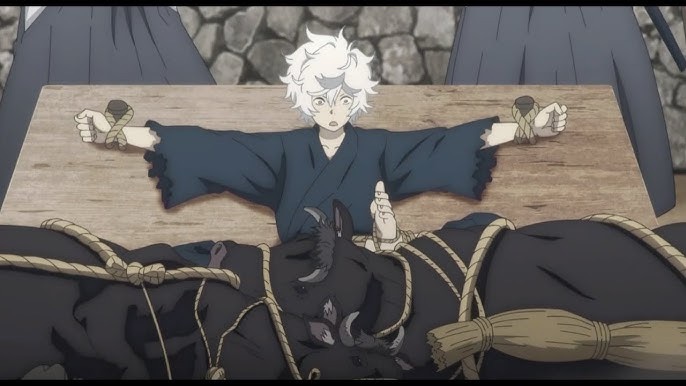
- In Episode 2, Gabimaru kills several criminals with ease. His methods are brutal, and he is frequently shown drenched in blood afterward.
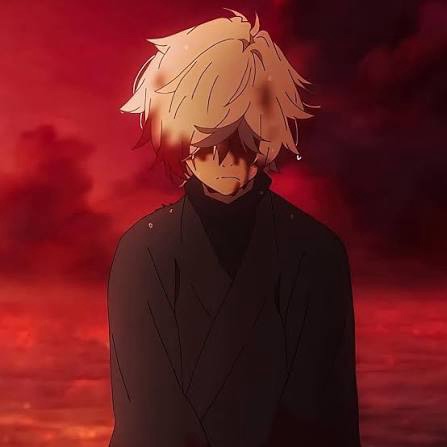
- Some characters are cannibals or derive pleasure from killing and dissecting their victims. While not always graphically shown, there are moments where characters are seen eating or attempting to eat others. In some scenes, blood is consumed.

- Battles between the criminals, the Asaemon, and the creatures of the island are frequent and vicious. Many characters bleed to death, are dismembered, or succumb to their injuries on-screen.
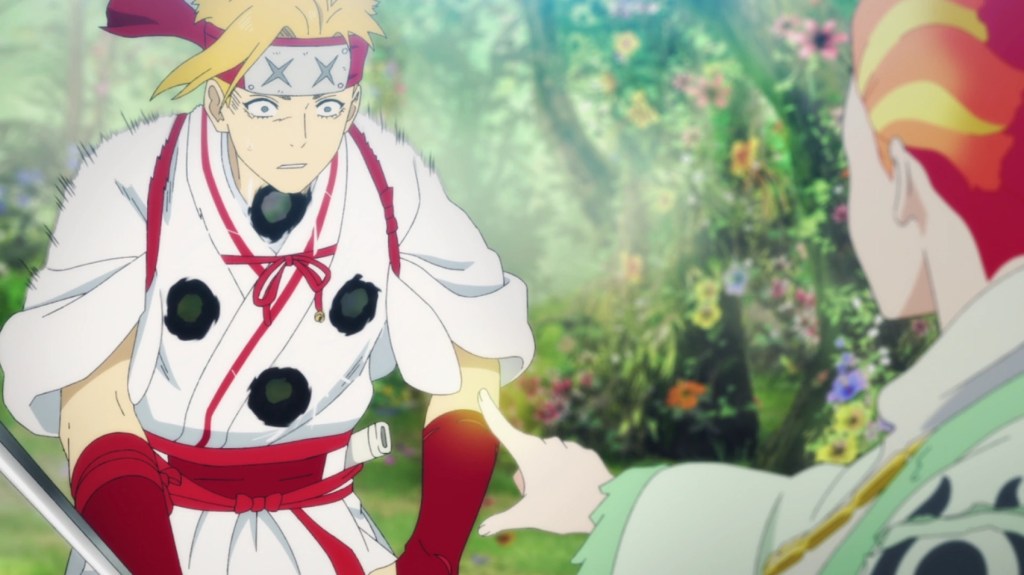
Inappropriate, Heavy, or Mature Themes or Conduct
This series contains multiple sexually explicit or disturbing visual elements:
- The opening sequence includes a nearly nude couple embracing, which may be unsettling.
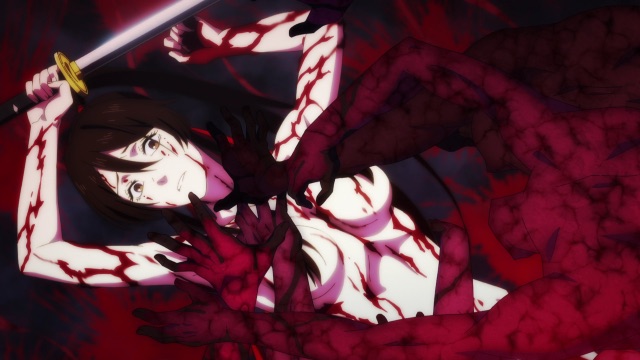
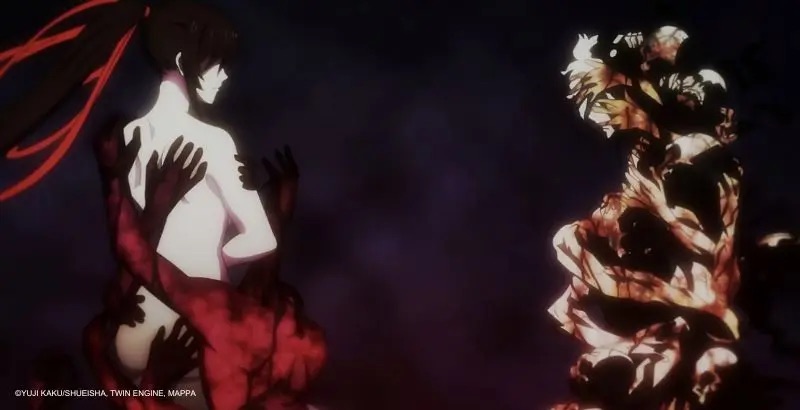
- In Episode 2, Sagiri is shown nude in symbolic imagery, surrounded by bloodied limbs. While not explicitly sexualized, the imagery is disturbing and suggestive.
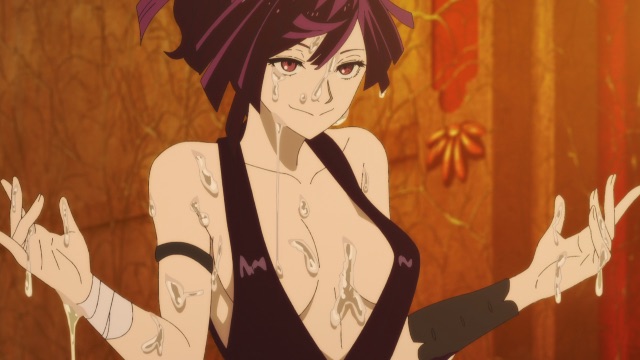
- Yuzuriha and Akaginu (the Cannibal Courtesan) both use their sexuality to manipulate others. Yuzuriha combines seduction with poison-based Ninjutsu, secreting toxic substances as part of her fighting style.
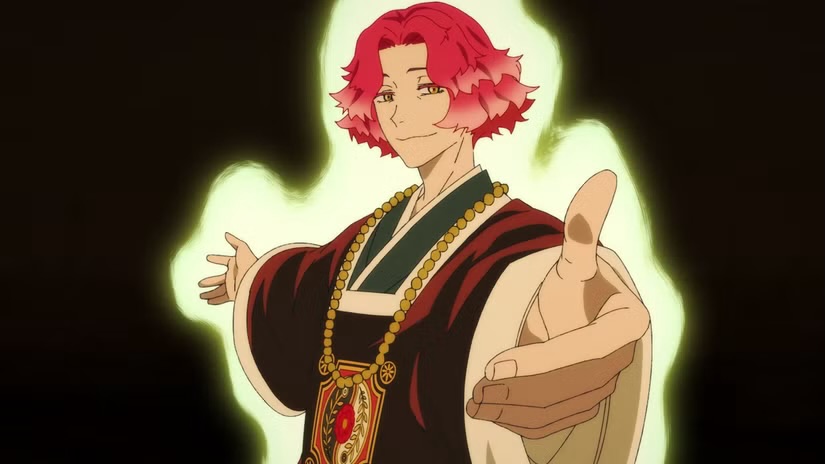
- In Episode 6, viewers meet the Tensen—immortal beings who can freely change sex between male and female. They are often partially nude, with uncovered chests, and appear unconcerned with modesty.
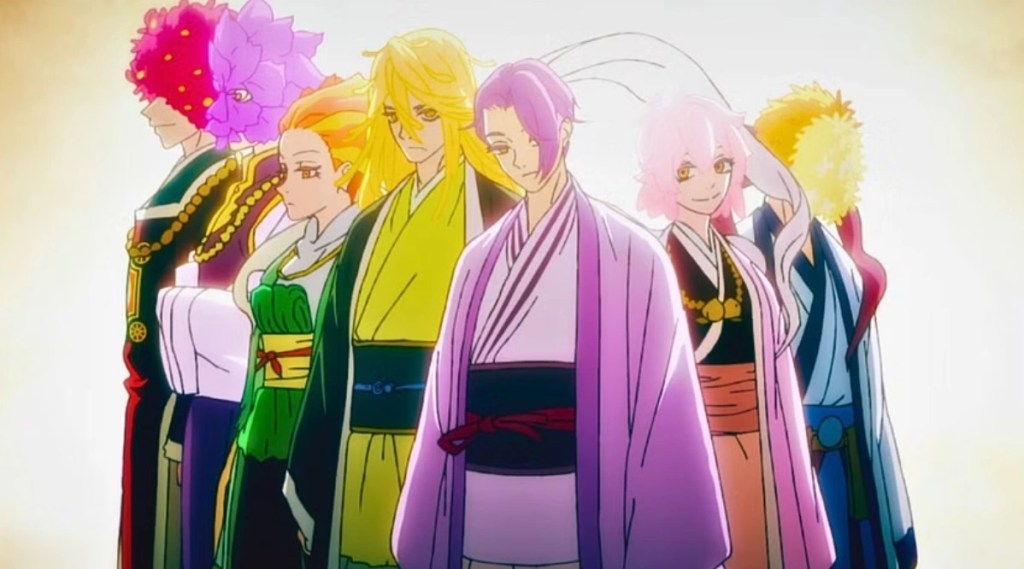
- The Tensen engage in both heterosexual and homosexual relationships. Some scenes depict intimate behavior, though genitals remain covered.
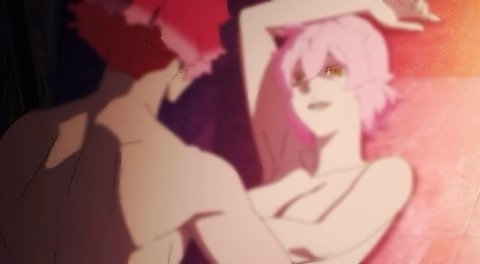
- In Episode 10, two Tensen are shown engaging in implied intercourse.
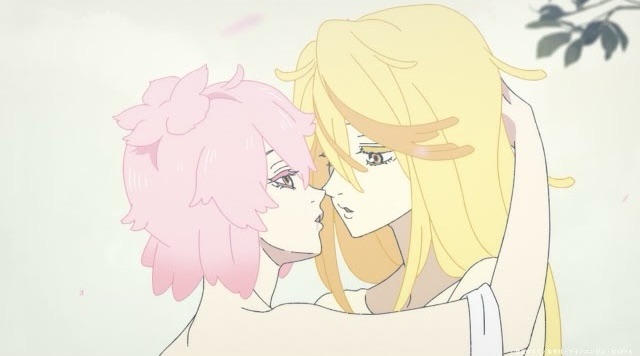
These elements are not constant, but when they appear, they are visually clear and inappropriate for younger viewers.
Alternative Lifestyle Themes
There are several alternative lifestyle themes explored in this series. Namely:
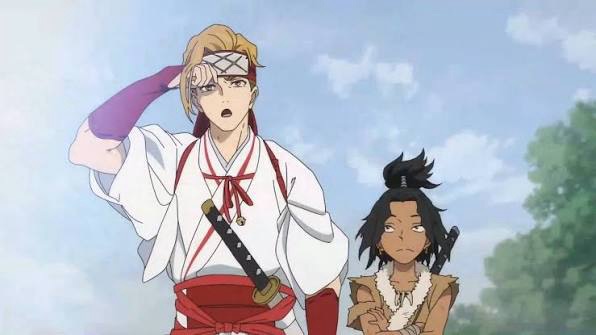
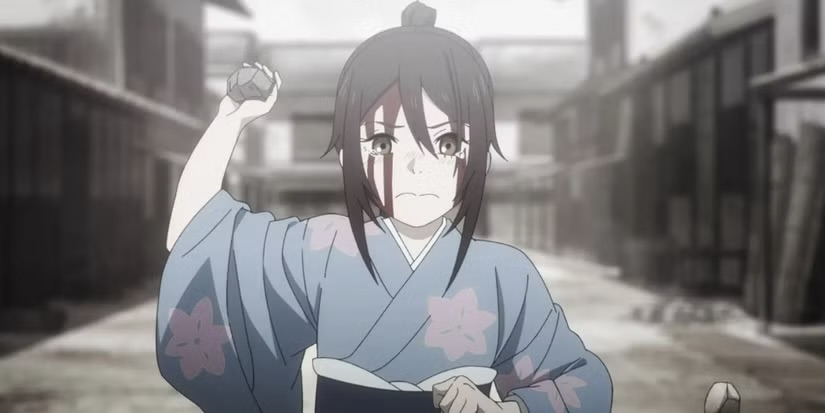
- Nurugai is a young, androgynous character who does not typically correct others when they assume she is a boy. When asked directly, she openly states she is a girl. Her gender presentation is not treated as a central conflict but may prompt discussion for some families.
- She is also not a true criminal— at least, not when in comparison to the other criminals on the island. She was arrested simply for belonging to a mountain clan that refused to submit to the Shogun. Her assigned Asaemon, Tenza, becomes deeply protective of her and believes she should not be on the island at all.
- Another young character, Mei, was originally a Tensen. When she failed to meet the expectations of the other Tensen, she was forced into servitude and exploitation. She eventually escapes, but her backstory is deeply disturbing.
- In Episode 11, while the Doshi describe Mei’s experiences, several Tensen are shown engaging in sexual behavior in the background. I strongly recommend listening to the dialogue without watching the visuals in this section, as the dialogue is important to understand the Tensen and their abilities.
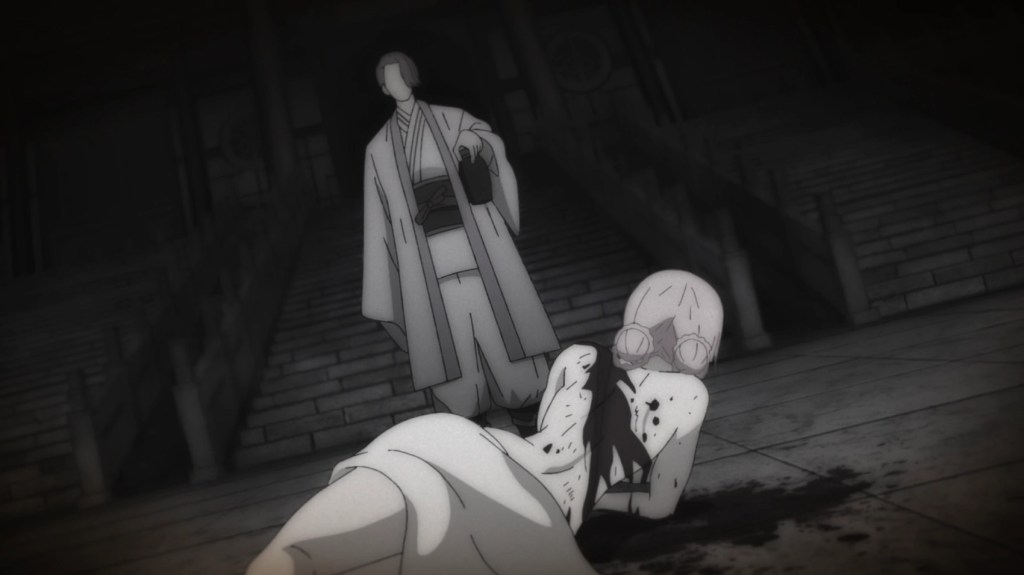
Level of Magical Elements
Magic is foundational to this series.
Ninjutsu is a supernatural art often combined with spells and spiritual techniques. The Tensen use a power called Tao—an energy that flows through all living things.
A character describes Tao as:
“Strength and weakness. Yin and yang. Stillness and movement. All in balance.”
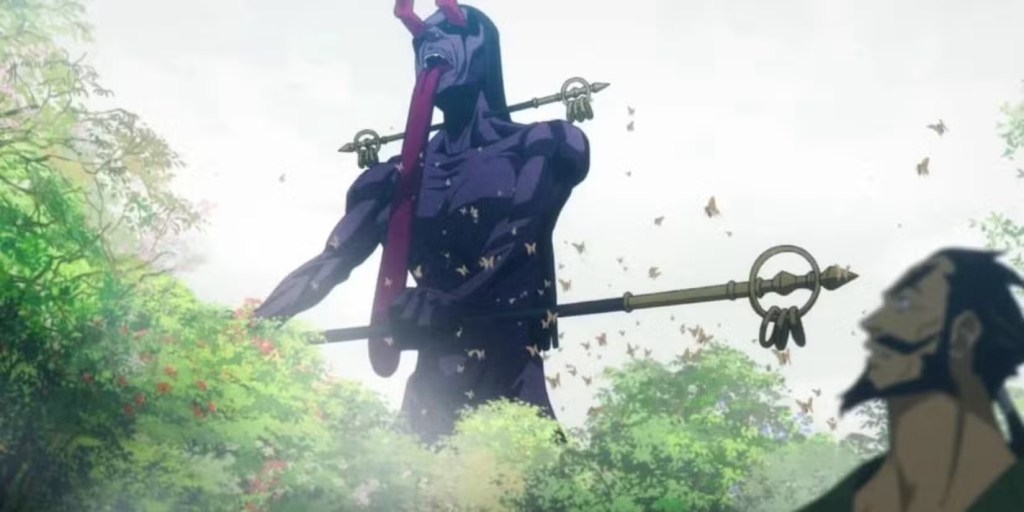
Spirits, monsters, and mystical beings are central to the plot. While not as grotesque as Curses in Jujutsu Kaisen (check out our review of JJK; Season 1) or Titans in Attack on Titan, these creatures are often unsettling and ridiculous-looking, inspired by Buddhist and Daoist imagery.
Level of Romance
This series contains multiple forms of romance—some gentle, some deeply inappropriate for younger viewers.
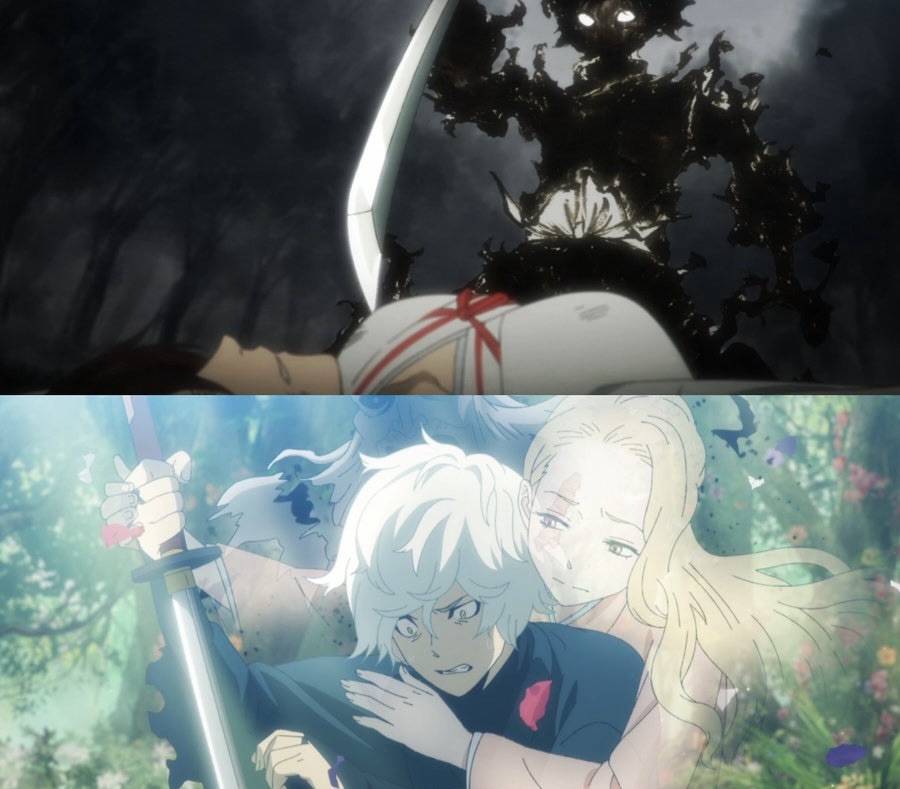
Gabimaru’s love for his wife, Yui, is sincere, tender, and surprisingly wholesome. He worries that loving her has made him weak, yet he also believes strength is meaningless if it cannot protect what matters most.
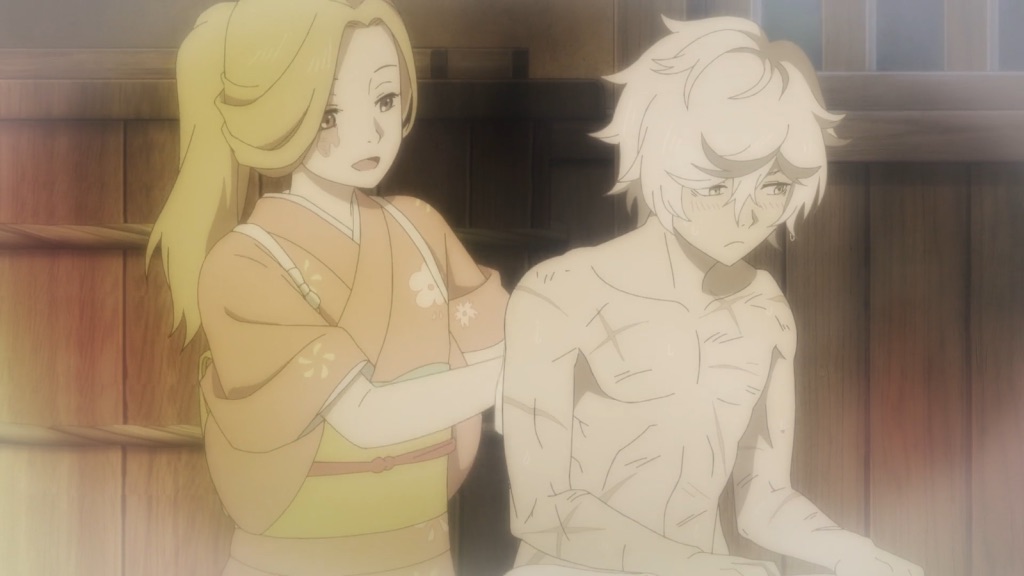
He often recalls her voice, her lessons, and her kindness. His devotion to her is one of the most emotionally grounding parts of the series.
Nurugai forms a strong emotional attachment to Tenza and even suggests they should marry one day. While not truly romantic, this bond is meaningful and rooted in safety and trust.
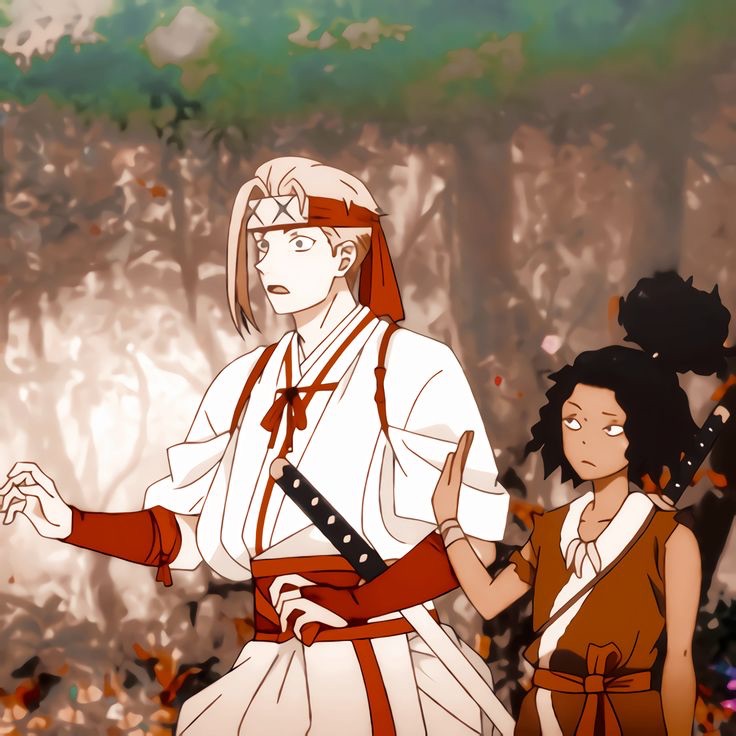
Asaemon Senta eventually develops feelings for Yuzuriha, though this is not explored until the final episodes.
Section 4: Specific Notes for Parents & Guardians
Sagiri’s backstory includes childhood bullying and deep internalized pressure to live a quiet, submissive life. She ultimately rejects this and chooses to forge her own path, challenging traditional expectations placed on women. Sagiri repeatedly defies the belief that women should only focus on domestic roles, slowly changing the minds of those around her through strength, discipline, and resolve.
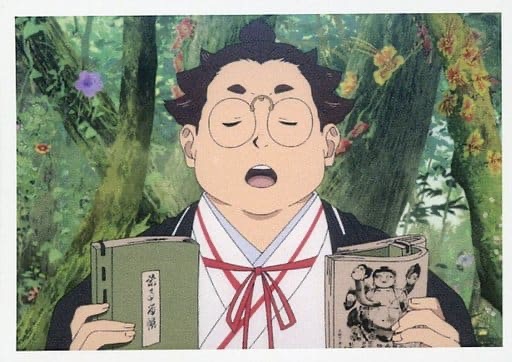
Religious symbolism is heavy throughout the series, particularly Buddhist and Daoist imagery, reflected in the monsters, architecture, and philosophy. We learn about much of this from Asaemon Senta.
Final Thoughts
This anime is beautifully written, emotionally complex, and philosophically rich—but it is also extremely dark.
While the story explores redemption, love, and the cost of violence, it does so through graphic imagery, disturbing themes, and intense psychological pressure. This is not a casual watch, and it is not one I would recommend for younger viewers.
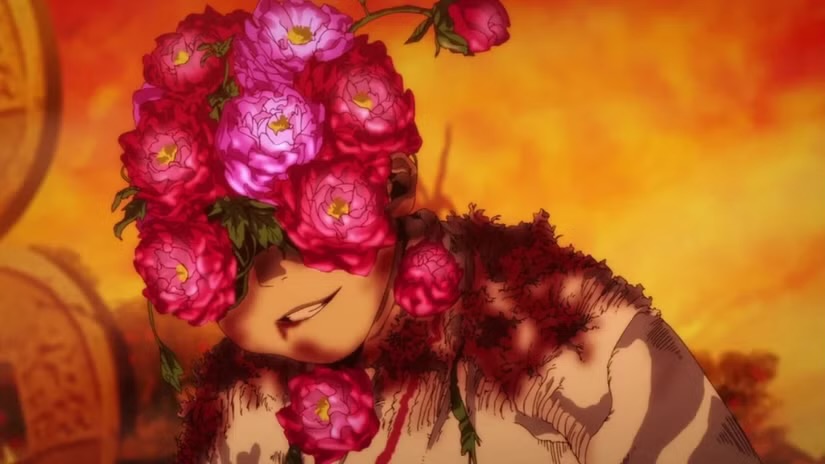
For older teens and adults, this series can spark meaningful conversations about morality, power, autonomy, and what it means to truly be free. But it requires emotional maturity—and ideally, parental guidance.
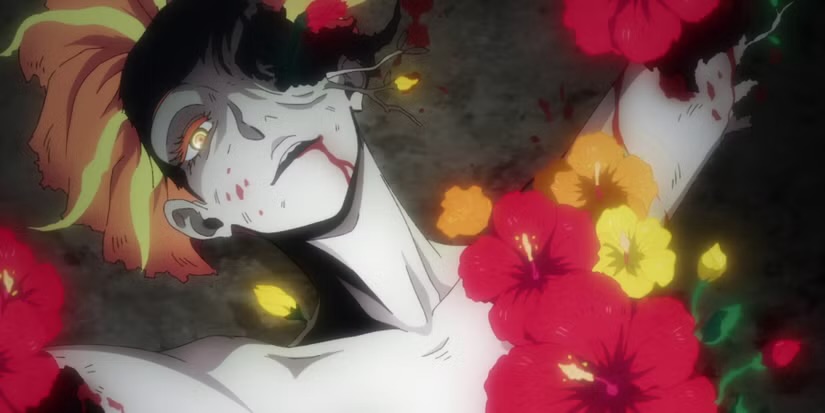
This is not just violent entertainment. It is heavy, haunting, and intentionally unsettling.
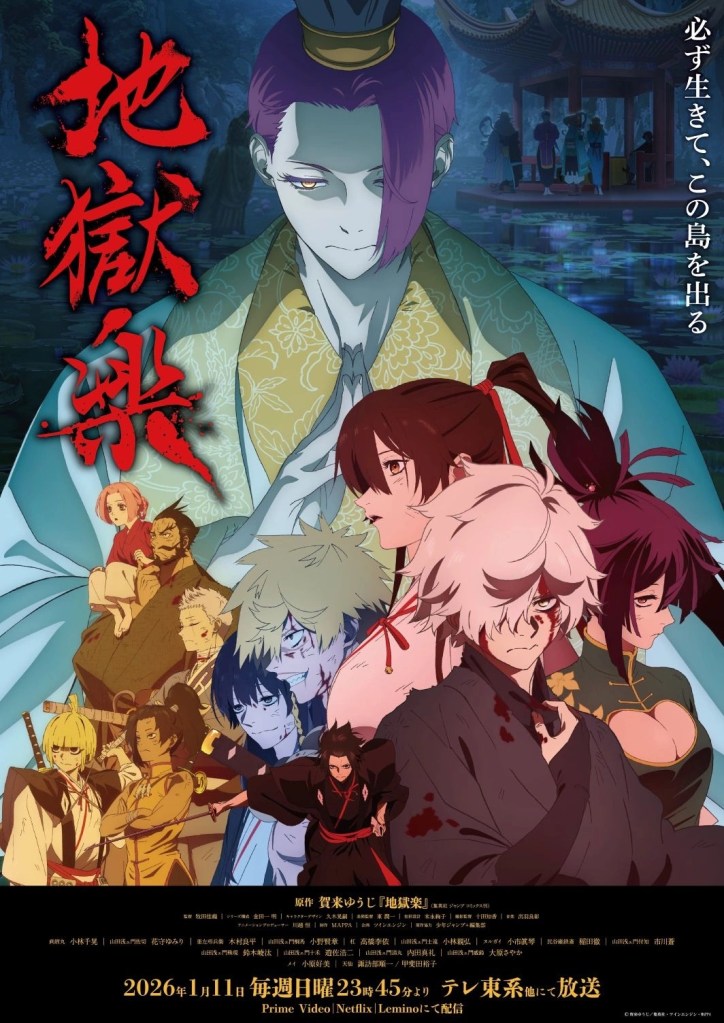
Stay tuned, because Hell’s Paradise (Season 2) will be airing Jan 11, 2026.
As always, thank you for reading this review, and I look forward to seeing you in the next one. 💛
At The Anime Momma Blog, my goal is simple: helping parents understand the anime their kids love so families can watch with wisdom, discernment, and great conversations along the way.
Check us out on social media!


Leave a comment