Demon Slayer vs. Jujutsu Kaisen: A Parent-Guided Comparison
Hi friends, it’s the Anime Momma. 💛
One of the questions I’ve been asked recently is, “Which is better for my kid—Demon Slayer or Jujutsu Kaisen?” And while that sounds simple, the real answer is… it depends.
It depends on your child, your values, and what you’re hoping anime will be for them.
Both shows are wildly popular. Both are beautifully animated. Both feature young heroes, supernatural battles, and emotional storytelling—but they are very different in tone, themes, and the kind of intensity they bring into a young viewer’s life.
These are not necessary to read beforehand, but below are my reviews of both shows if you’d like more in-depth information:
Demon Slayer (Season 1) and Jujutsu Kaisen (Season 1).
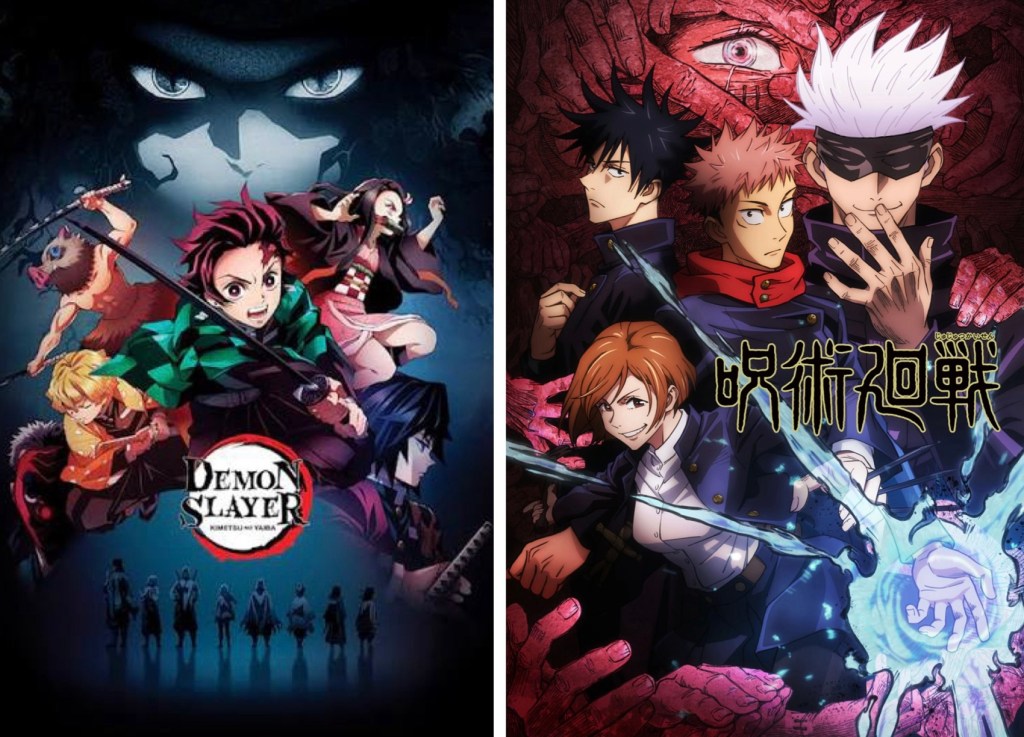
This post isn’t about which one is “cooler” or driving fear into the choices you make.
It’s about helping parents understand what kind of stories these shows tell, what kind of intensity they bring, and how that intensity might affect different kids at different ages.
Let’s take a gentle, honest look at both.
TL;DR:
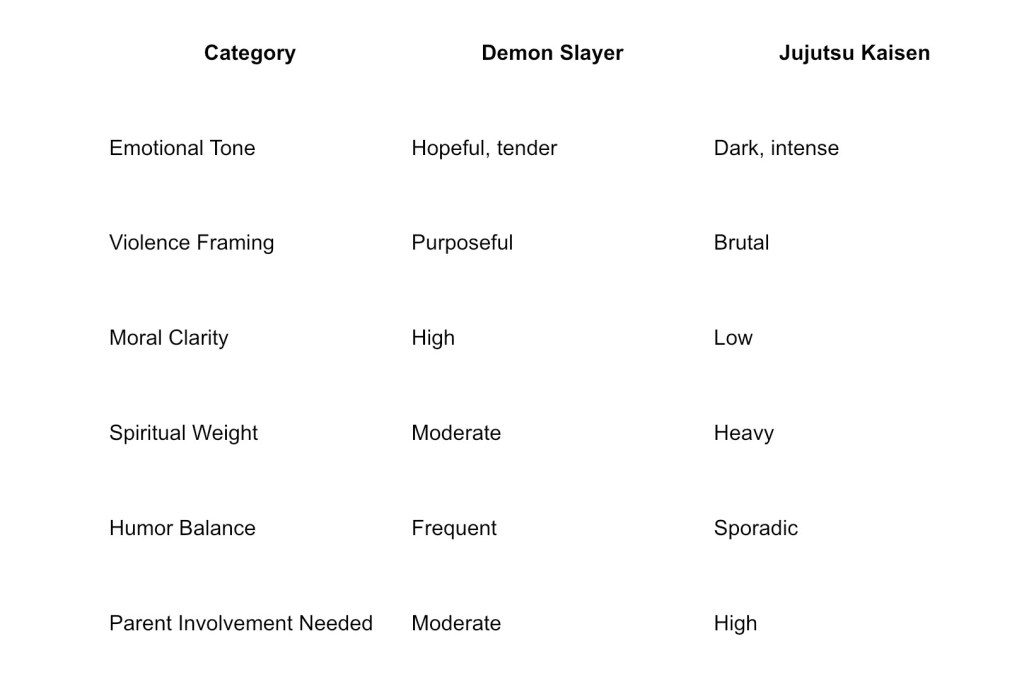
Demon Slayer and Jujutsu Kaisen may look similar on the surface, but they land very differently emotionally. Demon Slayer leans toward hope, compassion, and family-centered motivation, while Jujutsu Kaisen explores darker themes like despair, moral ambiguity, and emotional isolation.
Both can be meaningful—but both bring different kinds of intensity. The key isn’t banning one or picking the “right” show—it’s knowing what kind of story your child is stepping into, and whether they have the emotional tools to handle it.
Age-Range Recommendations
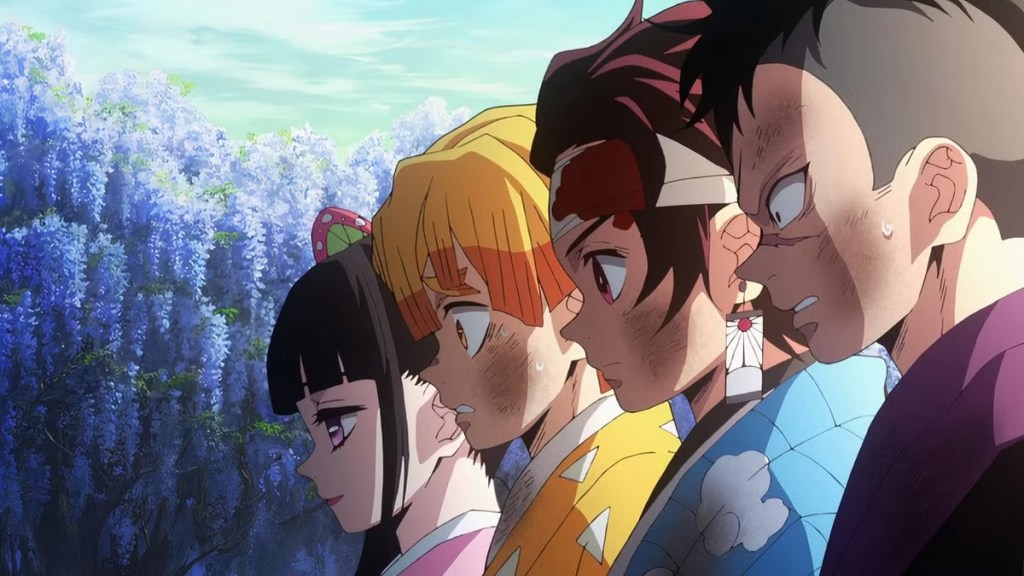
Demon Slayer — Suggested Age: 13+ (with guidance)
Why
• Strong themes of family, loyalty, and compassion
• Clear moral lines (good vs evil)
• Violence is intense, but often emotionally purposeful
• Main character models empathy, perseverance, and restraint
Watch With Caution If Your Child:
• Is sensitive to death or grief themes
• Struggles with emotional regulation after intense scenes
• Has difficulty separating fiction from real-world danger
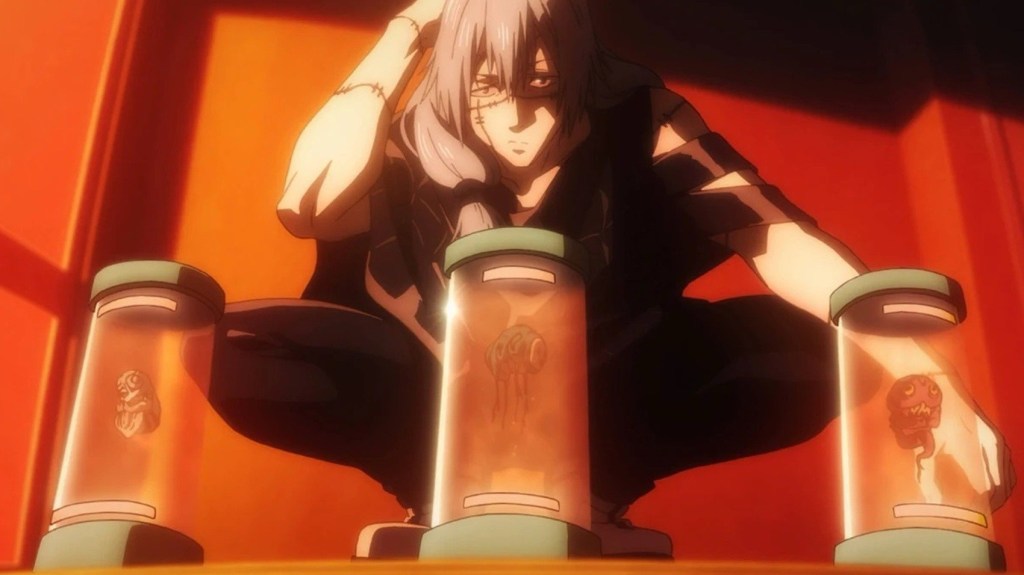
Jujutsu Kaisen — Suggested Age: 17+ (with strong guidance)
Why
• Much darker emotional tone
• More graphic violence and horror elements
• Themes of despair and moral ambiguity
• Heavy attachment risks
• Stronger exposure to grotesque imagery
Watch With Caution If Your Child:
• Is prone to hyperfixation
• Has anxiety, intrusive thoughts, or emotional dysregulation
• Struggles with boundaries around screen time
• Is highly empathic or absorbs character suffering deeply
Tone & Emotional Atmosphere
Demon Slayer
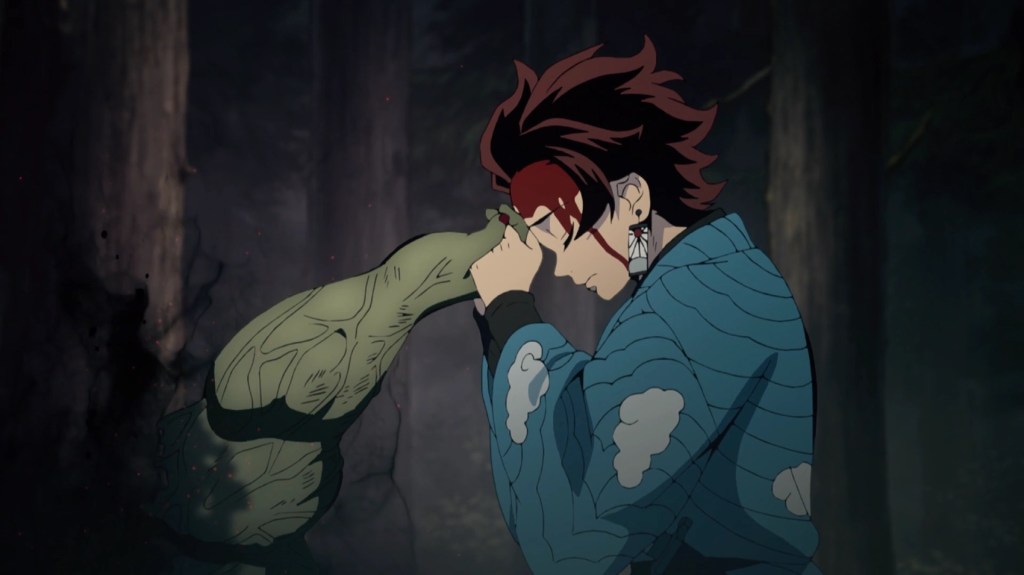
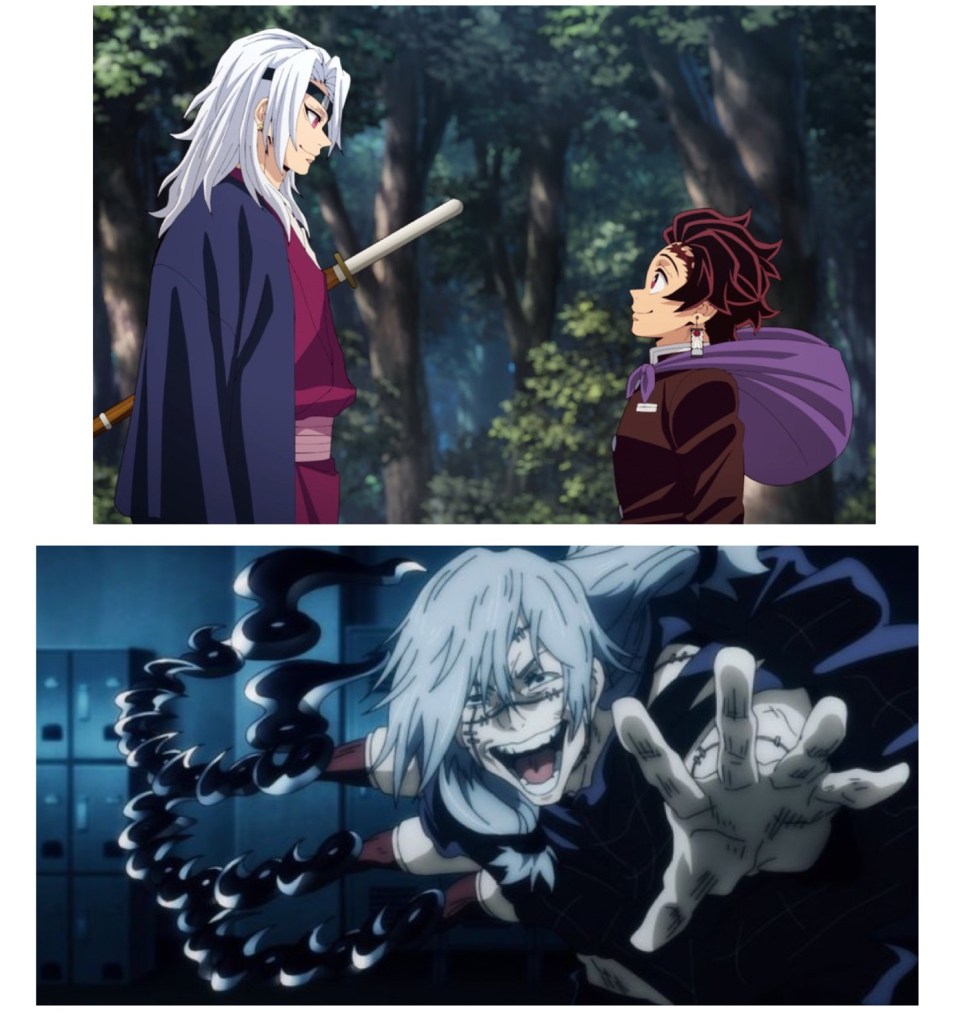
Demon Slayer carries a tone that is emotionally heavy—but still hopeful. While it deals with death, grief, and trauma, it consistently returns to themes of compassion, perseverance, and family. Even its villains often have tragic backstories that invite reflection.
There is a moral warmth to Demon Slayer. The world is cruel, but kindness still matters.
Jujutsu Kaisen
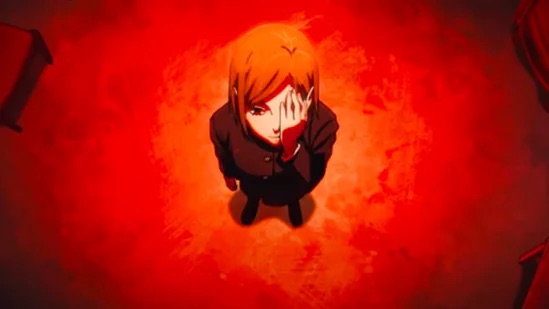
Jujutsu Kaisen, by contrast, leans darker, colder, and more morally ambiguous. Its world is one where suffering is constant, corruption is systemic, and hope is fragile. While there are compassionate characters, the story does not linger on comfort.
This series explores despair, cynicism, and loss in a much more psychologically intense way.
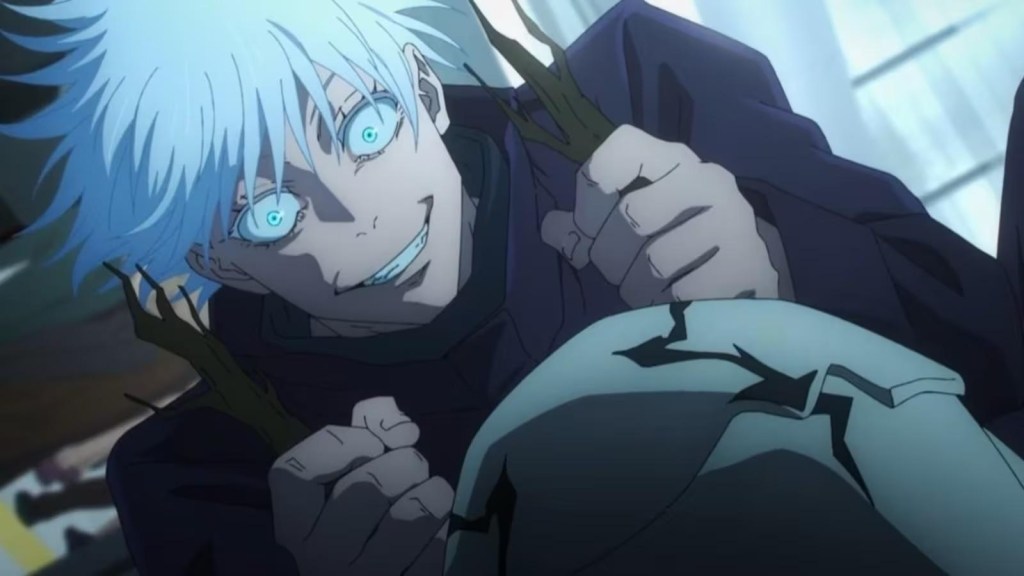
Parent Note: If your child is emotionally sensitive, Demon Slayer may feel safer. If they gravitate toward darker, more complex narratives, Jujutsu Kaisen will likely appeal—but may require more parental presence.
Action/Violence: How It’s Framed
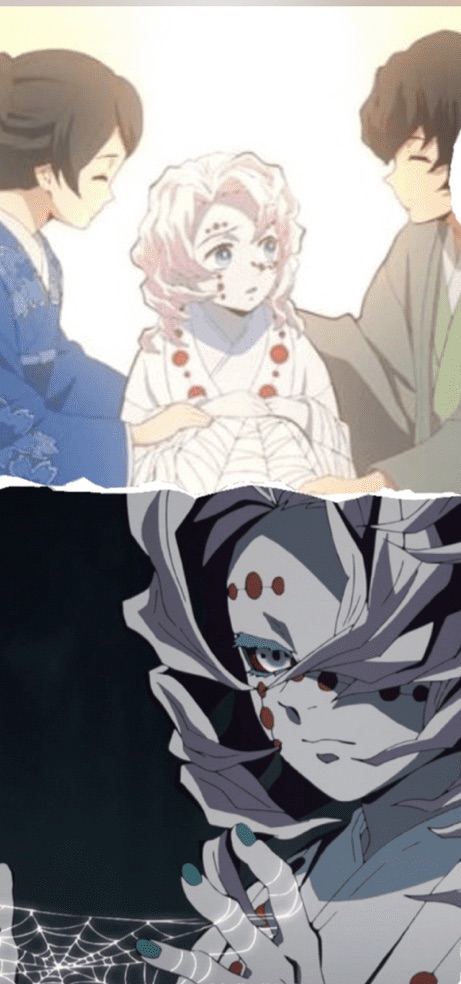
Demon Slayer
The violence in Demon Slayer is frequent, but it is often very purpose-driven. Battles usually serve a redemptive or protective purpose. Tanjiro fights to save others, not for power or prestige.
Even when demons are killed, the story often pauses to acknowledge their humanity.
Jujutsu Kaisen
Jujutsu Kaisen’s violence is more brutal, sudden, and emotionally jarring. Death can feel meaningless. Innocents die. Good intentions don’t guarantee good outcomes.
There is far less narrative cushioning between the viewer and the horror.
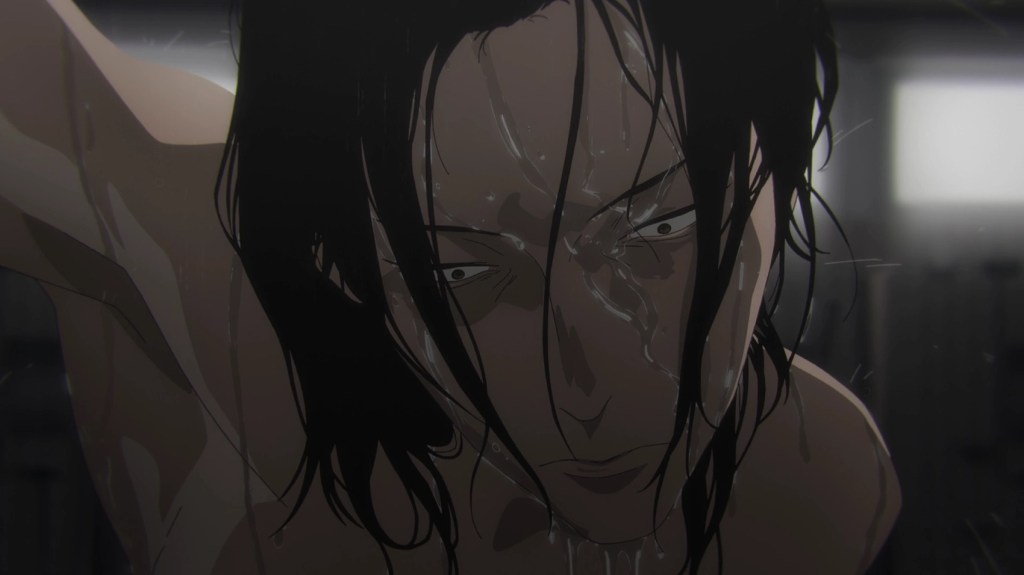
Parent Note: Demon Slayer contextualizes violence with meaning. Jujutsu Kaisen often presents violence as unavoidable reality.
Themes: What Your Child Is Absorbing
Demon Slayer Themes
• Family loyalty
• Compassion
• Healing from trauma
• Perseverance
• Moral clarity
• Responsibility
Jujutsu Kaisen Themes
• Existentialism
• Moral ambiguity
• Corruption
• Identity fragmentation
• Power and consequence
• Responsibility
Both series are deep—but they guide the viewer differently.
Demon Slayer asks: How do we remain kind in a cruel world?
Jujutsu Kaisen asks: Does kindness even matter in a cruel world?
Spiritual & Supernatural Elements
Demon Slayer
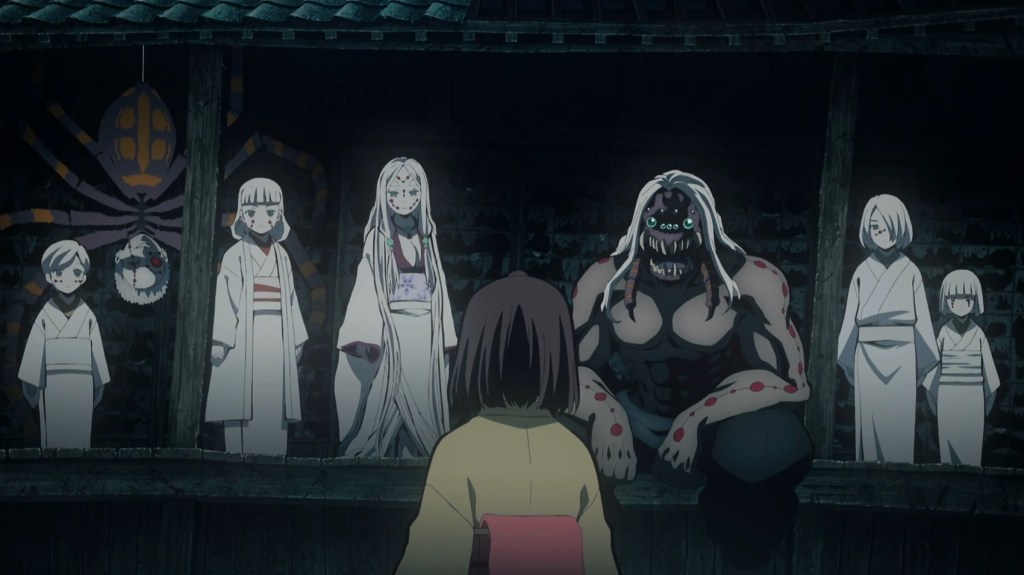
Demon Slayer continuously maintains a strong moral structure with the supernatural elements leaning more toward mythic and folkloric. While demons exist, they are not the same demons as read about in the Bible. They are monsters, and, for the most part, they are clearly evil.
Jujutsu Kaisen
Jujutsu Kaisen is built around curses and occultism—manifestations of human fear, hatred, and despair. This creates a much heavier spiritual tone due to the origin of these beasts. Some families may find this spiritually uncomfortable.

Humor & Emotional Relief
Demon Slayer
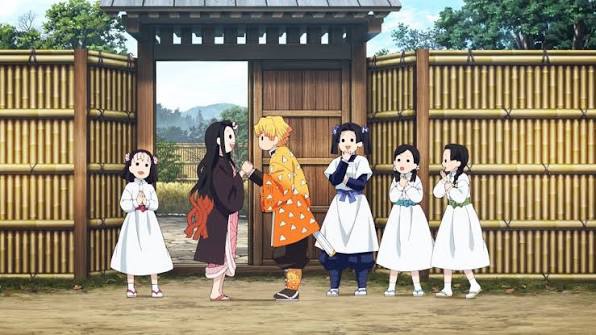
Even in dark moments, Demon Slayer intentionally includes emotional breaks—humor, lighthearted banter, and tender scenes.
Jujutsu Kaisen
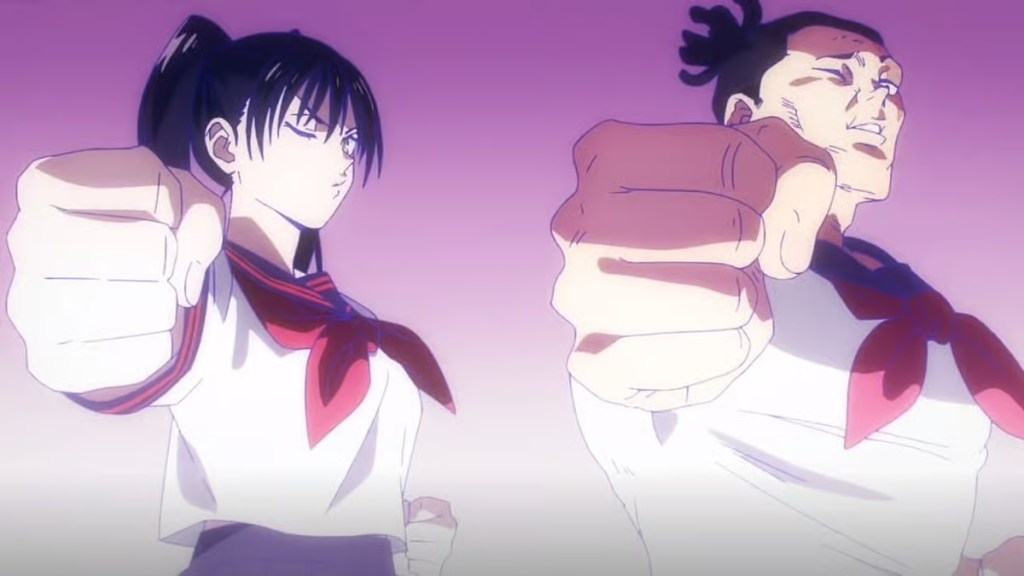
While it does have humor, it often comes abruptly and disappears quickly. The emotional tone swings sharply.
A Quick Look into the Main Character
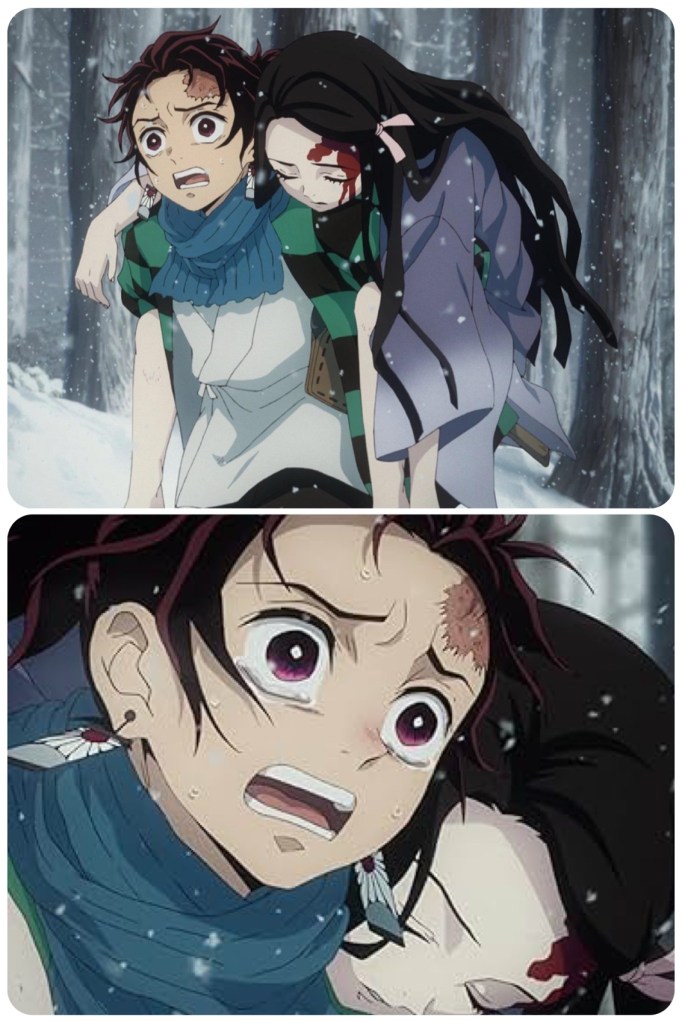
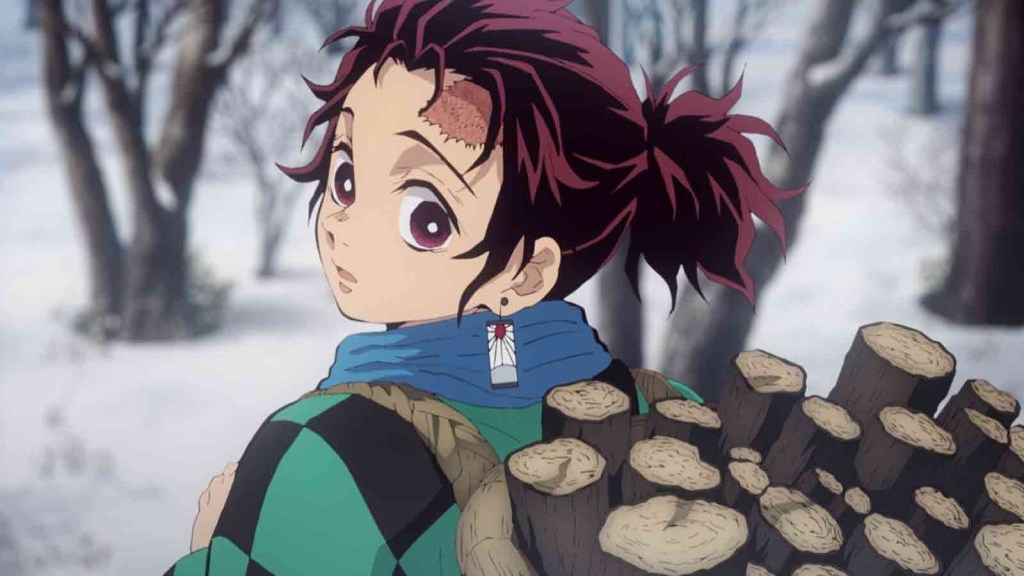
Demon Slayer (Tanjiro Kamado)
Strong moral compass, empathy-driven, and consistently hopeful even in darkness.
Jujutsu Kaisen (Itadori Yuuji)
Compassionate, optimistic, and morally grounded, but placed in situations with no clear “right” answers.

Which Is Right for Your Family?
Final Thoughts from The Anime Momma
Neither of these shows is “bad.” But they are not interchangeable. They are powerful. And powerful stories shape kids—sometimes in ways we don’t notice until later.
Demon Slayer often supports emotional growth while Jujutsu Kaisen often challenges emotional stability. One offers a hand to hold while the other asks hard questions without always offering answers.
For many kids—especially in formative years—that difference matters.
The goal isn’t to police what our kids love. It’s to walk beside them while they love it.
Ask questions. Watch together when you can. Notice how they feel after an episode, not just during it.
It’s not about the anime: it’s about the heart while watching it. 💛
At The Anime Momma Blog, my goal is simple: helping parents understand the anime their kids love so families can watch with wisdom, discernment, and great conversations along the way.
Check us out on social media ✨
 The Anime Momma Blog
Leave a comment