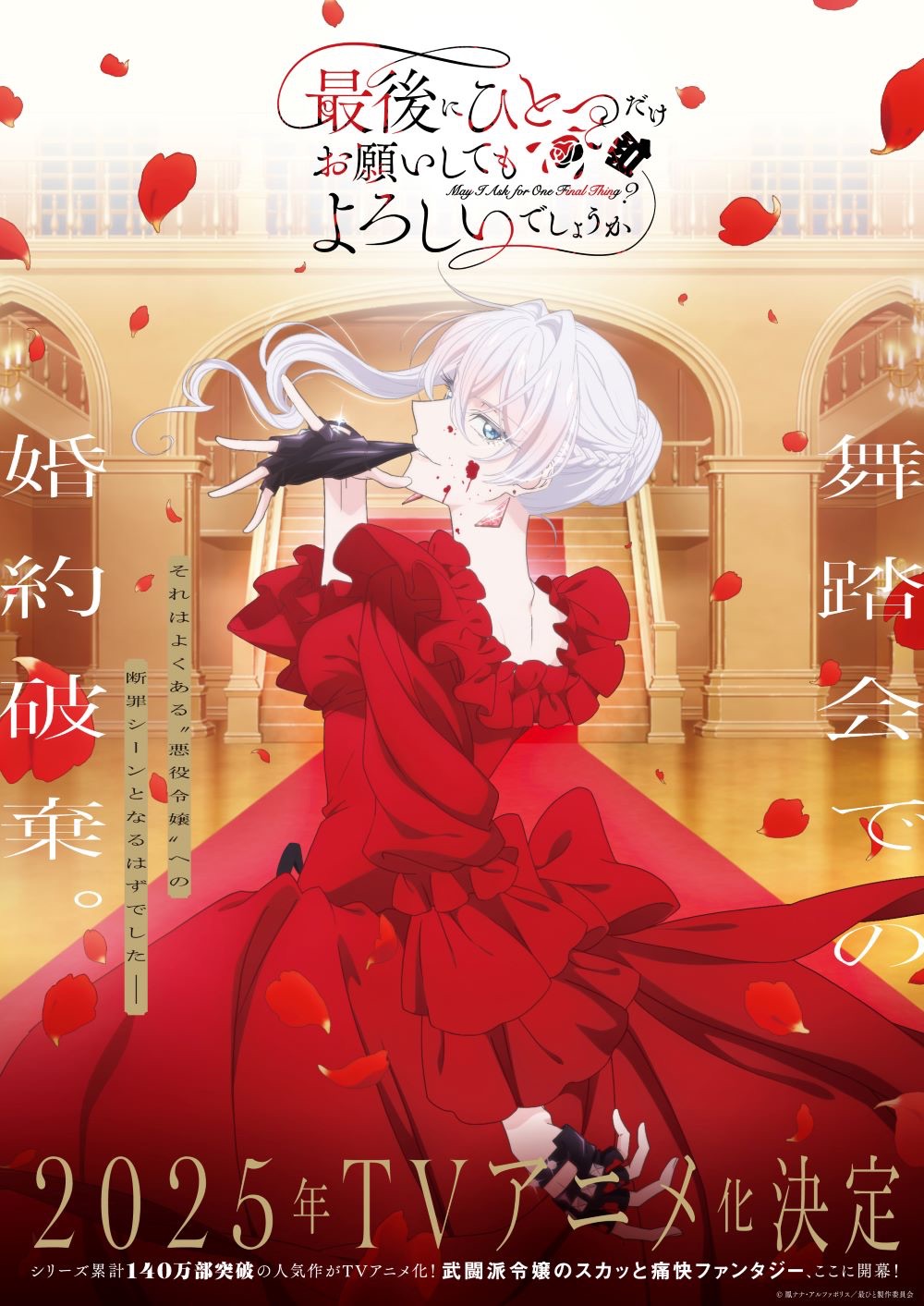
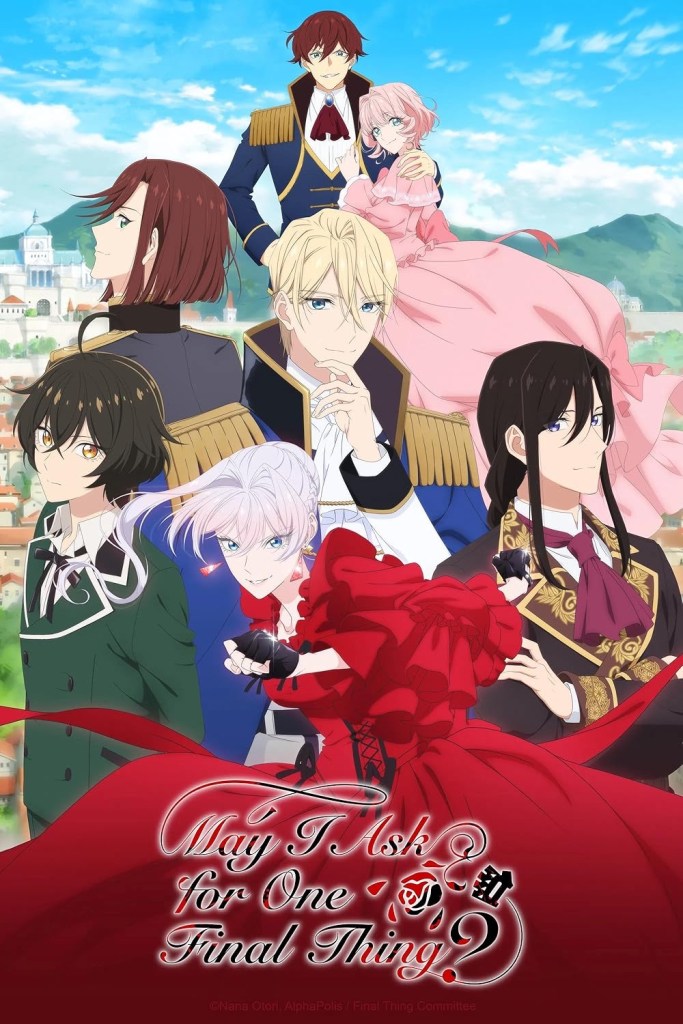
TL;DR: May I Ask for One Final Thing? is a fast-paced fantasy anime with a fierce female lead, frequent violence, strong language, and heavy themes like bullying, slavery, and war. Blood is present but not graphic. Romance exists but is sarcastic and unresolved. Best suited for viewers who are comfortable with morally gray heroes and storytelling.
Section 1: May I Ask for One Final Thing? (Season 1; 13 Episodes) — At a Glance
Anime Summary | Taken directly from MyAnimeList
Ever since childhood, Scarlet El Vandimion has preferred to deal with wrongdoers by using her fists. However, to preserve her family’s image, she suppresses her instincts and tolerates the abuse inflicted by her childish fiancé, Second Prince Kyle Von Pallistan. Only Kyle’s brother, First Prince Julius, is aware that there is more to Scarlet than meets the eye, but she cares little about his growing interest.
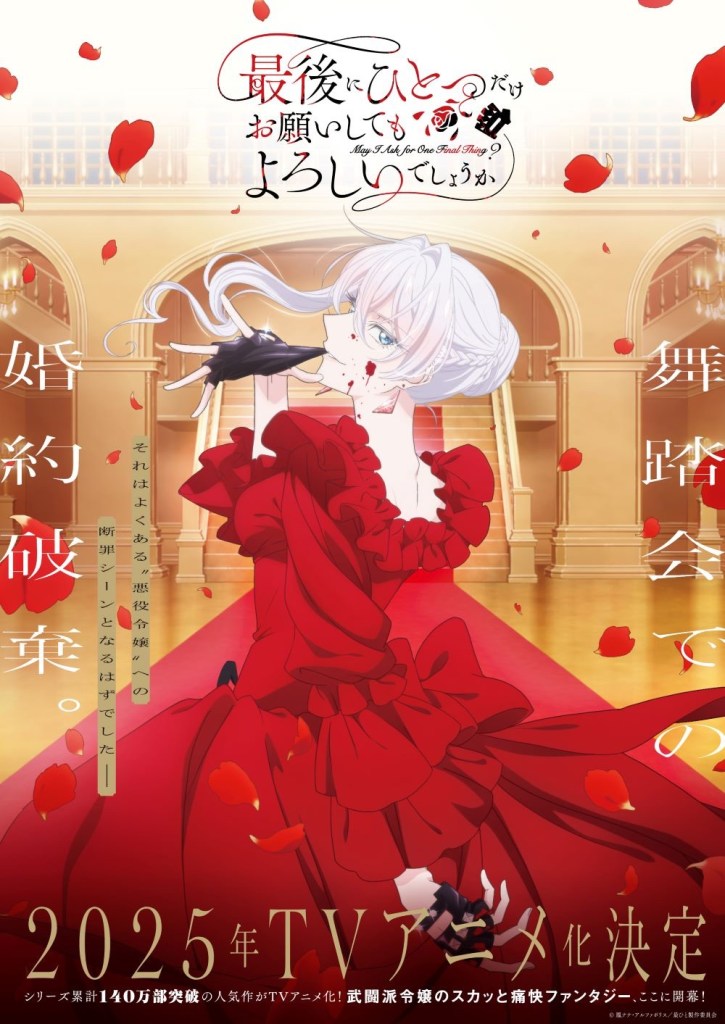
In the middle of a ball, Kyle accuses Scarlet of harassing Terenezza Hopkins, a commoner that has taken his heart. Scarlet’s engagement to Kyle is nullified, leaving her outraged that all of her efforts to endure thus far have amounted to nothing. Scarlet dons her studded leather gloves, once again becoming the “Mad Dog Princess.” Joined by Julius and werebeast Nanaka, Scarlet is ready to give filthy nobles a taste of their own medicine—one punch at a time.
Genres & Themes
Action, Comedy, Fantasy, Romance
MyAnimeList Rating
PG-13 | Teens 13 or older
The Anime Momma Rating
PG-10+ | Parental discretion advised between ages 10-13
Section 2: Star Levels
Each category below is rated on a five-star scale:
⭐ = very little present | ⭐⭐⭐⭐⭐ = a lot present
- Action/Violence Level: ⭐⭐⭐⭐⭐ (5/5)
- Addiction Level: ⭐️⭐️⭐️⭐️☆ (4/5)
- Blood/Gore Level: ⭐⭐⭐☆☆ (3/5)
- Inappropriate, Heavy, or Mature Themes or Conduct: ⭐⭐⭐☆☆ (3/5)
- Alternative Lifestyle Themes: ⭐☆☆☆☆ (1/5)
- Level of Magical Elements: ⭐⭐⭐⭐⭐ (5/5)
- Level of Romance: ⭐⭐⭐⭐⭐ (5/5)
Section 3: Star Levels — Explained
Action/Violence Level
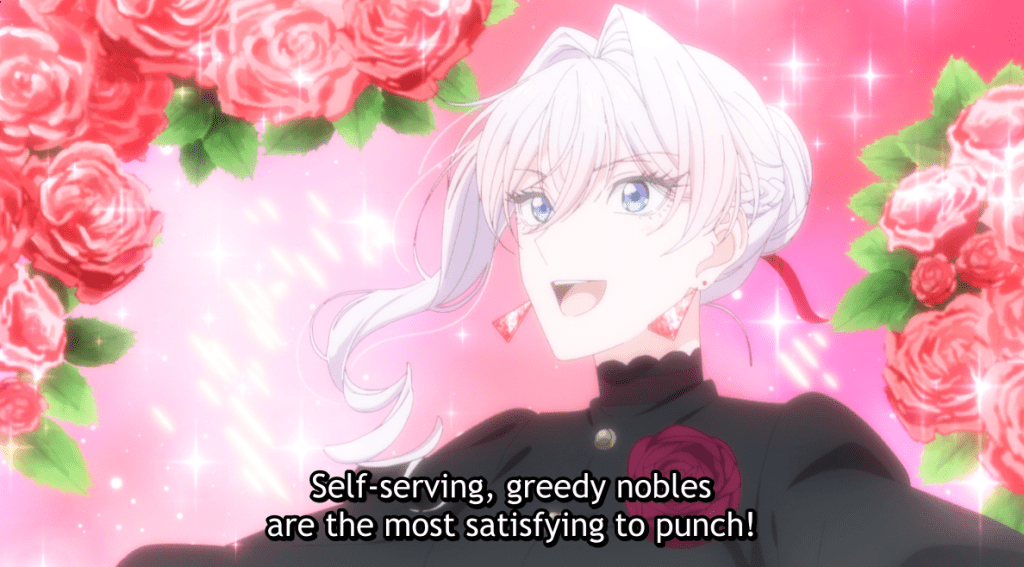
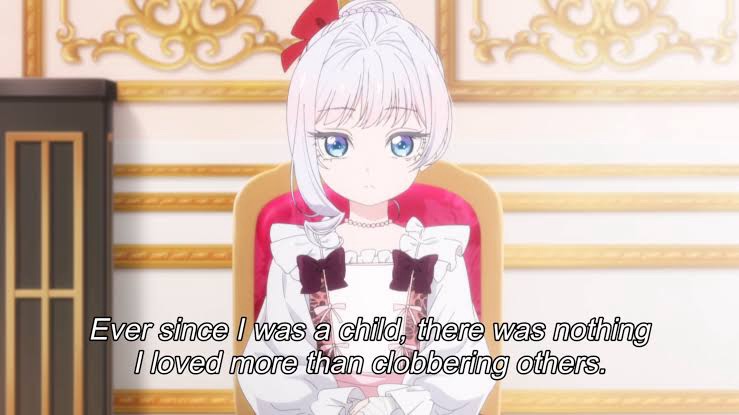
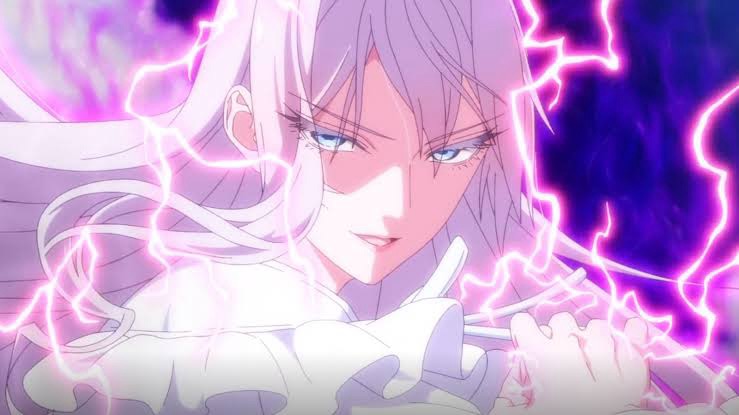
Scarlet El Vandimion has a reputation, and it’s well-earned. Nobles and commoners alike know her by nicknames like “The Bloodstained Noblewoman” and “The Queen of the Hunt,” and honestly? The shoe fits.
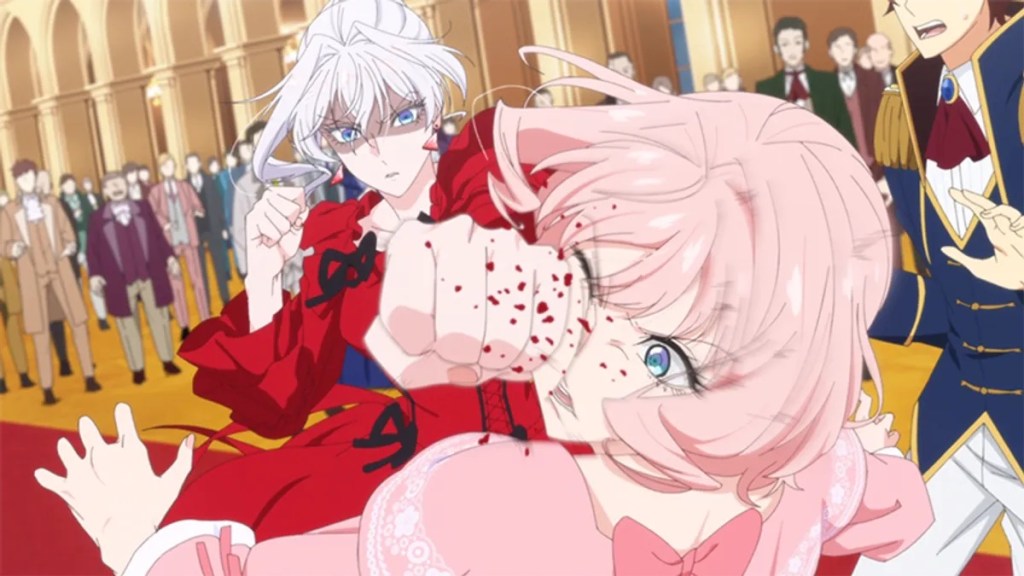
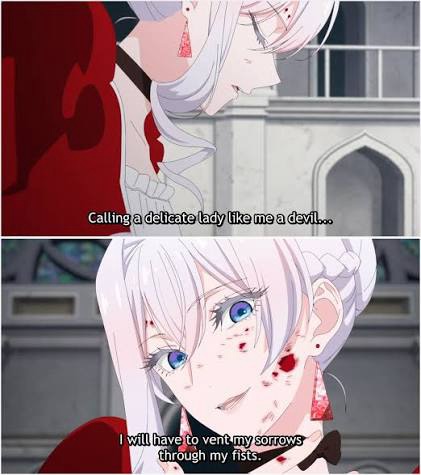
- Scarlet is incredibly skilled in combat and has zero patience for people who annoy her or abuse their power—especially corrupt nobles. Violence is very much her chosen problem-solving method, and while her fights are often framed as justice-driven or even cathartic, she does not hesitate to throw punches (literally) when she feels wronged or sees others being mistreated.
Parents should know that violence is frequent and intentional, even if it’s often played with flair and confidence rather than cruelty.
Addiction Level
This series is fast, fun, and surprisingly bingeable. Episodes move quickly, the story doesn’t linger too long in one place, and Scarlet’s bold personality keeps things engaging. I flew through this one in just a couple of days!
Blood/Gore Level
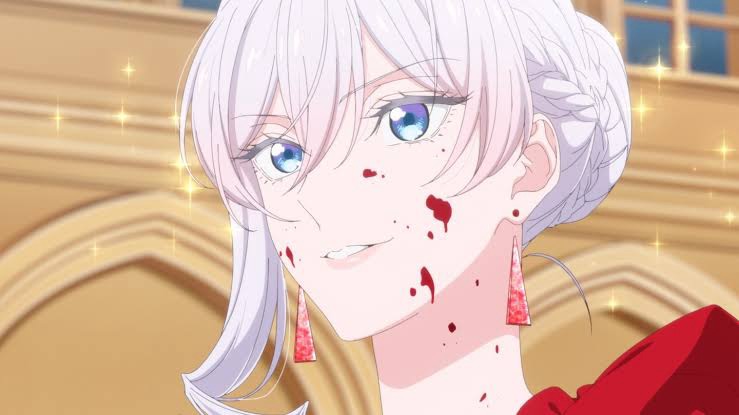
Due to Scarlet’s fighting style and the number of confrontations throughout the series, blood is present. Most of what’s shown includes small splatters, bloodied fists, or marks (such as bruises or scratches, etc.) left behind after a fight.
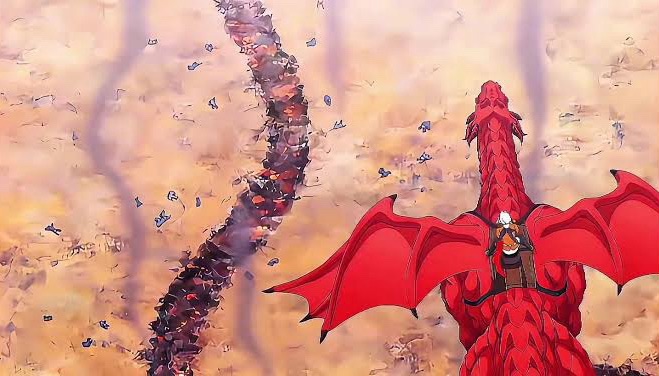
Later episodes escalate into full-scale war between multiple countries, which includes destruction and blood—but it never crosses into graphic or gory territory.
Inappropriate, Heavy, or Mature Themes or Conduct
This is where parents will want to pay closer attention.
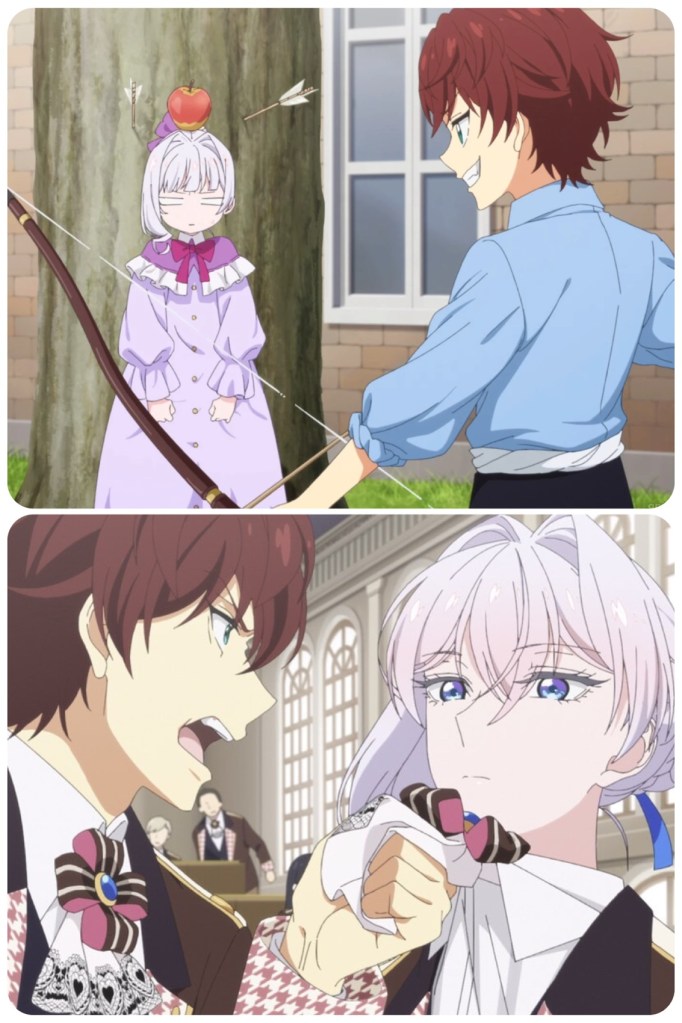
- In the opening episodes, Scarlet’s former fiancé, Kyle von Pallistan, is shown bullying and emotionally abusing her. This includes degrading language and physical intimidation (such as pulling her hair). Scarlet handles this strategically and does not remain a victim—but the behavior itself may be upsetting to younger viewers.
- Emotional manipulation and verbal abuse are recurring themes, particularly from the show’s villain, Terenezza. She possesses an ability that allows her to charm men into obedience, which she uses repeatedly to control others and position herself as the “Leading Lady” of the story.
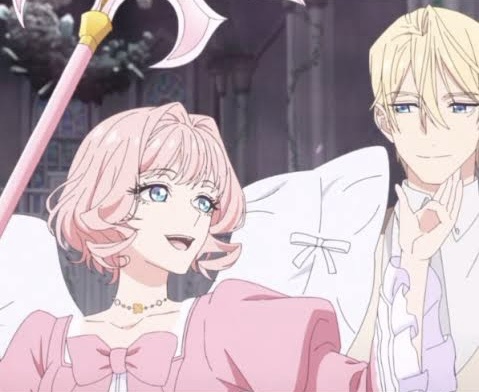
- Episode 4 contains a slave auction, which is one of the heaviest moments in the series. Slaves are dehumanized and referred to as “it” by nobles and auctioneers. While Scarlet and Prince Julius intervene to shut the auction down—which helps soften the impact—the scene itself may be disturbing.
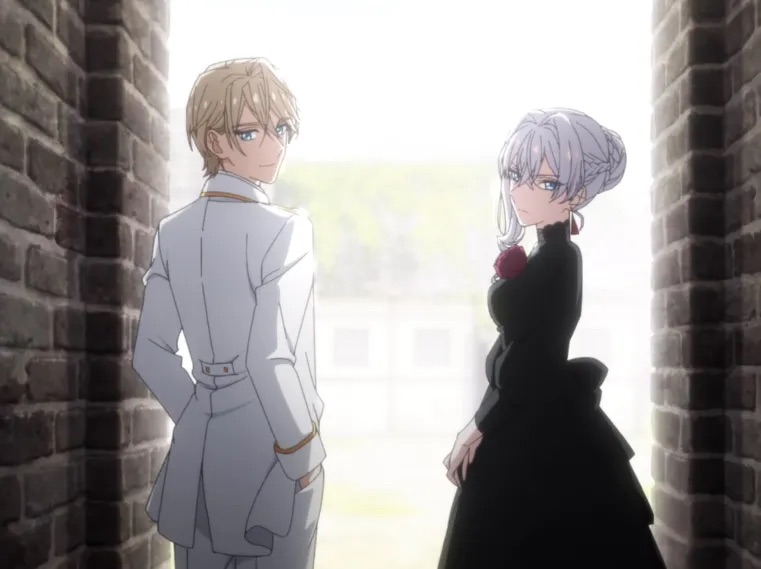
Alternative Lifestyle Themes
There are only two instances that I would classify as slightly “alternative lifestyle” themes:
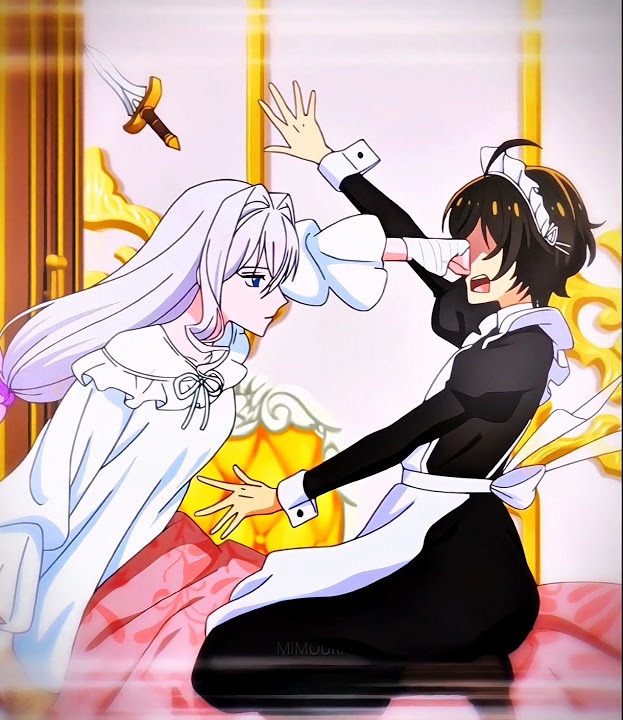
- In Episode 2, an assassin named Nanaka disguises himself as a maid as part of a mission. This is purely tactical and not portrayed as an identity choice. He is later revealed to have been enslaved and forced into violence, which is handled seriously rather than for humor.
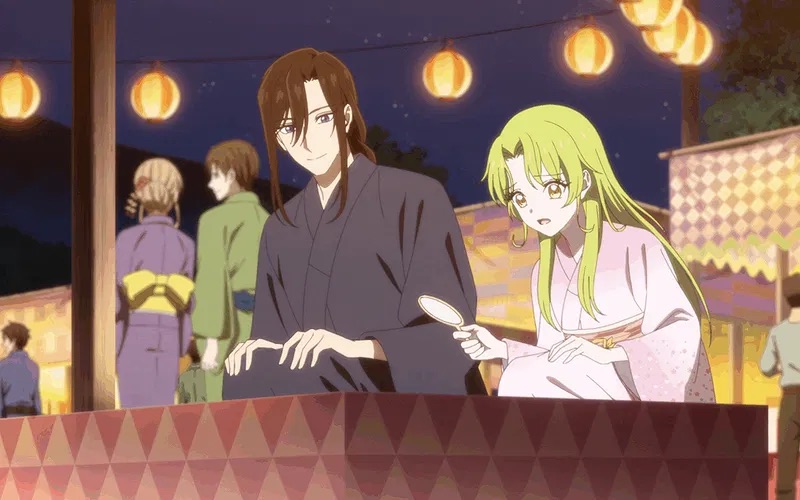
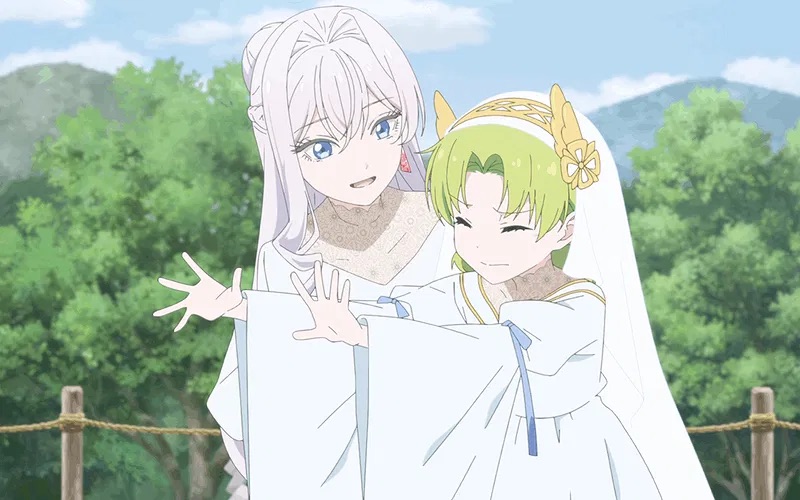
- Saint Diana occasionally hints that she may have feelings for Scarlet, though nothing ever comes of it. Later, Diana develops romantic feelings for Leonardo, Scarlet’s older brother, instead.
Level of Magical Elements
Magic is deeply woven into this series. Various races—such as orcs, elves, beastkin, and dragons—exist alongside humans, and supernatural abilities are common.
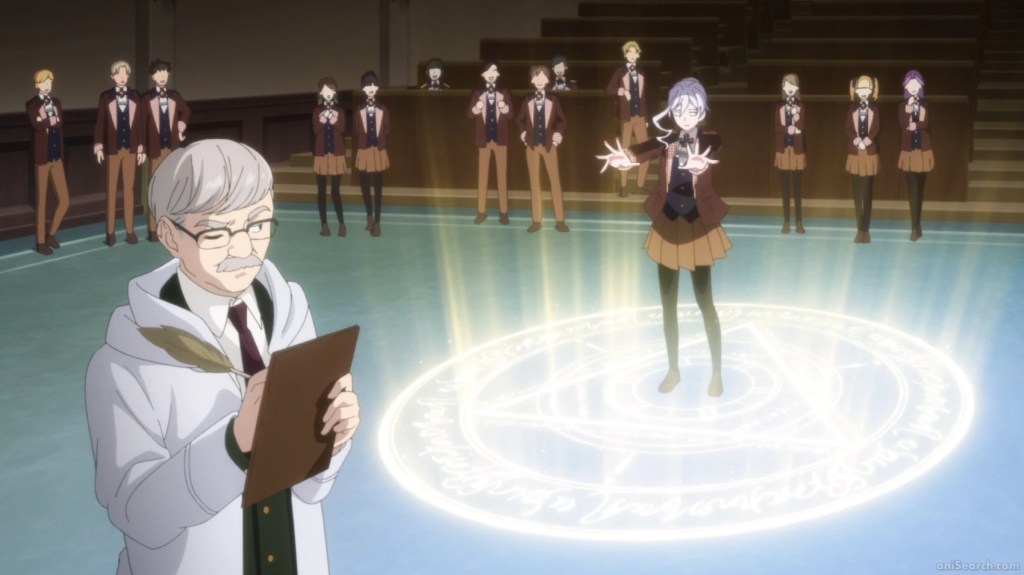
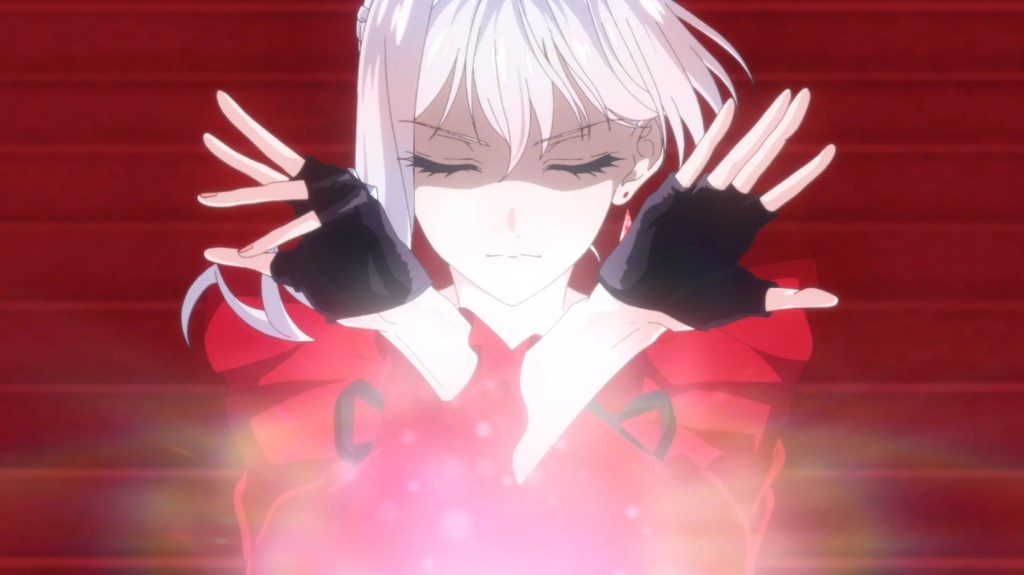
- Many people receive divine “Blessings” from gods, granting them unique powers. Scarlet herself can manipulate time, while Leonardo possesses clairvoyance.
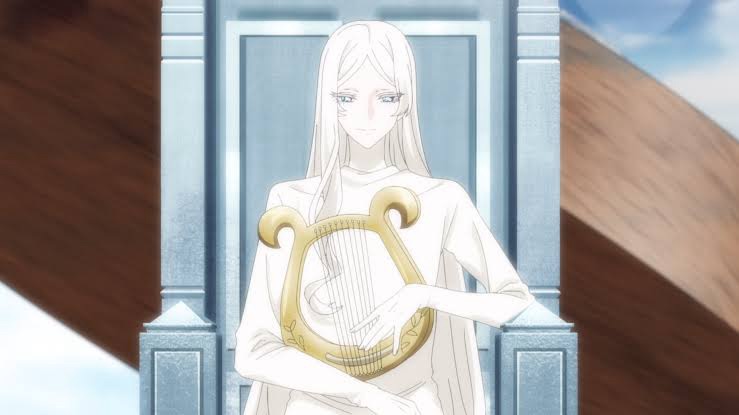
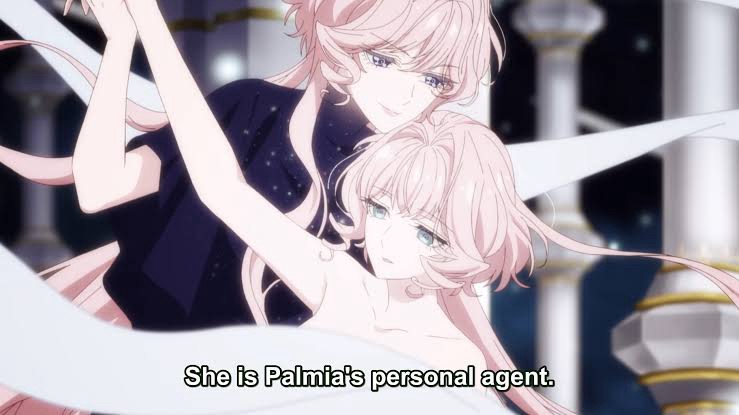
- The story also includes organized religions led by Saints who are directly empowered by gods. In later episodes, viewers meet the gods themselves, which may be worth noting for families sensitive to divine or religious portrayals in fantasy settings.
Level of Romance
Romance exists, but it’s far from soft or straightforward.
Scarlet’s primary love interest is Crown Prince Julius von Pallistan. Their dynamic is playful, sarcastic, and full of teasing. While Julius claims he sees Scarlet as nothing more than entertainment, his actions often suggest otherwise. By the end of the series, their relationship remains ambiguous—somewhere between genuine affection and strategic flirtation.
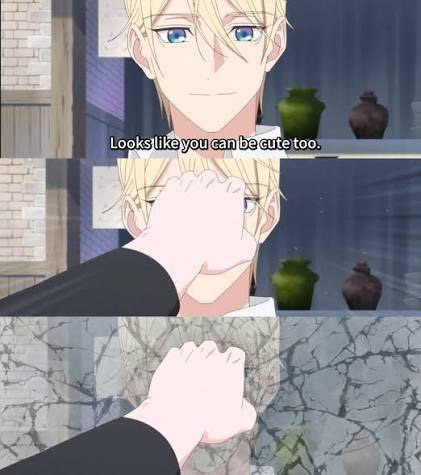
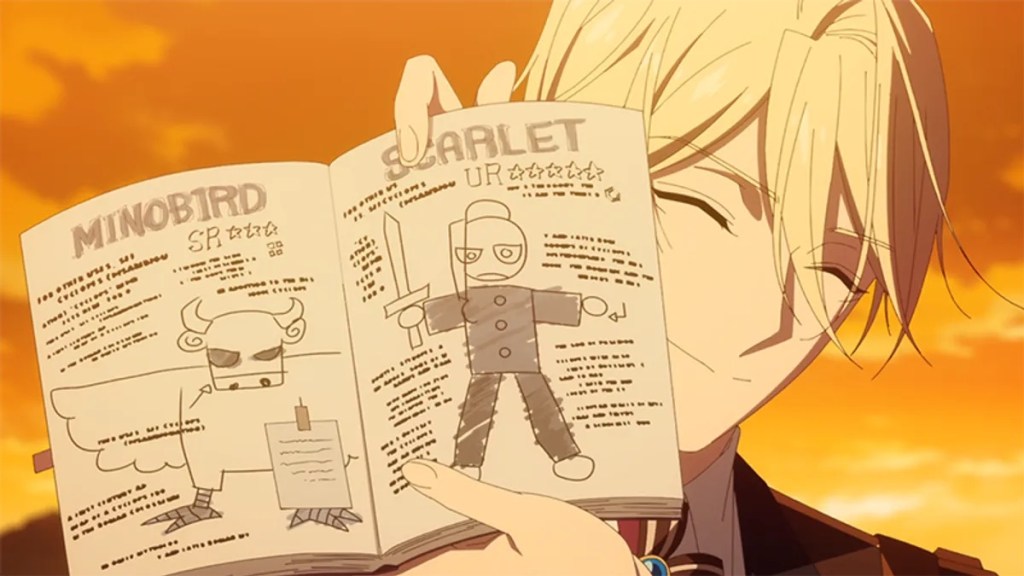
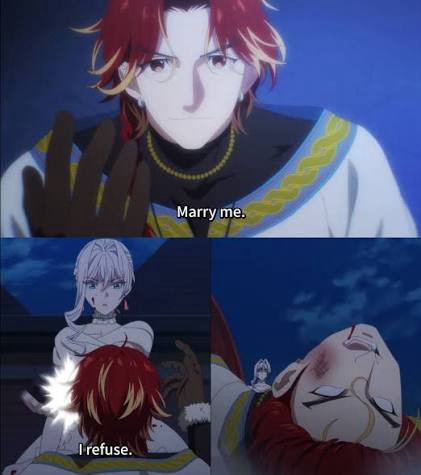
There are also several side romantic interests, among them most notably is Alflame, Prince of Vankish, who becomes instantly enamored with Scarlet’s strength and prowess. He even falsely claims she’s his bride to impress his troops.
Section 4: Special Notes for Parents & Guardians
Strong language and name-calling occur throughout the series. Scarlet frequently refers to Terenezza with derogatory insults, including profanity.
In later episodes, Saint Diana is revealed to have betrayed her own church. While morally complex, her actions stem from a desire to regain her powers in order to protect her people—adding nuance rather than outright villainy.
Final Thoughts
This anime is bold, unapologetic, and clearly not trying to be gentle. Scarlet is a powerful, complex heroine who refuses to be pushed around—but the world she inhabits is harsh.
For families with teens who enjoy strong female leads, political fantasy, and action-heavy storytelling, this may be worth watching together—with conversations along the way.
Viewers or those sensitive to bullying, outlandish-like religion, or aggressive language may want to skip this one.
As always, know your kids, trust your gut, and don’t be afraid to preview first 💛
Check us out on social media ✨🩵
 The Anime Momma Blog
Leave a comment