Read First: Kimetsu no Yaiba / Demon Slayer (Season 1) – Anime Review
Read Second: Kimetsu no Yaiba / Demon Slayer (Mugen Train Arc) – Anime Review
TL;DR: The Entertainment District Arc starts lighthearted but quickly becomes intense, with frequent action, heavy bloodshed, and emotionally charged storytelling. While the animation avoids dwelling on gore, themes of trauma, abuse, and loss play a major role, especially in the demons’ backstories. Romance is minimal, but strong emotional bonds drive the plot.
This arc is best suited for teens, with parental guidance recommended for younger and/or more sensitive viewers.
Section 1: Kimetsu no Yaiba / Demon Slayer: Entertainment District Arc (11 Episodes) — At a Glance
Anime Summary | Taken directly from MyAnimeList
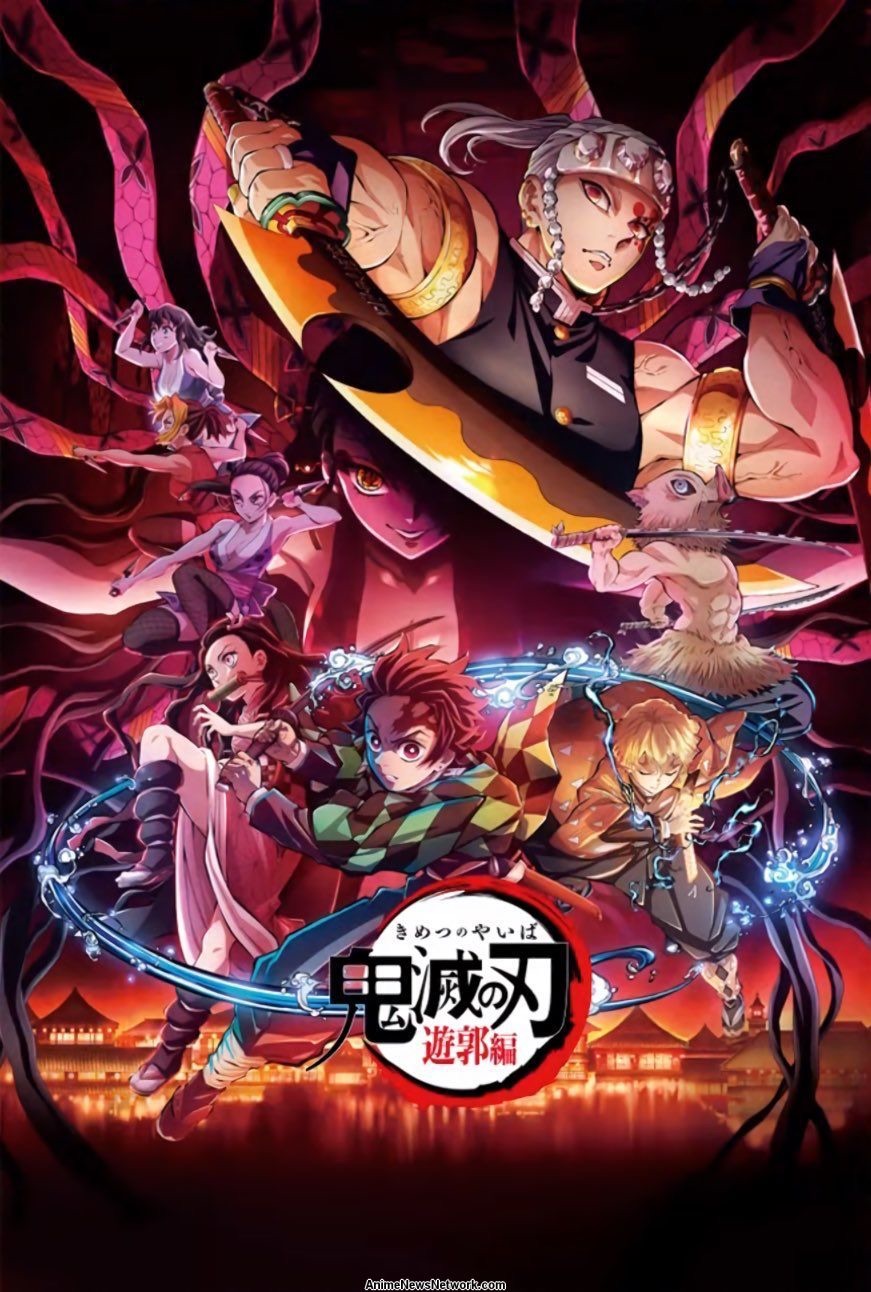
The devastation of the Mugen Train incident still weighs heavily on the members of the Demon Slayer Corps. Despite being given time to recover, life must go on, as the wicked never sleep: a vicious demon is terrorizing the alluring women of the Yoshiwara Entertainment District. The Sound Hashira, Tengen Uzui, and his three wives are on the case. However, when he soon loses contact with his spouses, Tengen fears the worst and enlists the help of Tanjirou Kamado, Zenitsu Agatsuma, and Inosuke Hashibira to infiltrate the district’s most prominent houses and locate the depraved Upper Rank Demon.
Genres & Themes
Action, Historical, Shounen[1], Supernatural
MyAnimeList Rating
R-17+ | Violence and Profanity
The Anime Momma Rating
PG-14+ | Parental discretion advised between ages 14-17
Section 2: Star Levels
Each category below is rated on a five-star scale:
⭐ = very little present | ⭐⭐⭐⭐⭐ = a lot present
- Action/Violence Level: ⭐⭐⭐⭐⭐ (5/5)
- Addiction Level: ⭐️⭐️⭐️☆☆ (3/5)
- Blood/Gore Level: ⭐⭐⭐⭐⭐ (5/5)
- Inappropriate, Heavy, or Mature Themes or Conduct: ⭐⭐⭐☆☆ (3/5)
- Alternative Lifestyle Themes: ⭐⭐☆☆☆ (2/5)
- Level of Magical Elements: ⭐⭐⭐⭐⭐ (5/5)
- Level of Romance: ⭐⭐☆☆☆ (2/5)
Section 3: Star Levels — Explained
Action/Violence Level
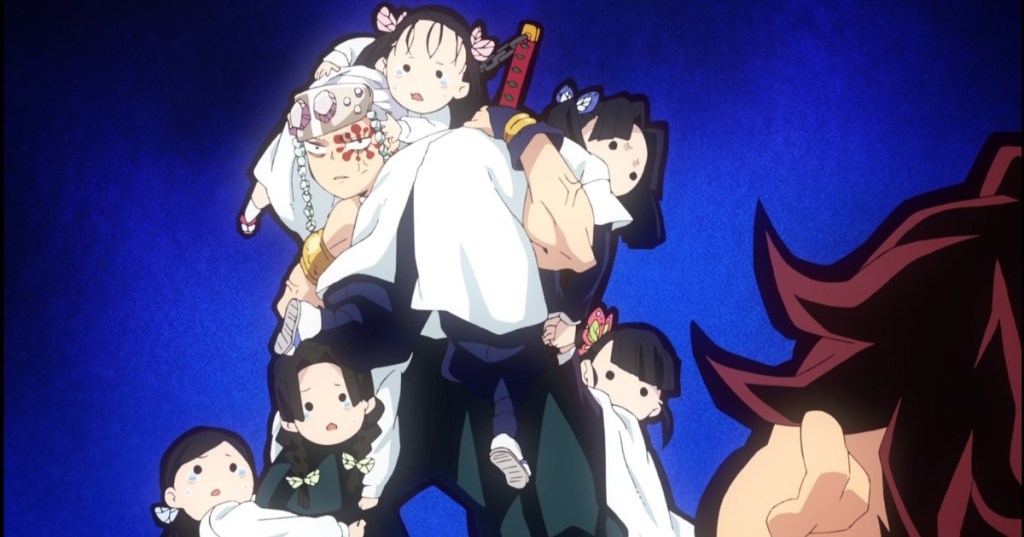
The Entertainment District Arc eases in gently, giving our trio time to heal and regroup after the devastating events of the Mugen Train. That calm doesn’t last long.
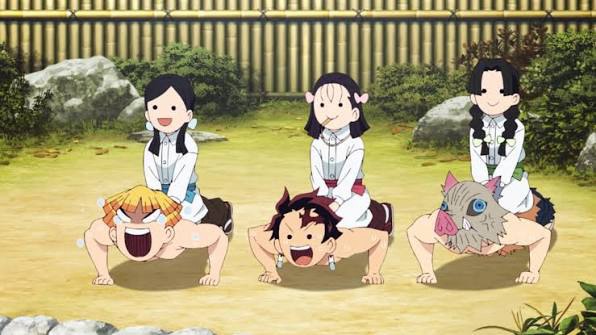
Once Tanjiro, Zenitsu, and Inosuke accompany the Sound Hashira, Tengen Uzui, into the Entertainment District, the tone quickly shifts. A string of disappearances and murders points to a demon hiding within the courtesan houses—places Tengen cannot access himself without assistance.
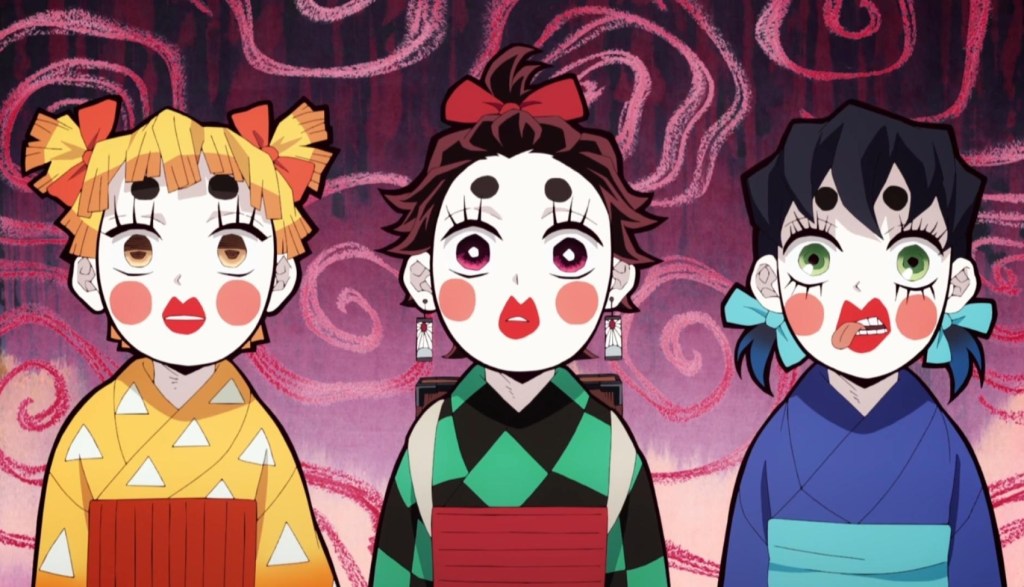
To investigate, the boys disguise themselves as courtesan girls (intentionally played for humor rather than glamour), and it doesn’t take long before the demon reveals herself.
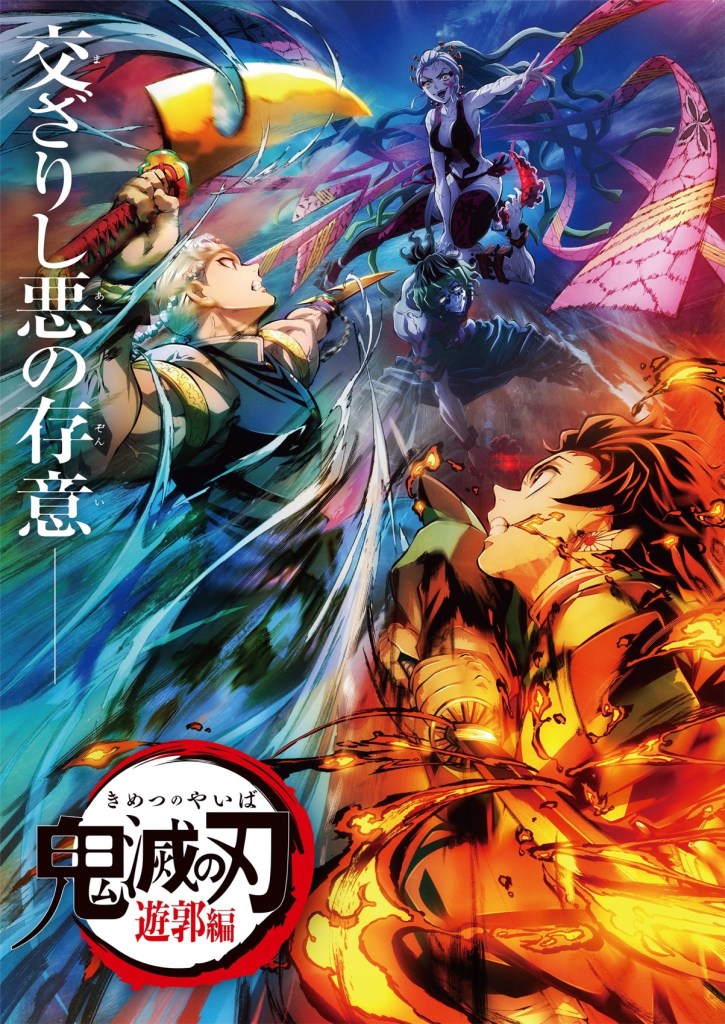
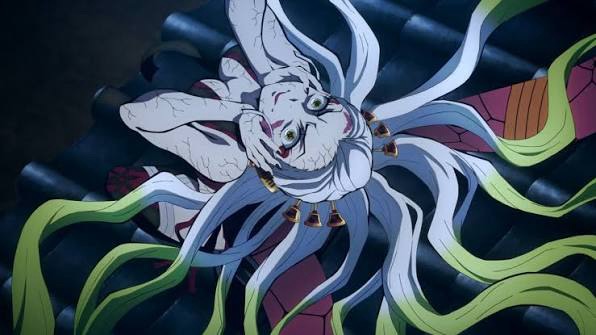
Daki, a member of the Upper Six, is powerful, cruel, and far beyond what Tanjiro can handle alone.
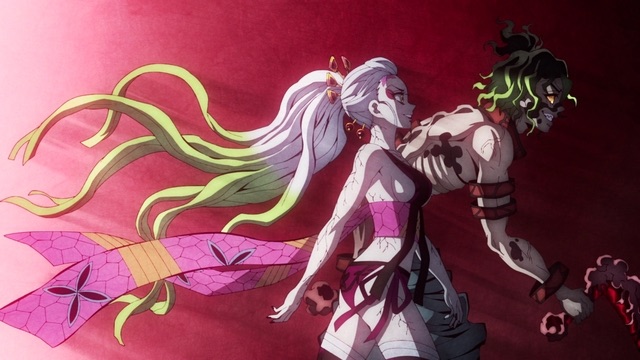
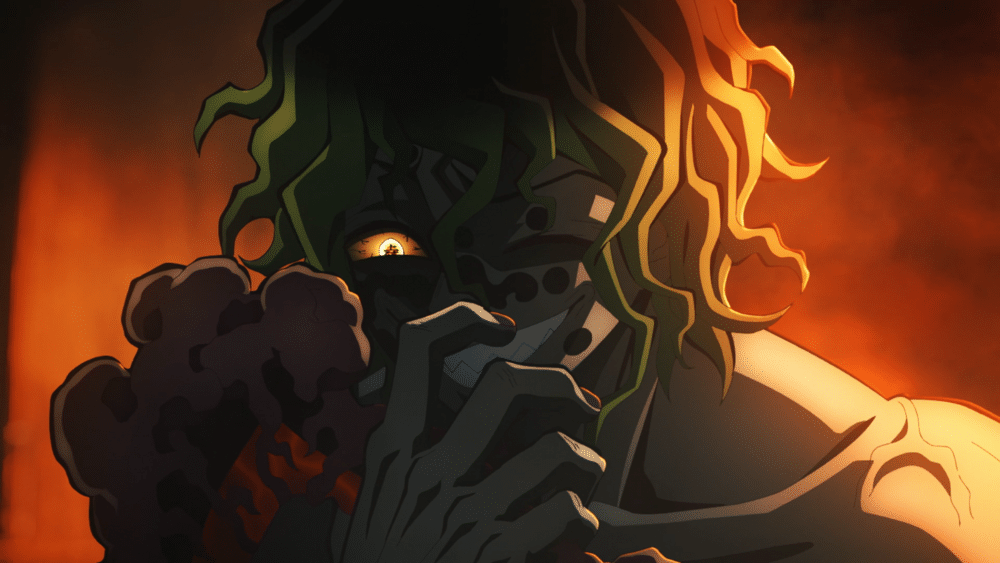
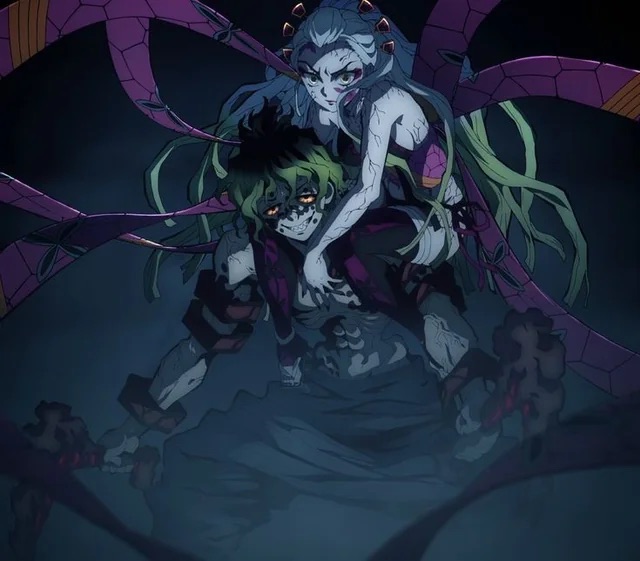
Just when victory seems possible, the situation escalates dramatically: Daki’s true nature is revealed when her brother, Gyutaro, quite literally emerges from her body. From this point forward, the arc becomes an all-out, relentless battle. Both demons must be beheaded in order to win—and doing so pushes the Demon Slayers to their absolute physical and emotional limits, bordering on self-destruction.
Addiction Level
This arc balances comedy, spectacle, and emotional heaviness. While I personally didn’t connect with it quite as deeply as the Mugen Train Arc, it is still beautifully animated, well-paced, and incredibly engaging.
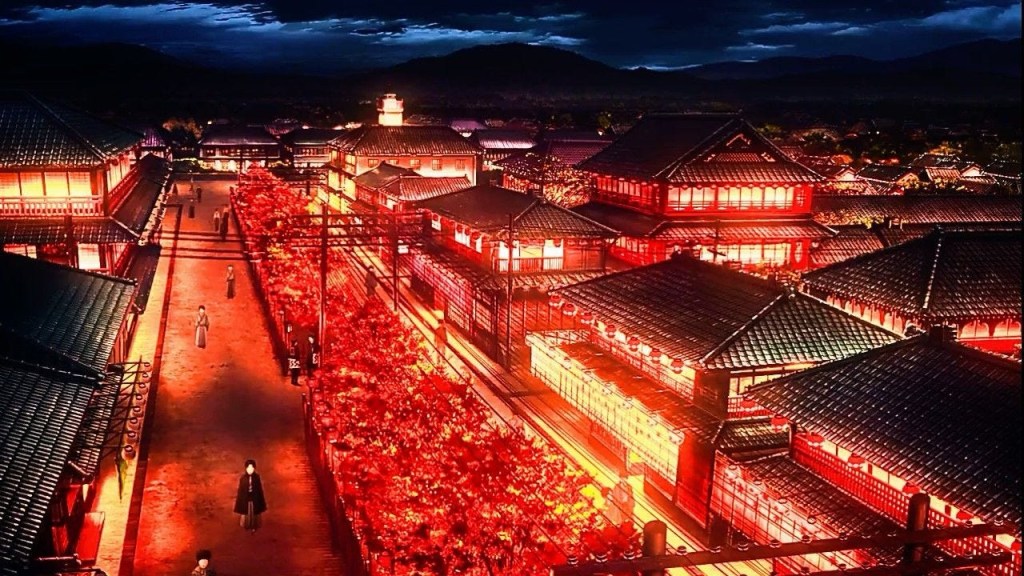
More than anything, Demon Slayer continues to frame its story as a battle between good and evil—not with hopelessness and despair. Even at its darkest, the series consistently reminds viewers that perseverance, compassion, and sacrifice matter. That throughline is one of the reasons this universe continues to resonate with me as a parent.
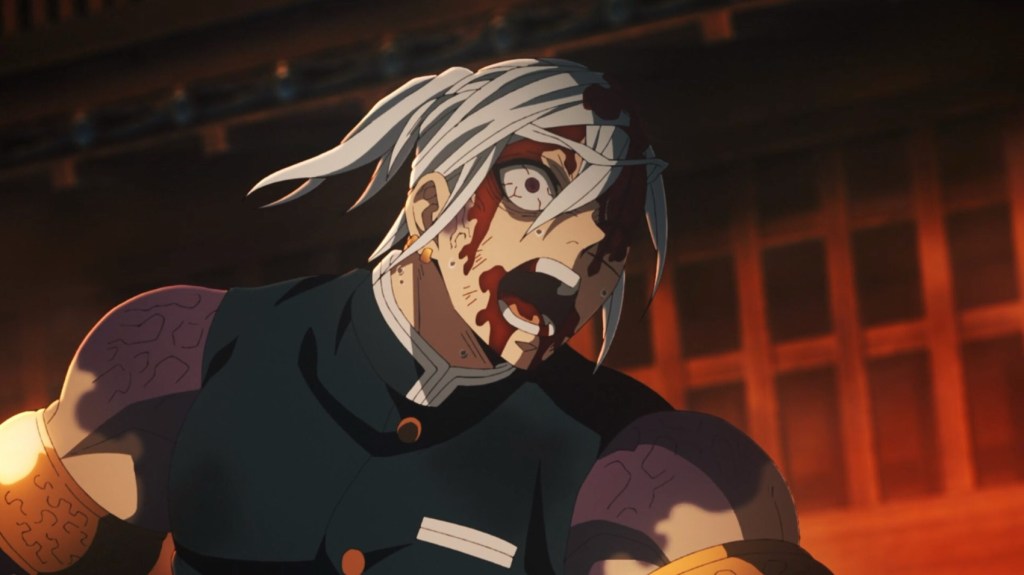
Blood/Gore Level
As with every Demon Slayer arc, defeating demons requires decapitation—so yes, there is frequent bloodshed.
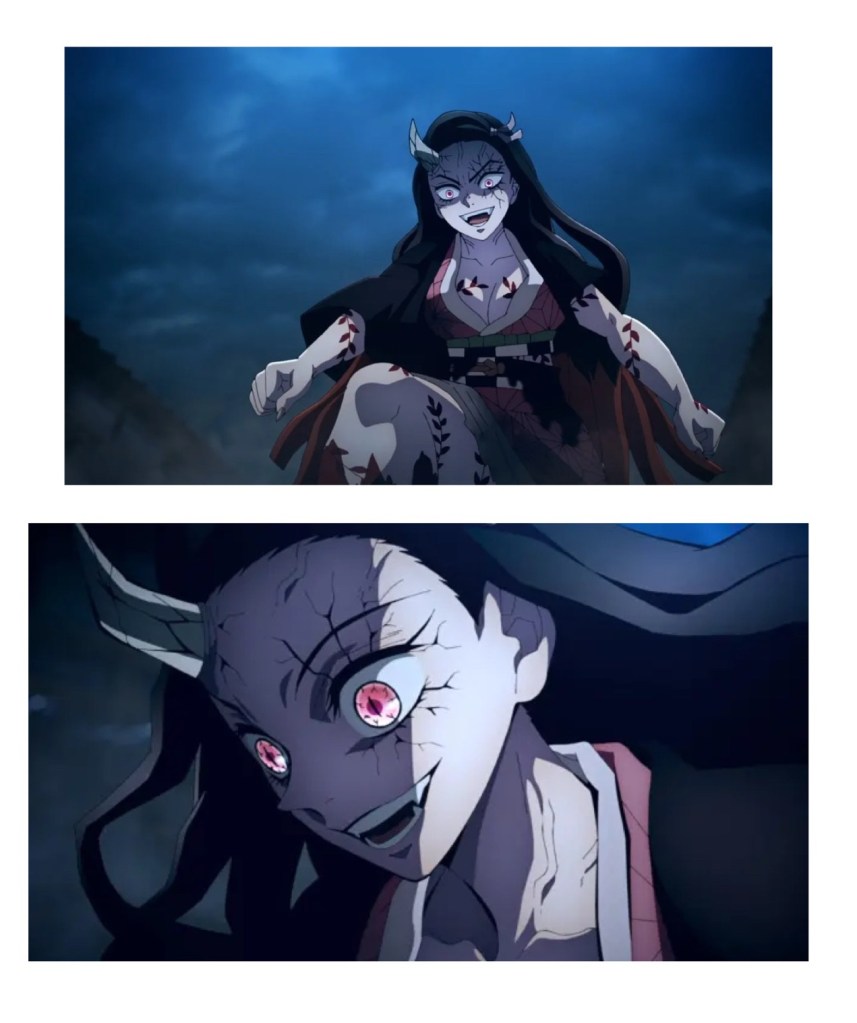
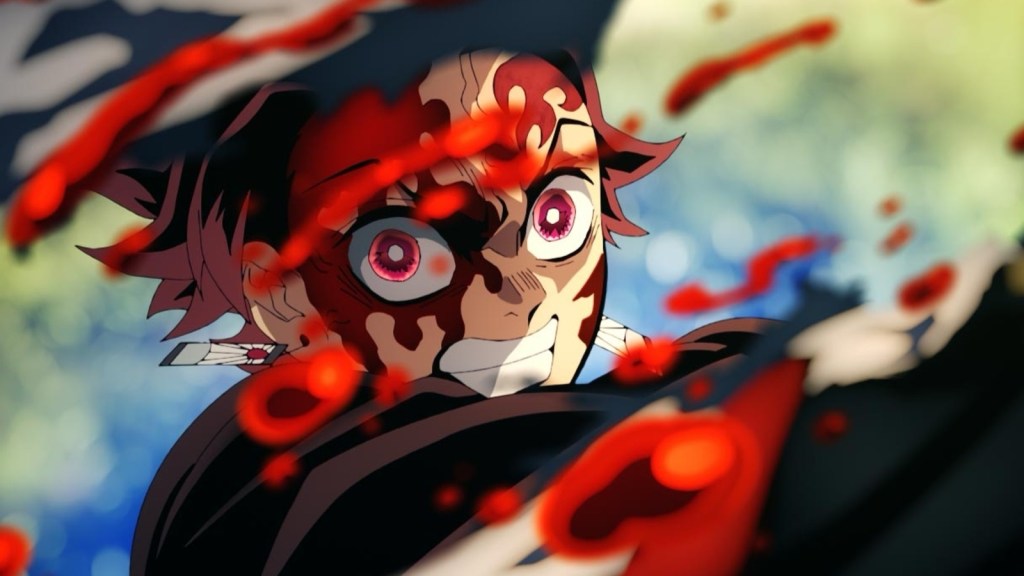
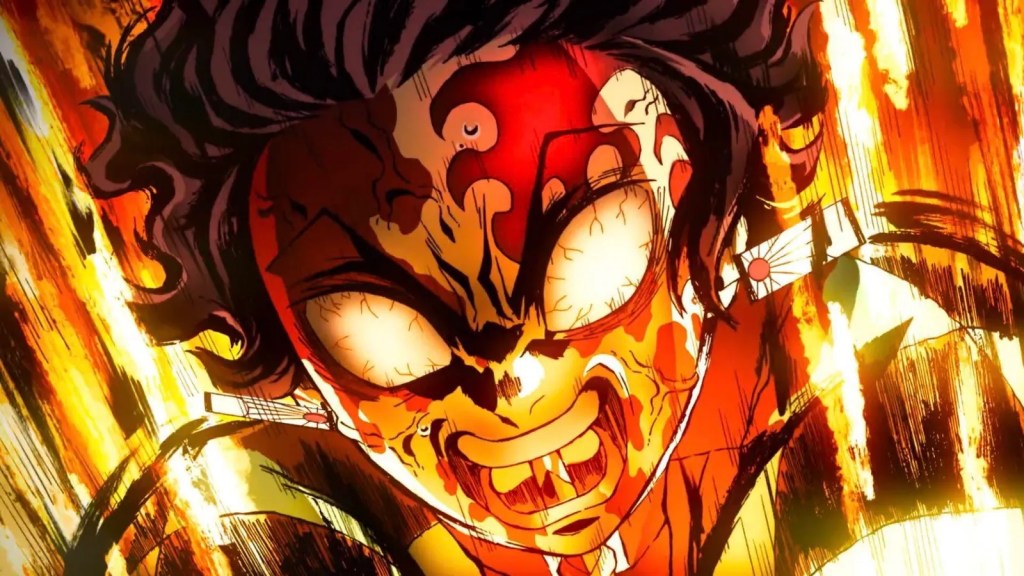
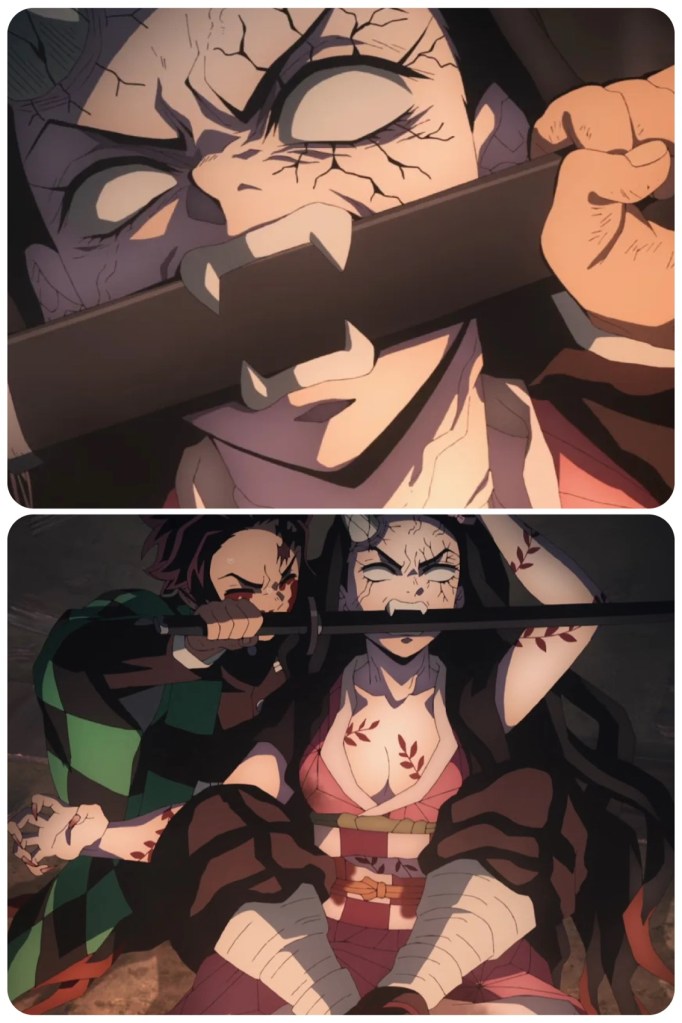
The fights here are intense and visually striking. When Nezuko is forced into battle after Tanjiro collapses, we see a frightening side of her as she teeters dangerously close to losing control and harming humans. This moment is emotionally heavy and may be unsettling for younger viewers.
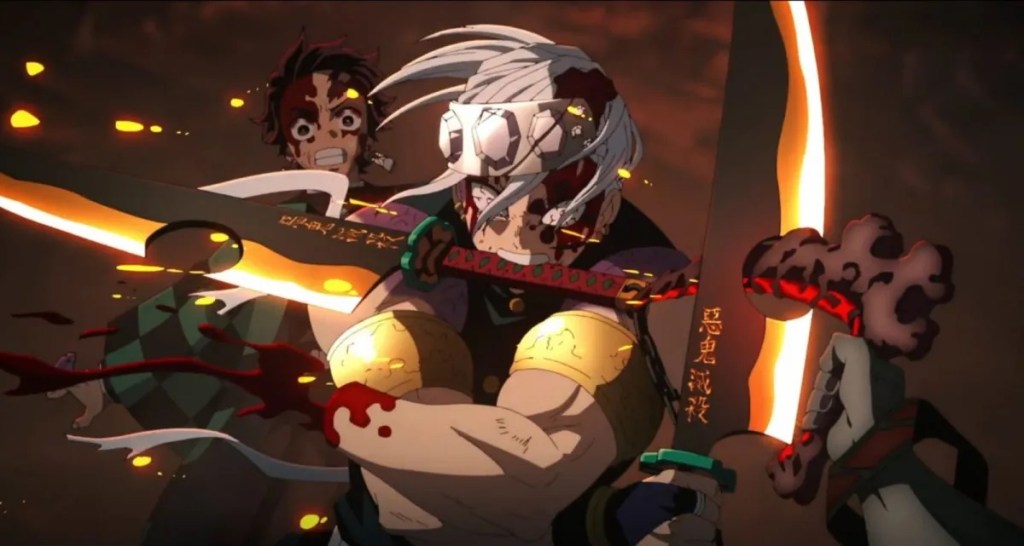
The battles involving Gyutaro escalate even further. There are severed limbs, poison-inflicted wounds, and characters pushed to the brink of death. The animation does not shy away from showing injuries—but it also doesn’t linger on suffering. While extremely bloody, I would still stop short of calling this arc outright gory.
Inappropriate, Heavy, or Mature Themes or Conduct
There are frequent themes that I would say fall into this category. One, of course, would be the overall grotesque appearances of the demons themselves. Many times, anime may try to have demons, monsters, or villains appearing as handsome or beautiful creatures. While this does happen in this anime, demons are usually more repulsive in appearance.
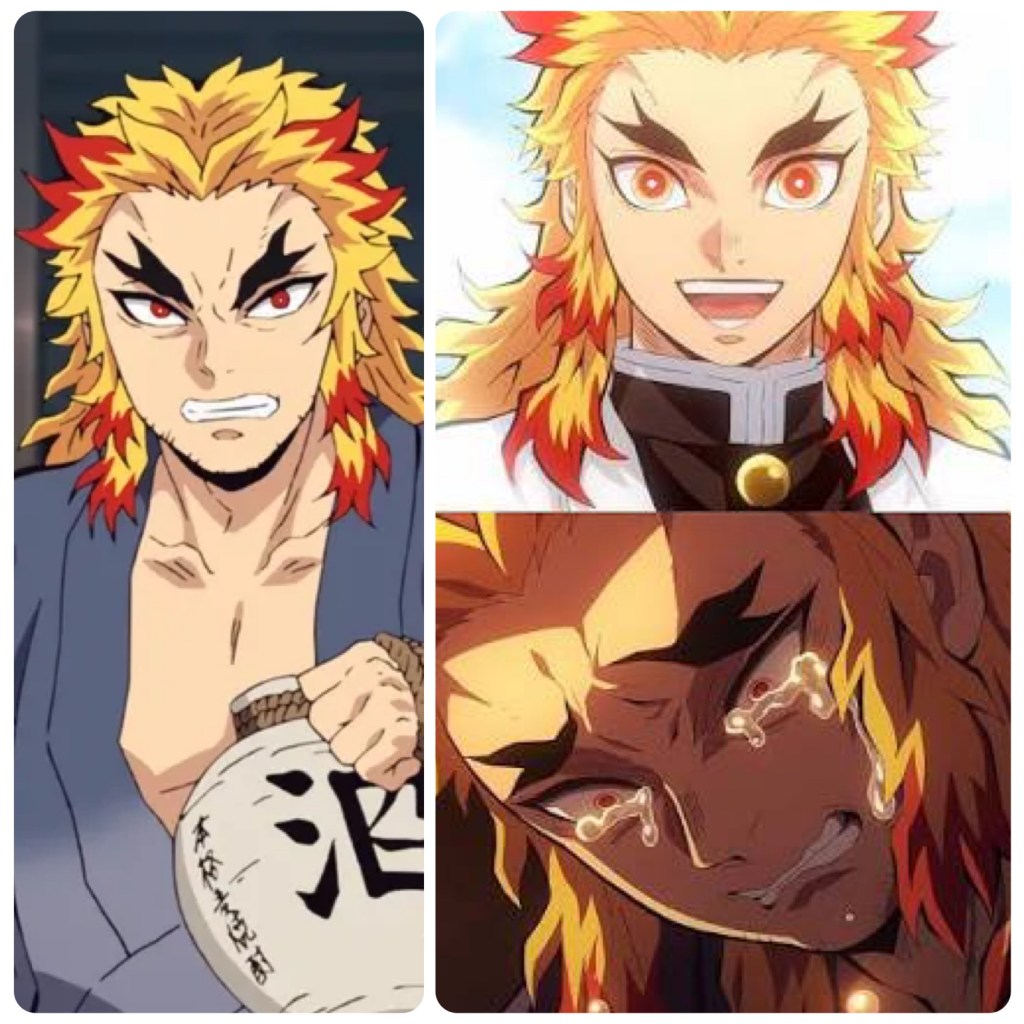
- We learn more about Rengoku’s father and his struggle with alcohol following grief and shame—a continuation of themes introduced in the Mugen Train Arc.
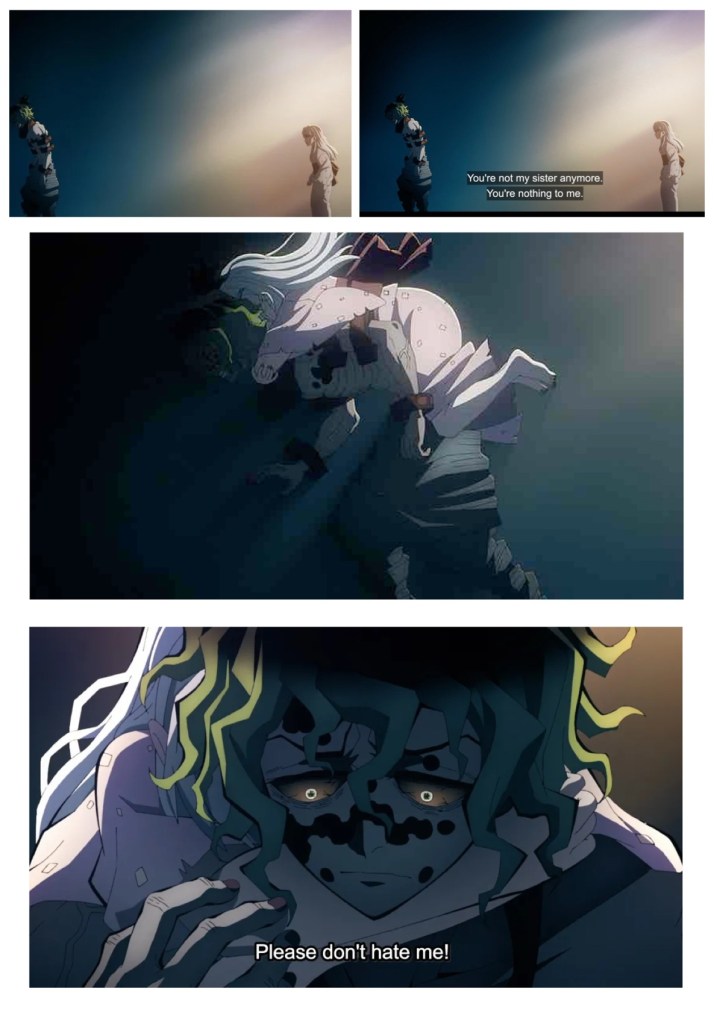
- The final episodes delve into Gyutaro and Daki’s tragic human past:
- Severe child abuse and neglect
- Social rejection and exploitation
- Daki’s death as a human by burning (not shown on screen)
- Their eventual transformation into demons
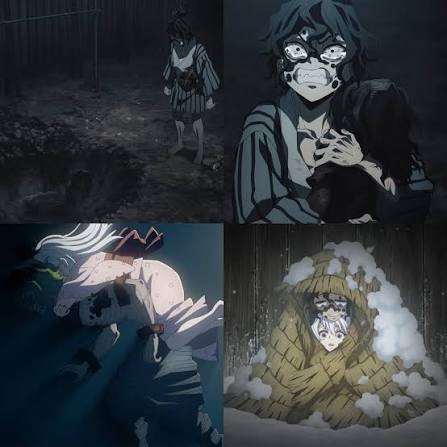
As with Rui in Season 1, the arc ends with a deeply emotional reconciliation between siblings. Daki’s cries for her brother as they pass on together were genuinely heartbreaking and may be emotionally overwhelming for sensitive viewers.
Alternative Lifestyle Themes
This arc contains several elements parents may want to be aware of:
- Tanjiro, Zenitsu, and Inosuke cross-dress to infiltrate the courtesan houses. This is presented strictly as a disguise, not an identity choice, and the characters repeatedly express discomfort with it.
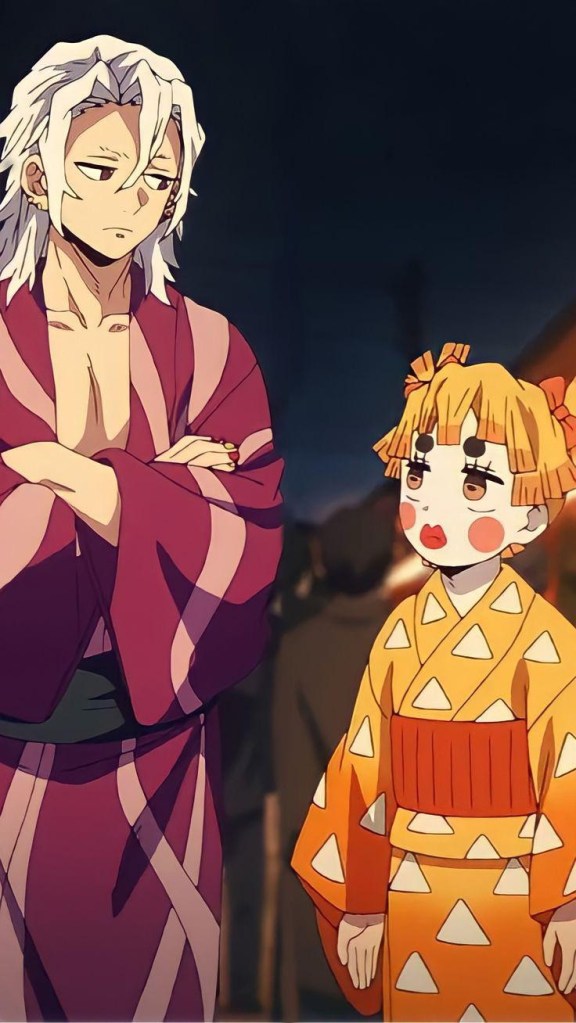
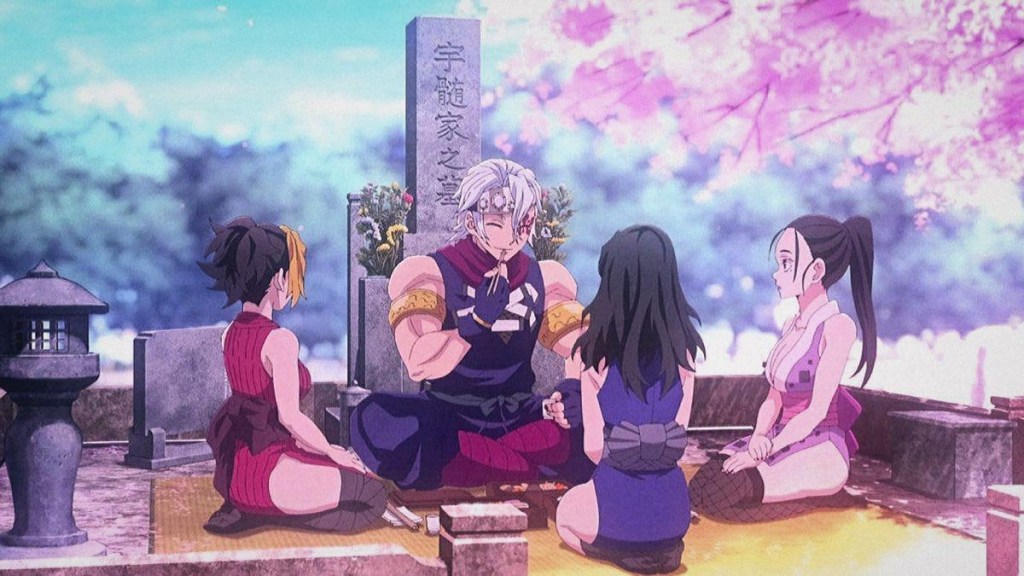
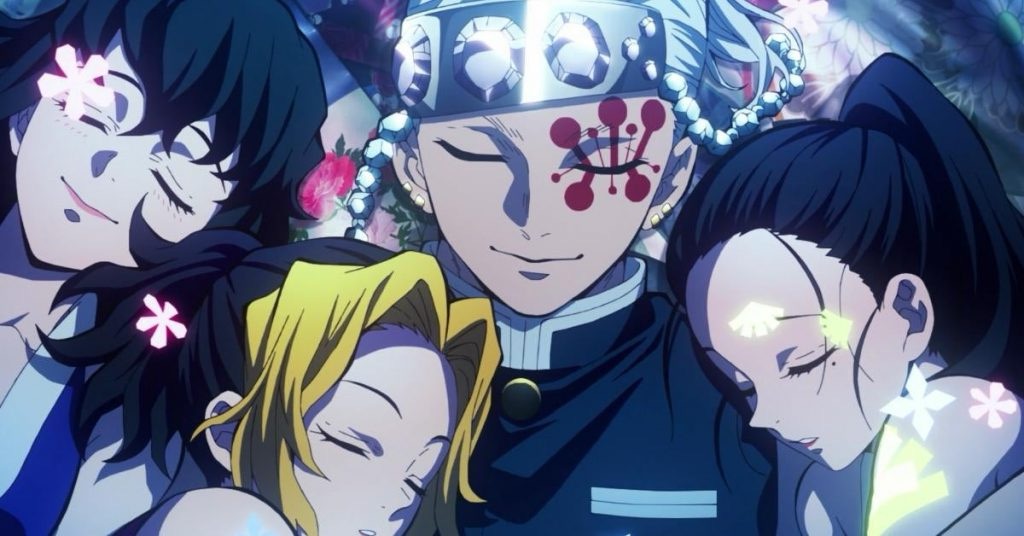
- Tengen Uzui, the Sound Hashira, has three wives. While the anime does not depict explicit intimacy, there are innuendos and brief jokes about their arrangement. There are also several moments of tenderness between the four.
- Daki and Gyutaro exhibit extreme sibling codependency rooted in trauma. While not romanticized, it is intense and emotionally charged.
Level of Magical Elements
As always, magic remains stylized rather than traditional. Demon Slayers use sword techniques visually tied to elemental styles, while demons possess supernatural abilities like regeneration, poison manipulation, and enhanced strength gained through consuming blood.
Level of Romance
Romance is minimal but present. Tengen’s search for the demon in the Entertainment District is motivated entirely by the disappearance of his wives, who were sent undercover before him. Their safety—and his devotion to them—drives much of the plot forward.
Section 4: Special Notes for Parents & Guardians
The Entertainment District Arc may begin with humor and flashy action, but it ultimately settles into a much heavier emotional space.
This arc highlights Nezuko’s struggle with her demonic nature, showing how close she comes to losing control. That moment can be especially unsettling, but it reinforces the series’ ongoing themes of restraint, humanity, and choosing compassion even in darkness.
This arc starts with comedy and ends with a simultaneous feeling of joy for the Demon Slayers who won, and a deep, unsettling sadness for those like Gyutaro and Daki who were dealt a very bad hand in their human lives.
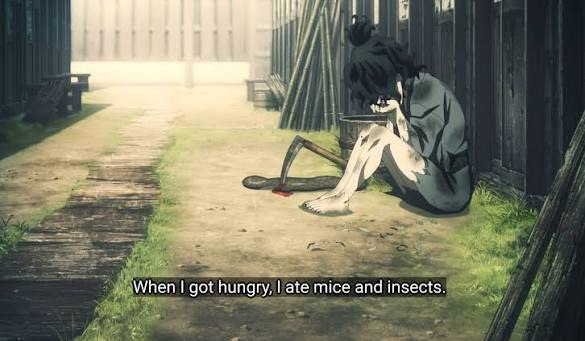
Exploring the tragic human lives of Gyutaro and Daki, this season focuses on childhood abuse, neglect, and the long-term effects of trauma. While their story does not excuse their actions, it does invite empathy—and that emotional complexity may be difficult for younger or more sensitive viewers.
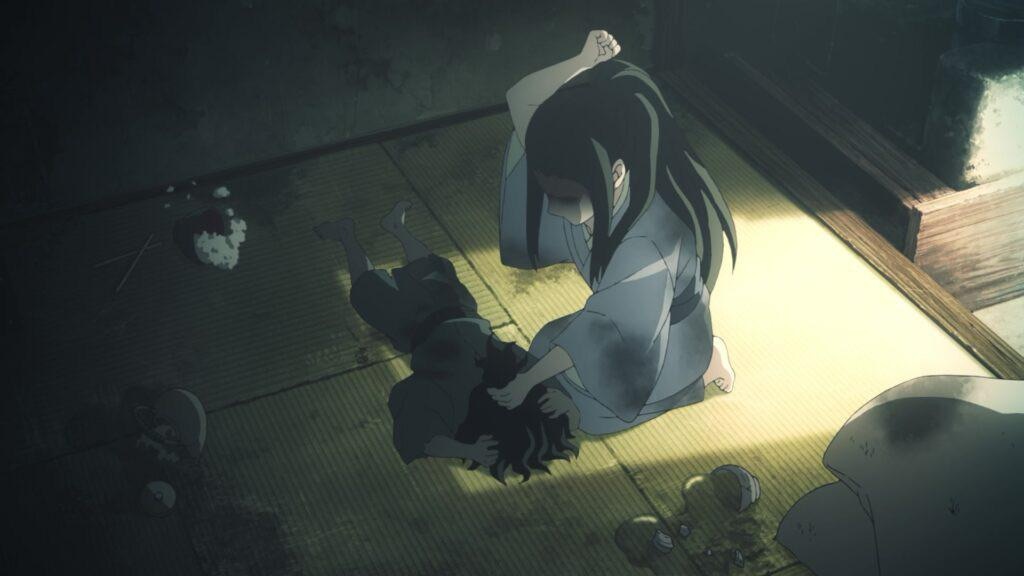
This definitely opens the door for families to discuss the differences between being dealt a bad hand and growing from it, versus allowing themselves to stay stuck in that very same misery.
- In this case, however, Gyutaro and Daki were only children when they were turned into demons. They had not yet had many chances to grow and become all that they could be, which is another notable difference that is worth discussing.
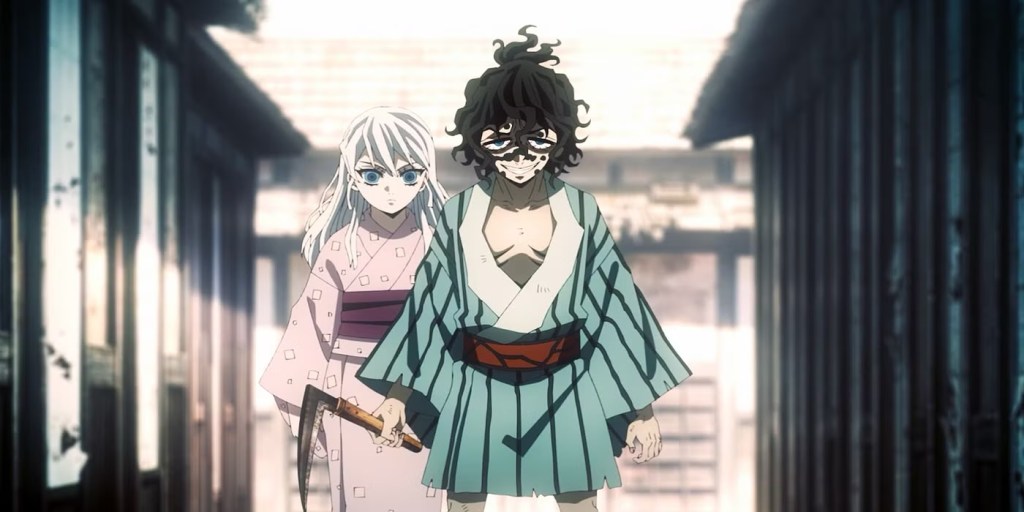
Final Thoughts
This arc is a powerful reminder that Demon Slayer isn’t just about flashy sword fights—it’s about choice.
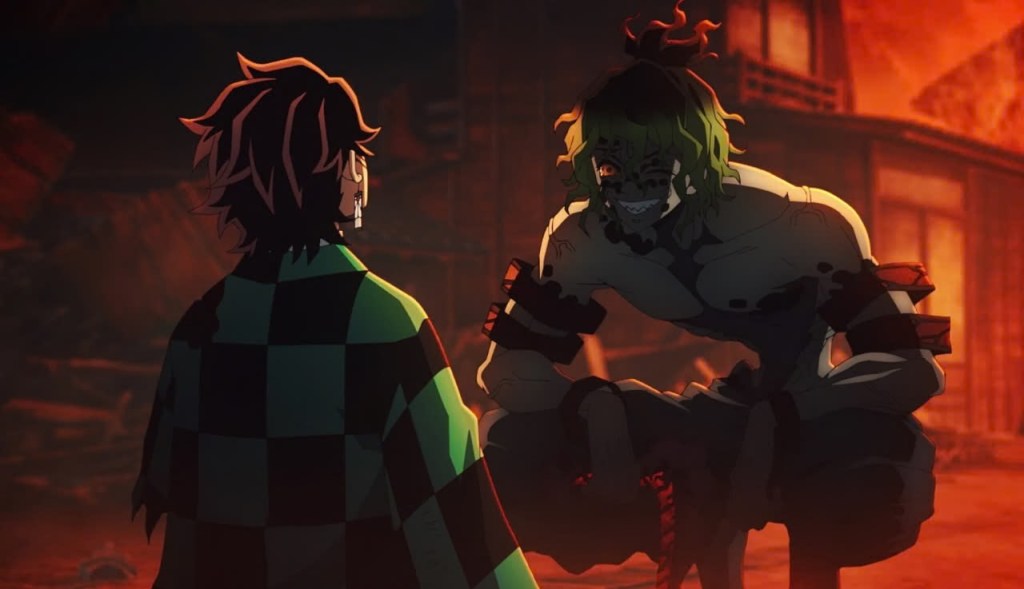
The Entertainment District Arc contrasts characters who grow through pain with those who become consumed by it. Gyutaro and Daki’s story is especially tragic because they were still children when their lives unraveled, leaving them with very few chances to choose differently.
For families watching together, this arc can open meaningful conversations about:
- How hardship shapes people differently
- The importance of guidance and support in childhood
- Why empathy matters—even when actions are unforgivable
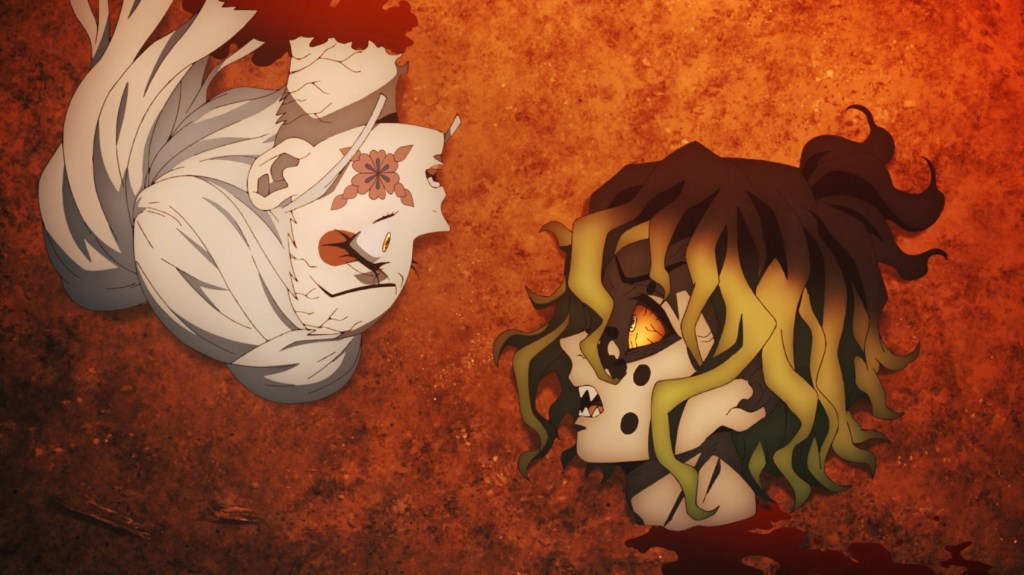
While emotionally heavier than previous arcs, it remains a beautifully crafted chapter in the Demon Slayer story—one best approached with discernment and, when possible, shared discussion.
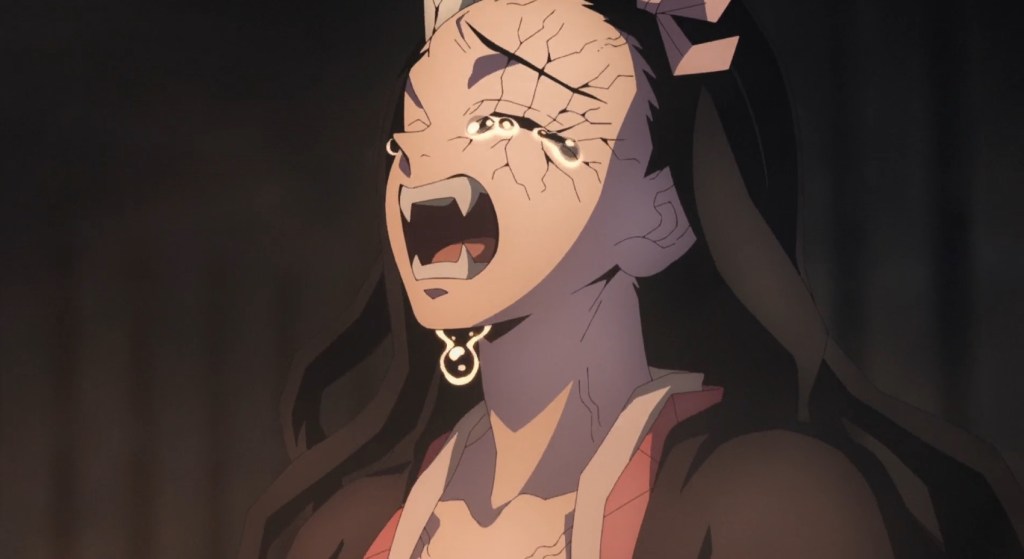
As always, I recommend watching this arc with discernment—and possibly alongside your teens—so you can process its heavier moments together. 💕
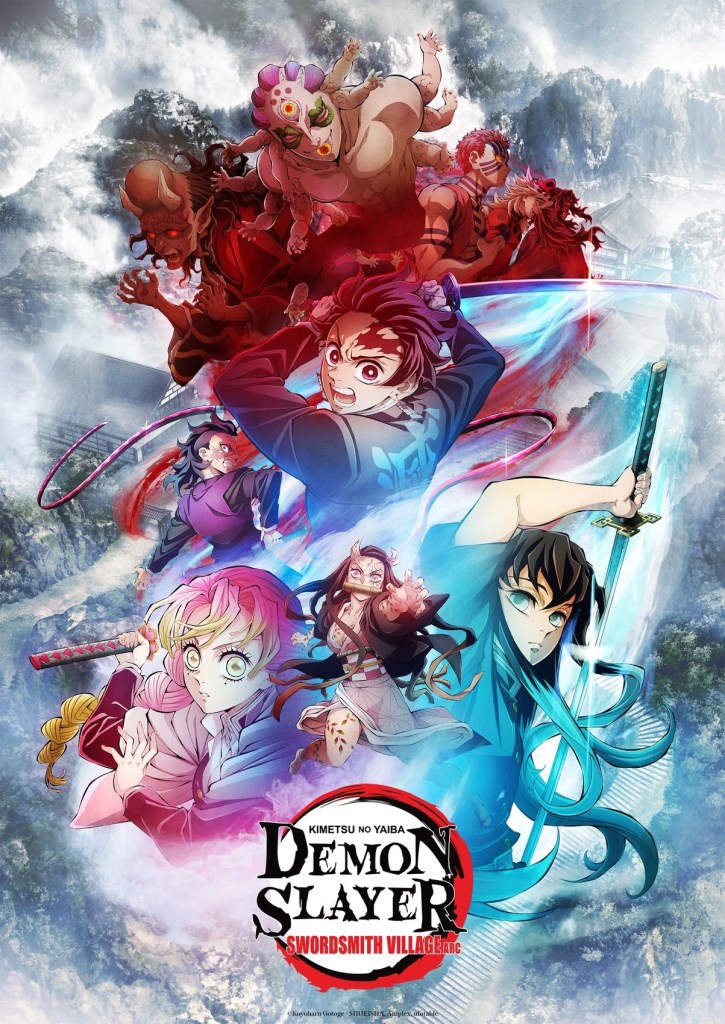
Read Next: Kimetsu no Yaiba / Demon Slayer (Swordsmith Village Arc) – Anime Review
At The Anime Momma Blog, my goal is simple: helping parents understand the anime their kids love so families can watch with wisdom, discernment, and great conversations along the way.
Check us out on social media ✨🩵


Leave a comment