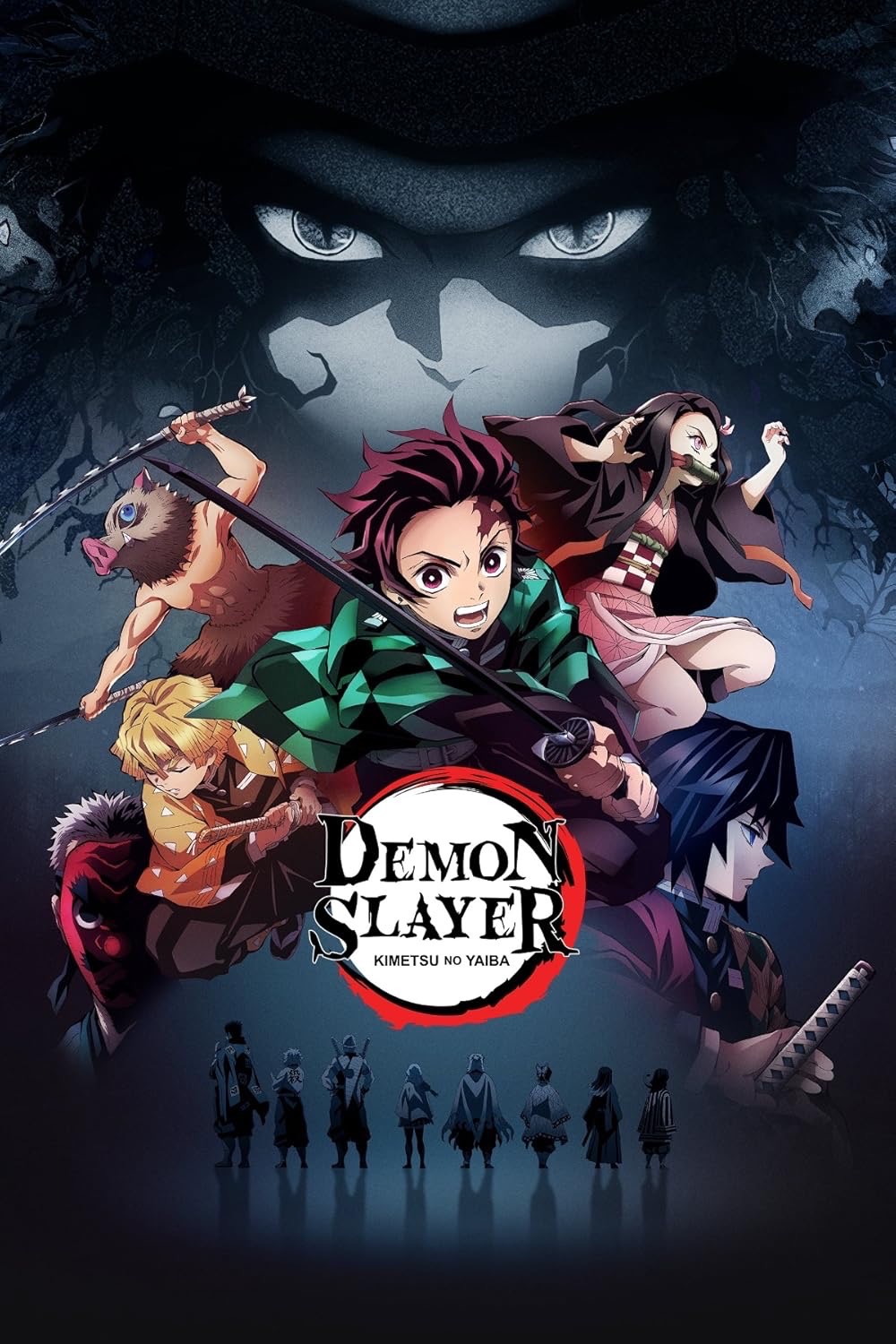
TL;DR: Demon Slayer (S1) is a beautifully animated, emotionally driven action anime with heavy themes of death and violence—best for middle-to-older teens (with parental guidance) or mature viewers who can handle intense content paired with a deeply compassionate story.
Section 1: Kimetsu no Yaiba / Demon Slayer (Season 1; 26 Episodes) — At a Glance
Anime Summary | Taken directly from MyAnimeList
Ever since the death of his father, the burden of supporting the family has fallen upon Tanjirou Kamado’s shoulders. Though living impoverished on a remote mountain, the Kamado family are able to enjoy a relatively peaceful and happy life. One day, Tanjirou decides to go down to the local village to make a little money selling charcoal. On his way back, night falls, forcing Tanjirou to take shelter in the house of a strange man, who warns him of the existence of flesh-eating demons that lurk in the woods at night.
When he finally arrives back home the next day, he is met with a horrifying sight—his whole family has been slaughtered. Worse still, the sole survivor is his sister Nezuko, who has been turned into a bloodthirsty demon. Consumed by rage and hatred, Tanjirou swears to avenge his family and stay by his only remaining sibling. Alongside the mysterious group calling themselves the Demon Slayer Corps, Tanjirou will do whatever it takes to slay the demons and protect the remnants of his beloved sister’s humanity.
Genres & Themes
Action, Historical, Supernatural, Shounen[1], Suicide[2]
MyAnimeList Rating
R-17+ | Violence and Profanity
The Anime Momma Rating
Because Demon Slayer is both extremely popular across a wide age range and firmly in my personal top five anime of all time, I’m giving it a nuanced rating: PG-13+, with extreme parental discretion for ages 13–16. For viewers outside that range—or for younger teens who are sensitive to violence or death—R-17+ is still the safer classification.
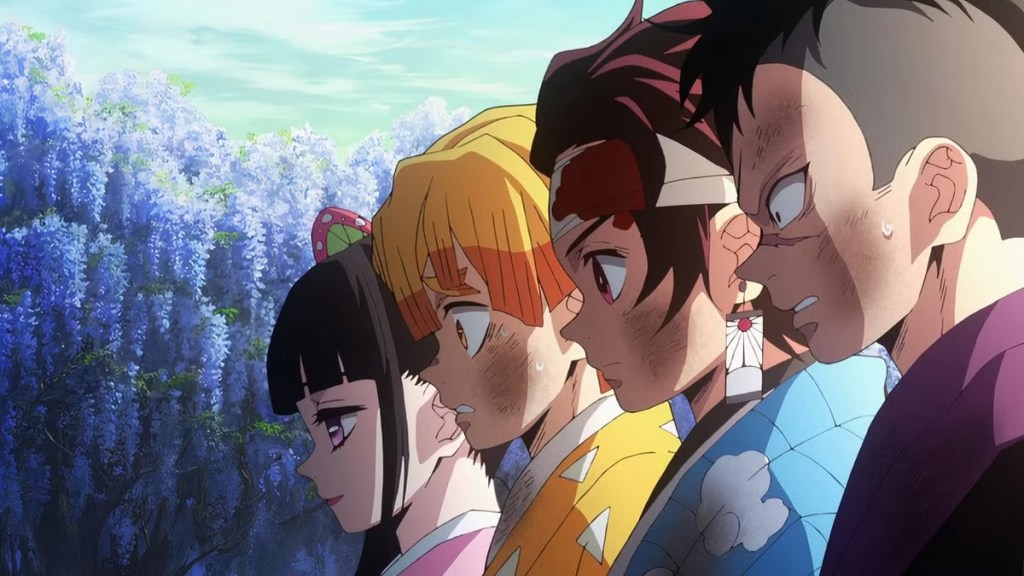
Section 2: Star Levels
Each category below is rated on a five-star scale:
⭐ = very little present | ⭐⭐⭐⭐⭐ = a lot present
- Action Level: ⭐️⭐️⭐️⭐️⭐️ (5/5)
- Addiction Level: ⭐️⭐️⭐️⭐️⭐️ (5/5)
- Blood/Gore Level: ⭐️⭐️⭐️⭐️☆ (4/5)
- Inappropriate, Heavy, or Mature Themes or Conduct: ⭐️⭐️☆☆☆ (2/5)
- Alternative Lifestyle Themes: ⭐️☆☆☆☆ (1/5)
- Level of Magical Elements: ⭐️⭐️⭐️⭐️☆ (4/5)
- Level of Romance: ⭐️⭐️☆☆☆ (2/5)
Section 3: Star Levels — Explained
Action Level
One of the reasons I lean toward a PG-13+ recommendation—rather than fully agreeing with MyAnimeList’s R-17+—is the heart of this story. At the center of Demon Slayer is Tanjiro Kamado, a main character driven not by revenge, but by compassion, responsibility, and love for his sister.
While many action-heavy anime focus on rage and vengeance, Demon Slayer consistently returns to Tanjiro’s desire to protect Nezuko and preserve her humanity. Even in the middle of intense battles, hope and empathy remain front and center.
Addiction Level
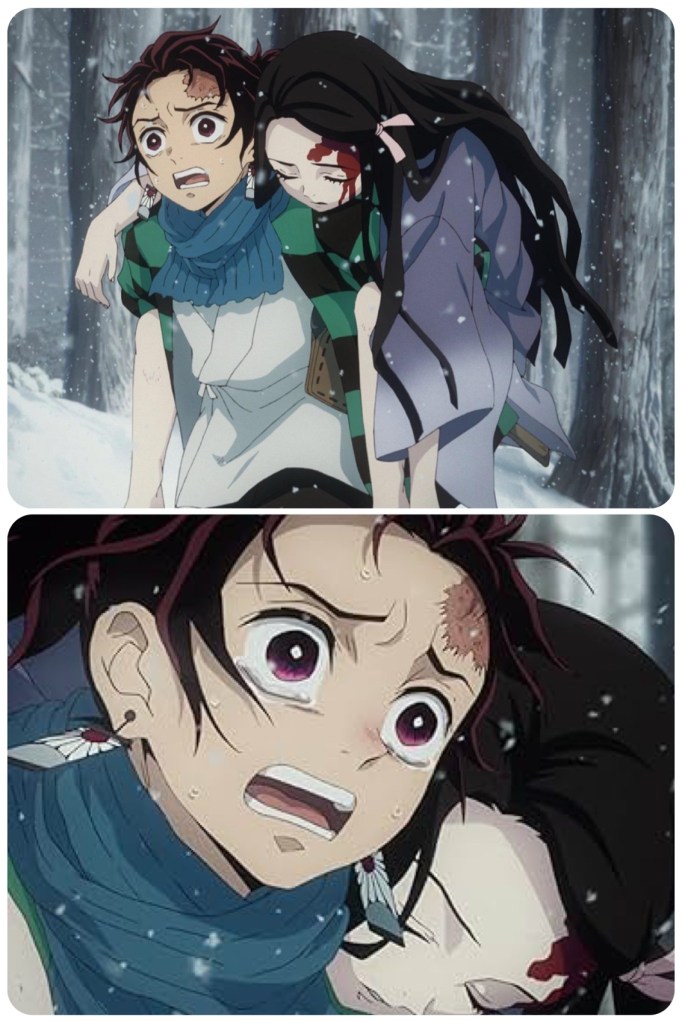
I fell in love with this anime almost immediately. The opening scene—Tanjiro struggling through a brutal snowstorm while carrying his bleeding and dying sister—sets the emotional tone right away. From that moment on, it was incredibly hard to stop watching.
Blood/Gore Level
- There is frequent violence and visible blood in this anime, but I would personally stop short of calling this series “gory.” Demons are defeated primarily through beheading with specialized swords, which can result in violent shots or spurts of blood. However, the violence tends to feel purposeful rather than gratuitous.
- In Episodes 15–21, the series focuses on an extended arc involving a demon “family” that uses spider-like abilities to torment both humans and members of the Demon Slayer Corps. The Spider “Mother” can manipulate others by embedding her webs into their bodies, controlling them much like a puppeteer. One of the children injects victims with poison, gradually transforming them into spiders who act as his minions.
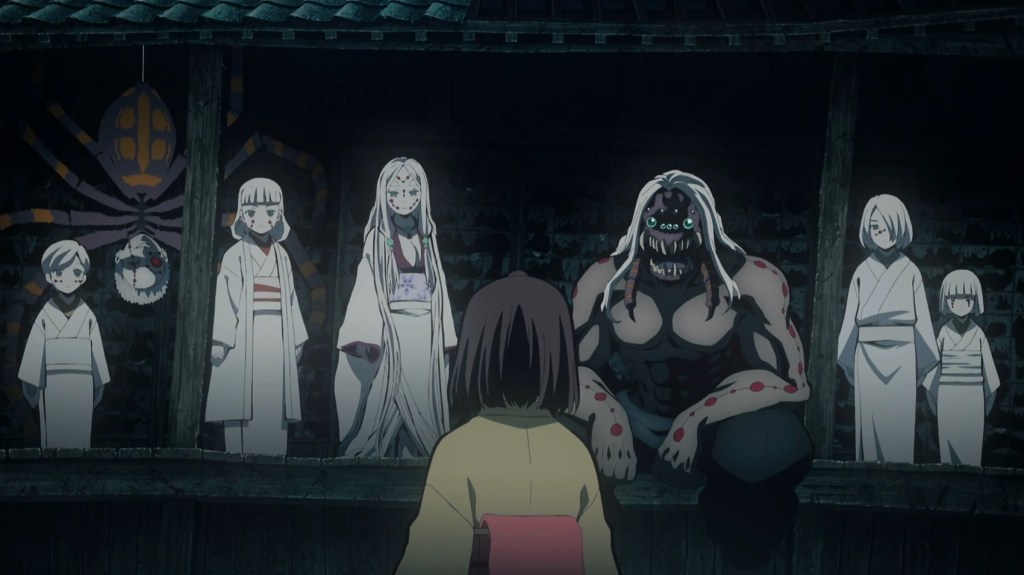
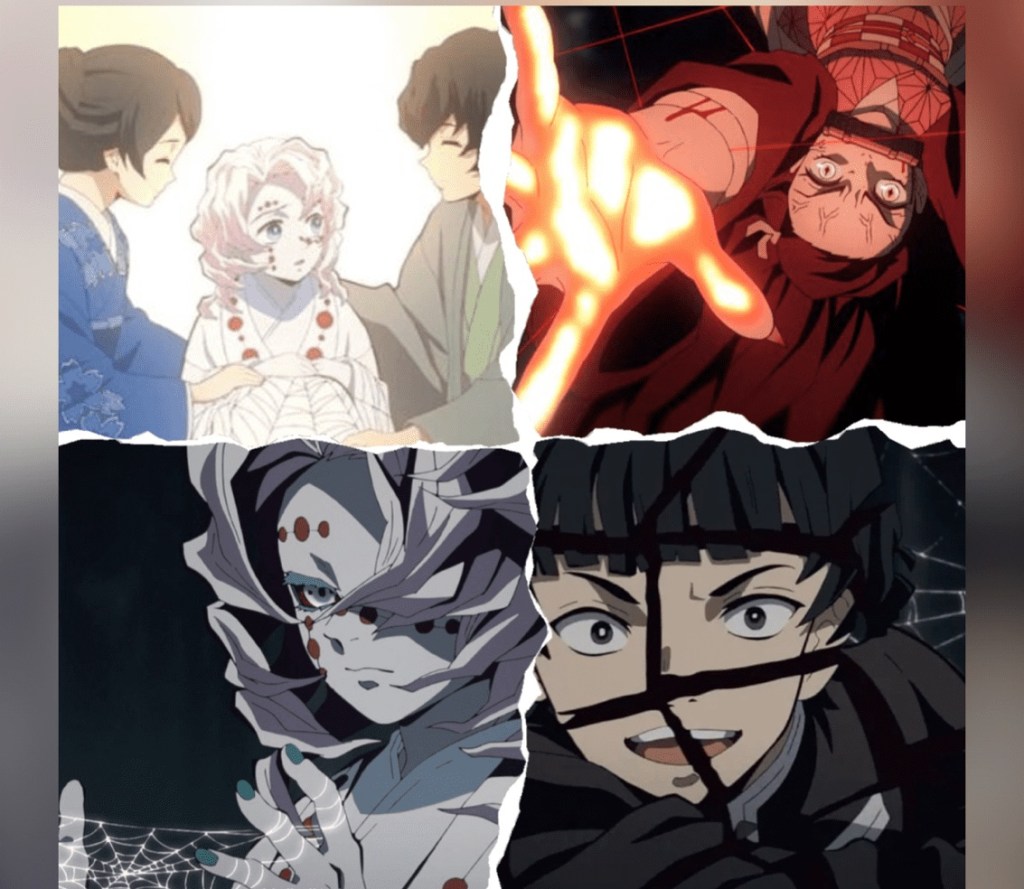
- The family is led by Rui, a demon child who is revealed to be Lower Rank Five of the Twelve Kizuki—powerful demons who serve directly under Muzan, the Demon King. Rui is portrayed as deeply abusive and sadistic, enforcing distorted and harmful ideas of what “family” should look like and punishing those who fail to meet his expectations. His abilities include sharing his blood to create new, powerful demons under his control and slicing through human flesh with razor-sharp threads.
- While this arc is particularly intense and may be disturbing for some viewers, it does conclude on a somber but meaningful note. As Rui is defeated, he recalls his life as a human and shares a final moment with his true family, expressing remorse and seeking forgiveness as they hold him in his final moments.
Inappropriate, Heavy, or Mature Themes or Conduct
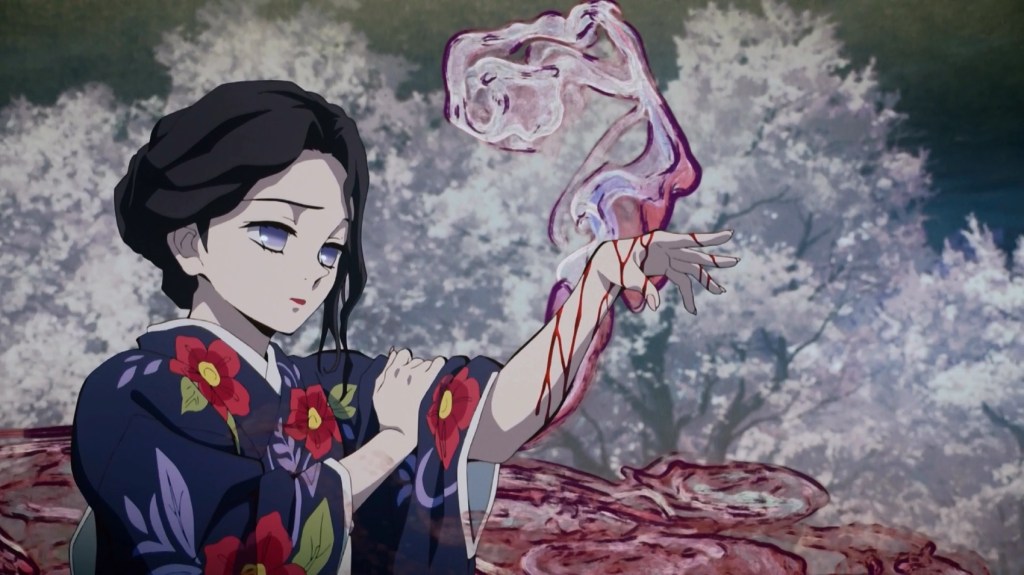
Sexualized imagery is extremely minimal and largely background-level. There are a few times we see Nezuko’s large cleavage, but this is not focused on and the anime will usually quickly move on.
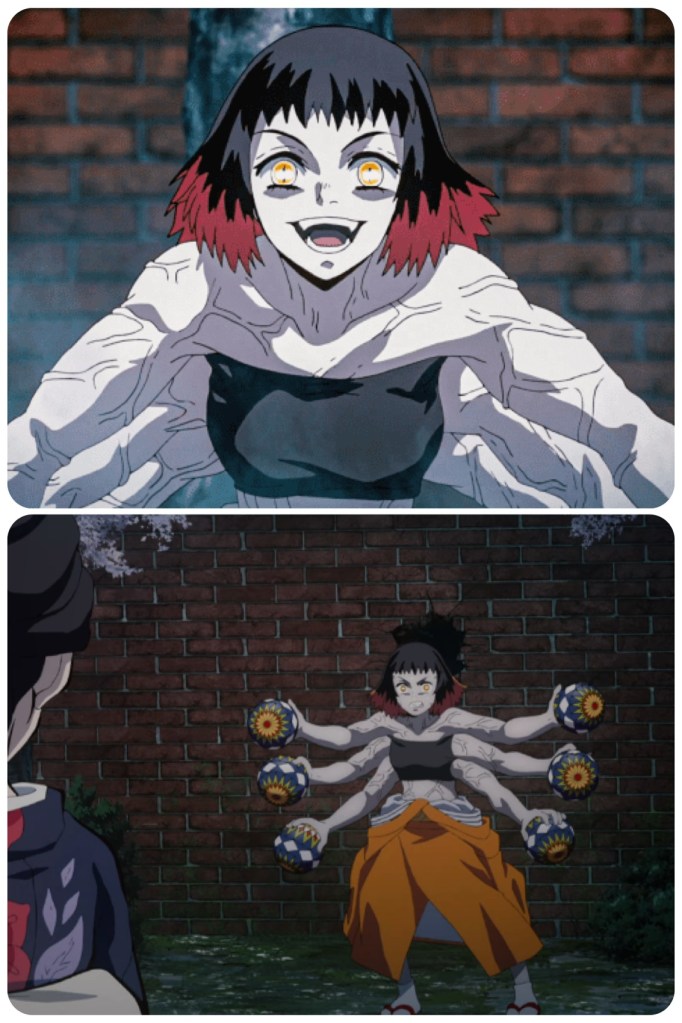
- In Episode 10 (possibly Episode 9), viewers are introduced to the demon Susamaru during her battle with Nezuko. Susamaru is depicted fighting in a bra, which draws attention due to her minimal clothing rather than the fight itself. While no explicit nudity is shown, her eventual death is portrayed in a very intense and brutal manner, which may be unsettling for some viewers.
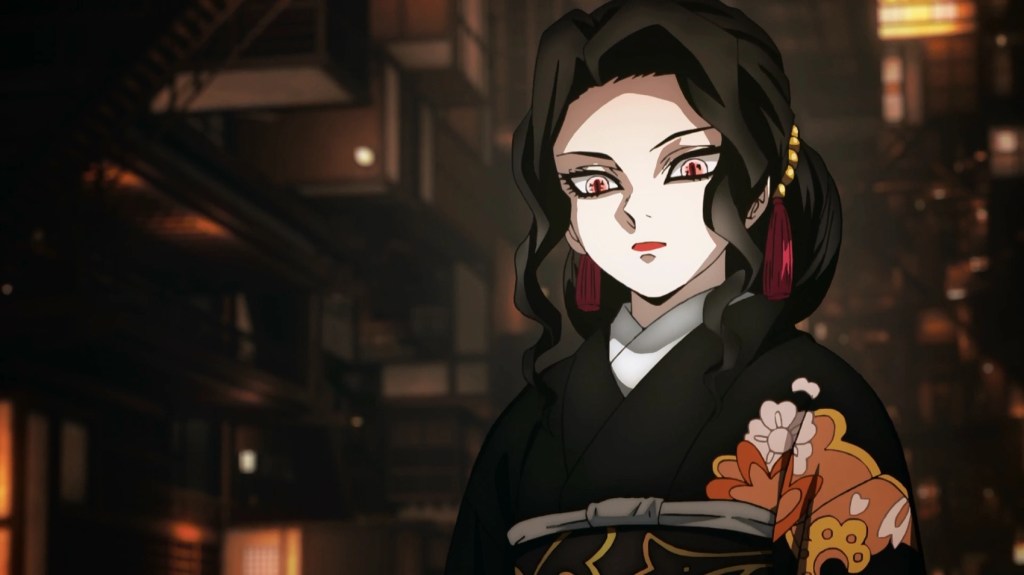
- In the final episode of Season 1 (episode 26), Muzan disguises himself as a woman while hiding among humans. This portrayal is brief and is used strictly as a narrative device for anonymity and survival. While it can be seen as a bit comical and it is not played for sexualization, parents and guardians may still want to be aware of the scene in advance.
Alternative Lifestyle Themes
Alternative Lifestyle themes are extremely minimal and largely background-level.
Level of Magical Elements
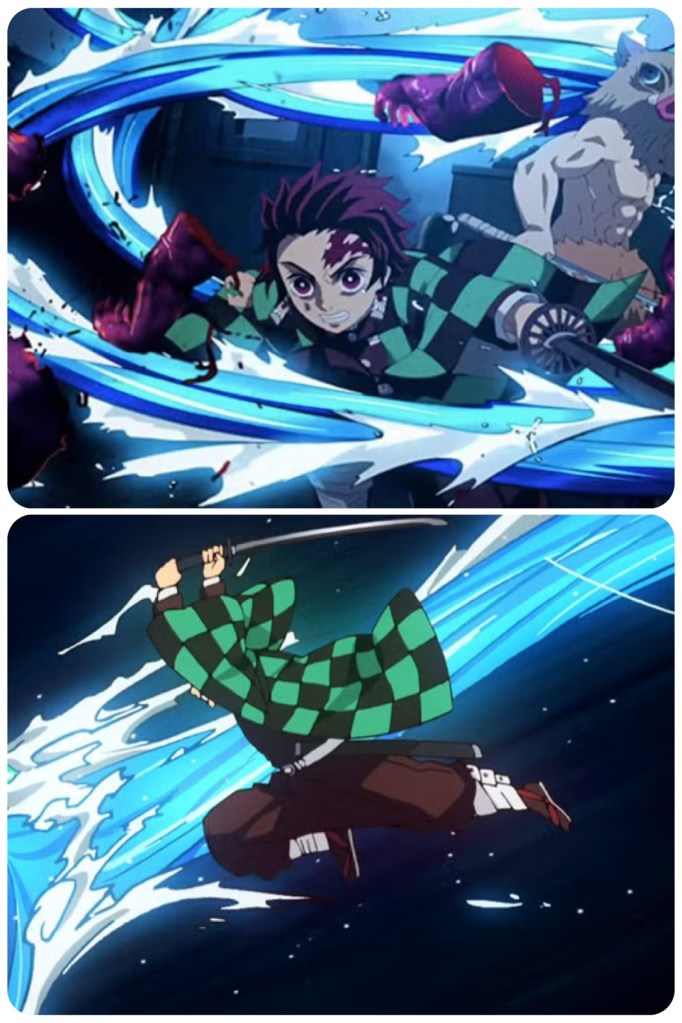
While this series does not use “magic” in a traditional sense, supernatural elements are central to the story. Demon Slayers wield swords that allow them to channel elemental techniques (water, fire, lightning, stone, etc.), while demons possess enhanced strength, regeneration, and abilities gained through consuming blood.
Level of Romance
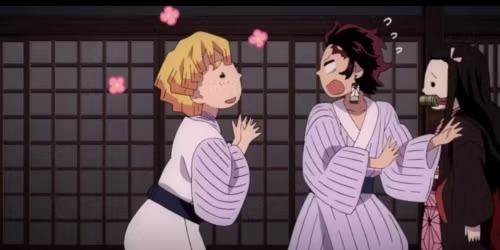
Romantic elements are rather limited. Most notably, Zenitsu frequently (and loudly) professes his love for Nezuko, often played for comedic effect rather than genuine romance.
Section 4: Special Notes for Parents & Guardians
- Demon Slayer is a Shounen anime, meaning its primary demographic is boys ages 12–18. As noted above, extreme parental discretion is advised for ages 13–16. Unless otherwise noted, this remains the same throughout the series. [1]
- Parents may notice Crunchyroll’s content advisory mentioning “suicide.” No character actually commits suicide in this arc. Instead, characters repeatedly place themselves in life-threatening situations to protect others, even when gravely injured. The theme is sacrifice and selflessness—not self-harm—but it may still prompt important conversations with older children or teens. Unless otherwise noted, this remains the same throughout the series.[2]
- Profanity is frequent in anime, and that includes in Demon Slayer.
- As discussed in my previous post, What Do I Need to Know About Anime?, many anime—especially older and fantasy-based series—use the word “demons” to describe the villainous monsters of their series. This is not a reference to religious entities or religious demons in a Christian sense. The series does not explore gods, hell, or spiritual theology; instead, demons function as monstrous beings with supernatural traits.
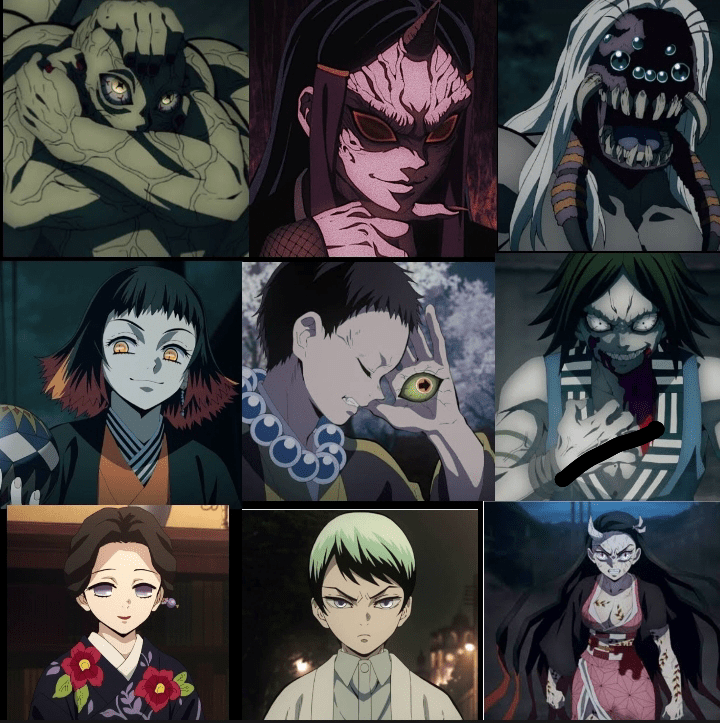
- The show depicts significant death, grief, and loss. Children or teens who are sensitive to these themes—or who have experienced personal loss—may benefit from watching alongside a parent and discussing these topics together.
- Tanjiro frequently shows compassion toward demons, recognizing that many come from abusive, neglectful, or tragic pasts. This nuance may be uncomfortable for viewers who prefer a strict hero-versus-villain divide, but it also opens the door to meaningful conversations about empathy, justice, and moral complexity.
Final Thoughts
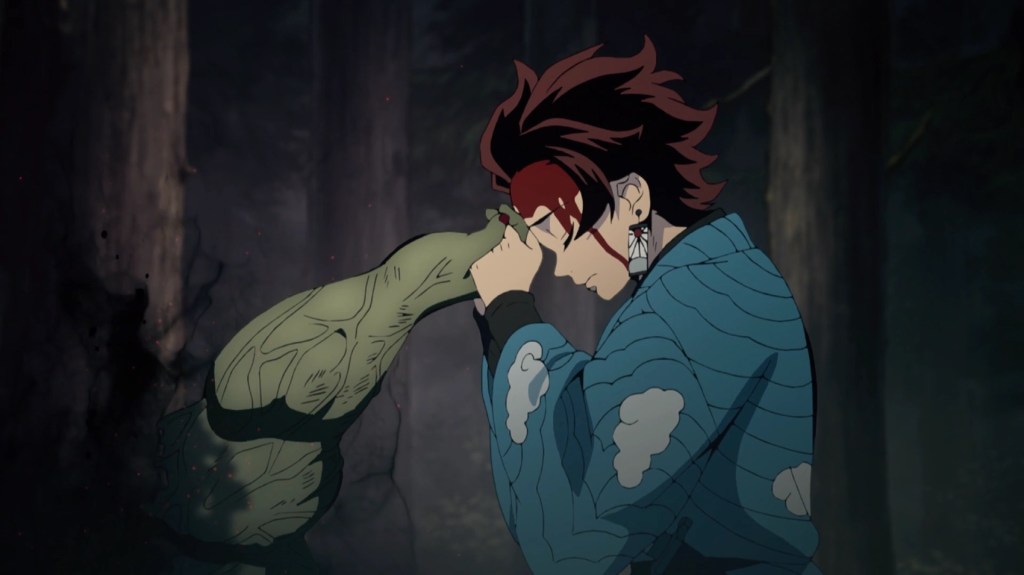
Demon Slayer is a beautifully animated, emotionally driven anime that balances intense action with an unusually tender heart. While it contains violence, death, and darker themes that are not suitable for younger viewers, the story consistently centers on compassion, perseverance, and the power of family. Tanjiro’s unwavering love for his sister and his refusal to lose neither his own morals nor Nezuko’s humanity—even when facing terrifying and deadly monsters—sets this series apart from many others in the same genre.
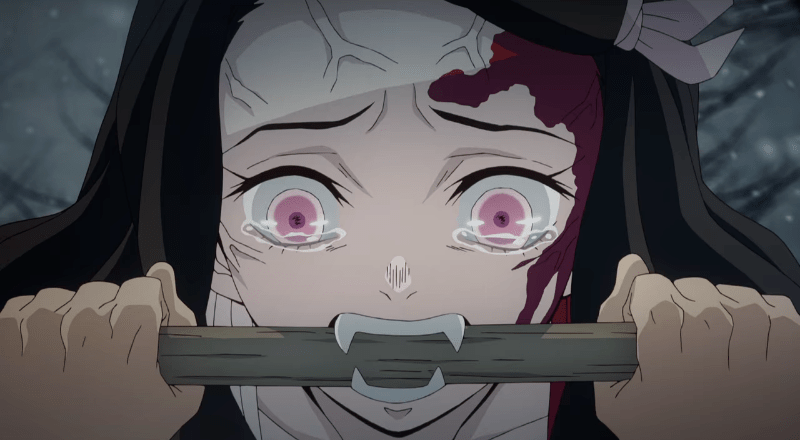
That said, this is not a “watch-and-walk-away” anime. The emotional weight, frequent battles, and themes of loss make it best suited for older teens with thoughtful parental guidance and ongoing conversations. For families willing to engage alongside their viewers, Demon Slayer can open the door to meaningful discussions about grief, empathy, moral choices, and what it means to fight evil without becoming hardened by it.
In short: stunning, impactful, and deeply moving—but one that deserves intentional viewing rather than casual consumption.
Read Next: Kimetsu no Yaiba/Demon Slayer (Mugen Train Arc) – Anime Review
Thank you for reading, and I look forward to seeing you in our future reviews. 🩵
At The Anime Momma Blog, my goal is simple: helping parents understand the anime their kids love so families can watch with wisdom, discernment, and great conversations along the way.
Check us out on social media ✨


Leave a reply to Demon Slayer vs. Jujutsu Kaisen: A Parent-Guided Comparison – The Anime Momma Blog Cancel reply