Part 1 of the Loving Anime Without Losing Yourself series
Hi friends 👋 it’s the Anime Momma. Today, I want to talk about something a little more personal—and something I think many of us can quietly relate to.
TL;DR
Anime can be a powerful source of comfort, creativity, and connection—especially for neurodivergent viewers. However, without healthy boundaries, deep enjoyment can slowly shift into obsession. This post explores how that shift can happen, what warning signs parents can look for, and how to support children with empathy, balance, and open conversation rather than fear or shame.
As anime continues to grow in popularity, more and more people are finding joy, comfort, and connection through it. This includes a wide range of viewers, from neurotypical individuals to those who are neurodivergent. For many, anime is not just entertainment—it’s a place of familiarity, emotional regulation, and belonging.
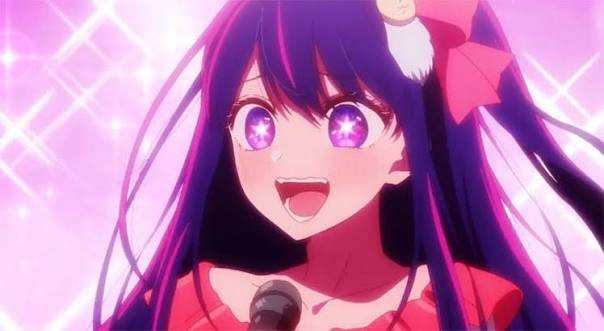
Research supports this experience. One article (here) from the National Library of Medicine notes that anime has become especially meaningful for many neurodivergent individuals, who often engage with it as a way to regulate emotions and sensory input. The visually rich storytelling, strong character focus, and structured (yet exaggerated) social interactions can make anime feel both comforting and accessible. For some, anime becomes more than an art form—it becomes a tool for connection, empowerment, and self-expression.
In short, neurodivergent individuals often connect with anime more deeply than the average viewer—and that depth of connection is not a bad thing.
That’s exactly why I believe this conversation matters.
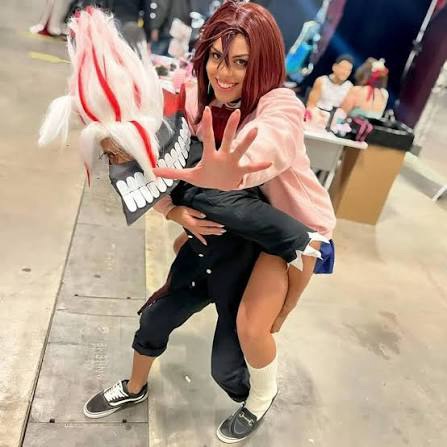
We need to talk about fandoms—especially the big, loud, wildly popular ones—and how easy it can be to move from enjoying something… to loving it… and eventually to being completely consumed by it.
Oxford defines a fandom as either:
- the state or condition of being a fan of someone or something, or
- fans of a particular person, team, or fictional series regarded collectively as a community or subculture.
Those definitions are accurate, but in anime spaces, fandom often goes a step further. Being “in the fandom” frequently means living and breathing the series—thinking about it constantly, engaging with it daily, and allowing it to take up a significant amount of emotional and mental space.
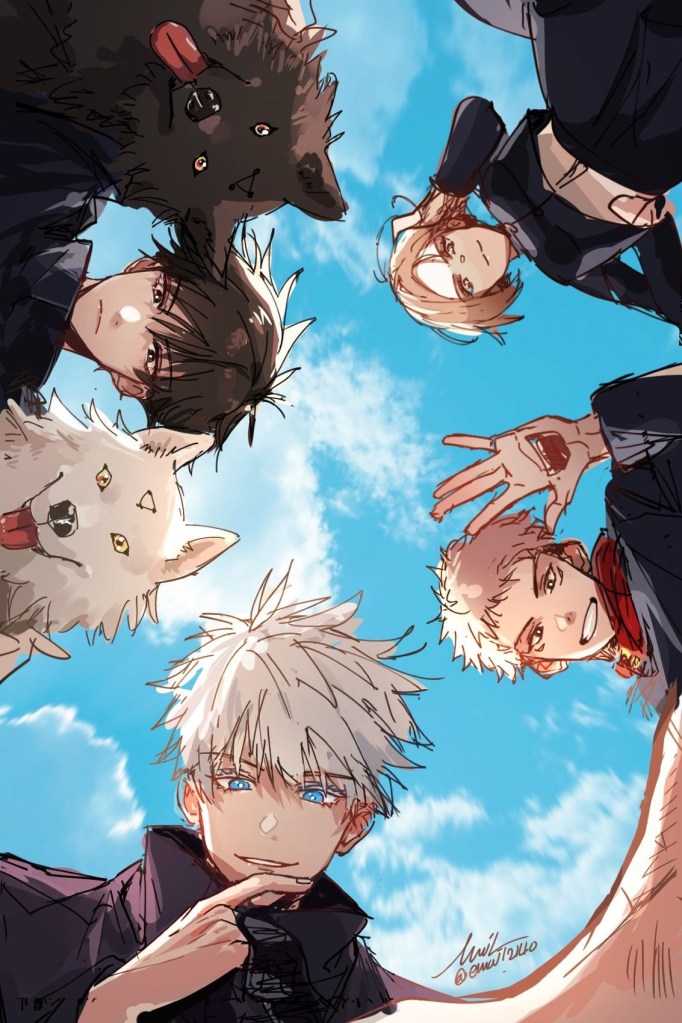
Series like My Hero Academia, Attack on Titan, and Jujutsu Kaisen are just a few examples of anime with massive, passionate fanbases. These shows are deeply loved for good reason, and the sense of community they foster can be powerful.
For over a decade, I was deeply involved in fandoms like these—and for a long time, that involvement was genuinely positive. I found community. I made friends who loved the same stories and characters that I did. I was encouraged to create, to imagine, to write, and to dream bigger than I ever had before.
As someone who didn’t always feel seen or supported growing up, that encouragement meant the world to me. Being told that my ideas mattered—that my creativity had value—felt like striking gold. My love for reading, writing, and daydreaming didn’t just survive; it flourished.
And in many ways, that growth was beautiful. My writing improved. My confidence grew. I learned just how powerful storytelling can be.
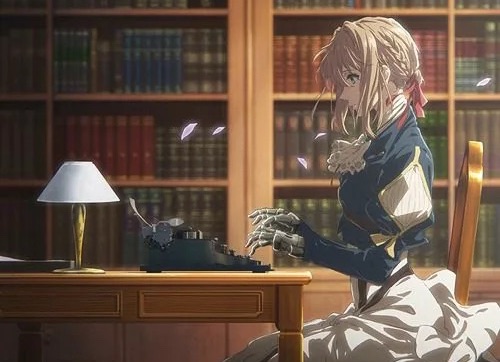
But growth without boundaries can slowly turn into something else.
Over time, those fandoms—and the characters within them—began to take up more and more space. They were what I thought about when I woke up, what I talked about throughout the day, and what I wrote about at night. Everything began to orbit around fictional worlds and imagined storylines.
At first, that might sound harmless—even ideal. And it could have been, if those creative outlets had stayed light, wholesome, and grounded. But they didn’t always. Some of that exploration drifted into places that were no longer healthy—things that weren’t good to consume, and certainly not good to dwell on or produce.
It was then that I began to understand how thin the line can be between passion and obsession.
That realization was not easy to face. My joy in these fandoms had become tangled with unhealthy patterns, even though I believed—deep down—that I was a good, kind person trying to do the right thing. My morals, shaped by both upbringing and faith, felt constantly at odds with the direction my obsessions were pulling me.
I was stuck in a tug-of-war: wanting to step away, yet repeatedly drawn back in by the passion, creativity, and sense of belonging those fandom spaces offered.
It wasn’t until later in adulthood—after being diagnosed with ADHD at 26 and OCD at 28—that things began to make more sense.
For many neurodivergent individuals, intense interests come naturally. Autism can bring deep, joyful “special interests.” ADHD can lead to powerful periods of hyper-focus while functioning in their interests. OCD can introduce intrusive, distressing obsessions that feel impossible to shut off. These are not moral failures—they are differences in how the brain processes information.
When supported and guided, these traits can be incredible strengths: creativity, persistence, imagination, and deep empathy. But without boundaries, they can also become overwhelming or all-consuming.
And that’s where support—especially from parents and trusted adults—matters most.
Why? Because the shift from interest into something deeper rarely happens all at once. Many kids don’t fall into obsession overnight—it’s often unsupervised intensity that slowly takes over.
How Do We Recognize the Warning Signs?
Not every deep interest is a problem. In fact, many are healthy, joyful, and life-giving. The concern arises when an interest begins to crowd out other important parts of life. Some gentle signs to watch for include:
- The anime or fandom becoming the only topic of conversation
- Difficulty engaging in other hobbies, friendships, or responsibilities
- Strong emotional distress when unable to watch, read, or engage with fandom content
- Sleep disruption, anxiety, or irritability tied directly to the series or characters
- Creative work or online engagement drifting into age-inappropriate or unhealthy territory
- A noticeable withdrawal from family, faith, or real-world relationships
These signs don’t mean something is “wrong” with your child—or with you. They simply signal that some additional guidance, balance, or support may be needed.
Additional Warning Signs to Watch For
In addition to the signs mentioned above, some emotional and behavioral changes may signal that an interest is becoming overwhelming rather than enriching:
- Increased irritability, short temper, or emotional outbursts when interrupted or redirected
- Becoming unusually defensive (this can happen when questioned about their like or dislike of said anime or characters)
- Difficulty regulating emotions (this can happen after watching intense episodes or engaging online)
- Snapping at siblings, parents, or friends over unrelated issues
- Withdrawal from previously enjoyed activities that are not anime-related
- Using anime or fandom spaces exclusively as a way to escape stress or conflict
- Strong emotional attachment to characters that replaces real-world relationships
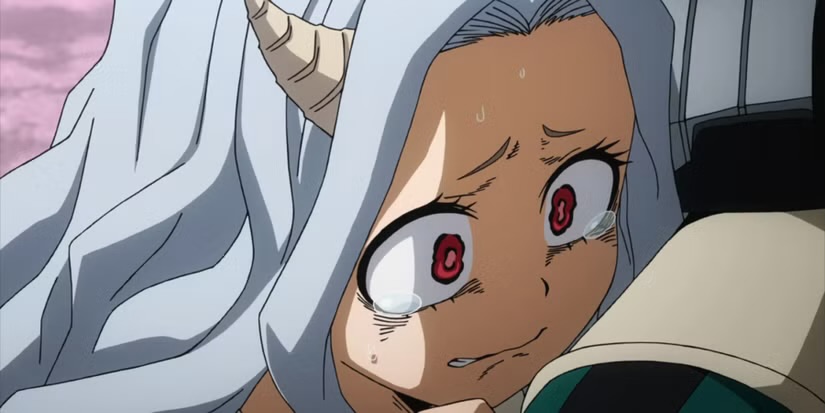
These behaviors are not signs of “bad influence” or poor character. They often indicate emotional overload, difficulty with regulation, or a need for support—especially in neurodivergent children who may already experience big emotions more intensely.
Helpful Resources for Parents & Guardians
If you’d like to explore this topic further or need additional support, the following resources may be helpful:
- National Library of Medicine (NLM)
Research articles on neurodivergence, media engagement, emotional regulation, and special interests. (See this article for more information about Children with Autism & Anime, in particular.) - Child Mind Institute
Practical, parent-friendly articles on ADHD, autism, OCD, emotional regulation, and healthy media use. - ADDitude Magazine
Accessible resources for ADHD and neurodivergent families, including hyperfocus, screen time, and emotional overwhelm. - Autistic Self Advocacy Network (ASAN)
Offers insight into autistic experiences and strengths, including special interests and sensory processing. - Common Sense Media
Useful for age-appropriate media discussions and family conversation starters (helpful alongside Anime Momma reviews). - Talking to Your Child’s Pediatrician or Therapist
Especially if emotional changes feel sudden, intense, or difficult to manage at home.
You do not need to walk this path alone—and asking for guidance is a sign of care, not failure!
A Gentle Word for Parents and Guardians
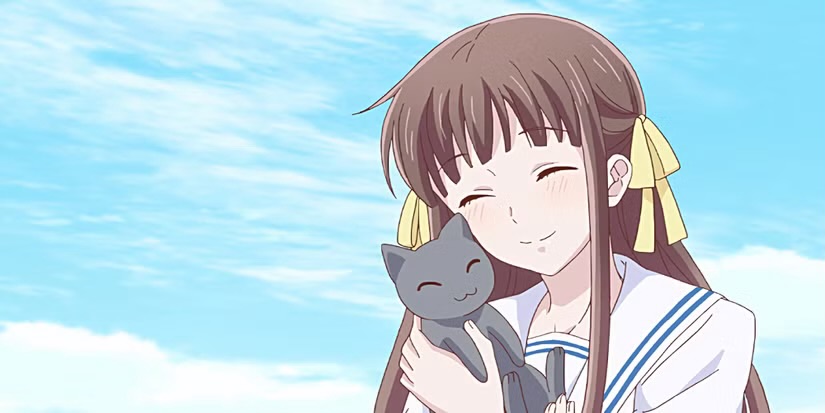
If there’s one thing I hope you take away from this post, it’s this: loving anime deeply is not the enemy. Passion, imagination, and creativity are gifts—especially for neurodivergent minds.
What children (and adults) need most is not shame or restriction alone, but connection. Conversations. Boundaries paired with understanding. A safe place to process big feelings and big interests without fear.
Anime can be a bridge—to creativity, to empathy, to storytelling, and even to healing. When we walk alongside our children, helping them recognize balance instead of demanding perfection, we teach them something far more lasting than rules alone ever could.
And that, my friends, is where healthy fandom truly begins. 💛
You are currently on Part 1 of Anime Momma’s “Loving Anime without Losing Yourself” series.
Click here to read Part 2: Healthy Passion vs. Obsession: Helping Kids Keep the Joy Without Losing Balance
Click here to read Part 3: Online Fandoms, Algorithms, and Parasocial Relationships
Click here to read Part 4: Protecting Curiosity Without Shaming It (Navigating explicit content with wisdom, boundaries, and compassion)
Click here to read the Intro of this series: Loving Anime without Losing Yourself.
Thank you for reading, and I look forward to seeing you in our next articles and reviews! 🩵
At The Anime Momma Blog, my goal is simple: helping parents understand the anime their kids love so families can watch with wisdom, discernment, and great conversations along the way.
Check us out on social media ✨


Leave a reply to Online Fandoms, Algorithms, and Parasocial Relationships (Part 3) – The Anime Momma Blog Cancel reply