Read First: Kimetsu no Yaiba / Demon Slayer (Season 1) – Anime Review
Read Second: Kimetsu no Yaiba / Demon Slayer (Mugen Train Arc) – Anime Review
Read Third: Kimetsu no Yaiba / Demon Slayer (Entertainment District Arc) – Anime Review
TL;DR: The Swordsmith Village Arc is visually beautiful but noticeably darker than earlier Demon Slayer arcs. Violence is more cruel, emotional moments are heavier, and some imagery—both violent and suggestive—may be difficult for younger or sensitive viewers. While the story ultimately ends on a hopeful note, parental awareness and discretion are strongly recommended.
Section 1: Kimetsu no Yaiba / Demon Slayer: Swordsmith Village Arc (11 Episodes) — At a Glance
Anime Summary | Taken directly from MyAnimeList
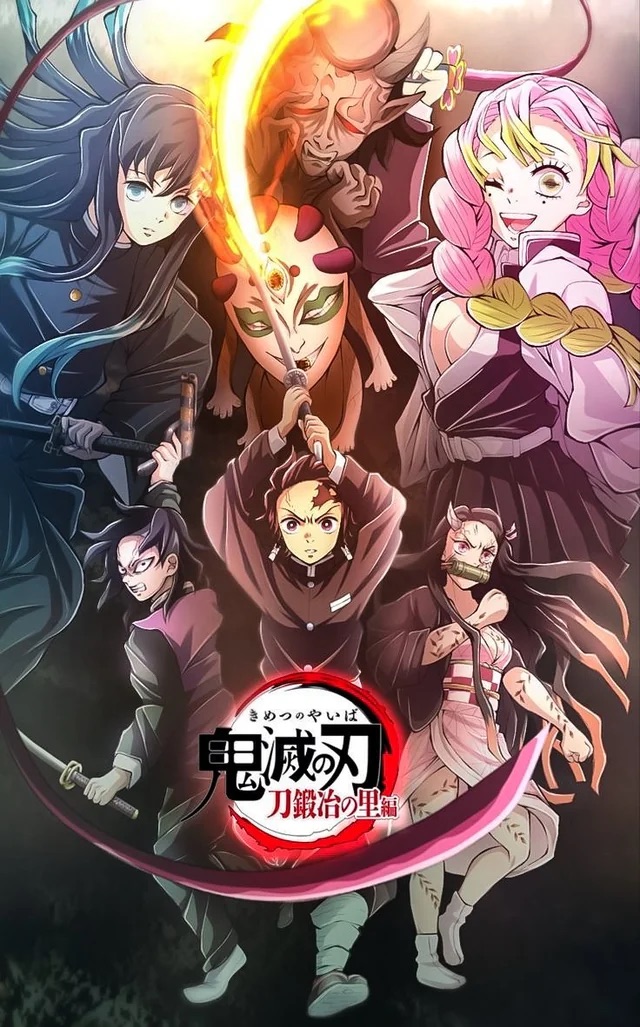
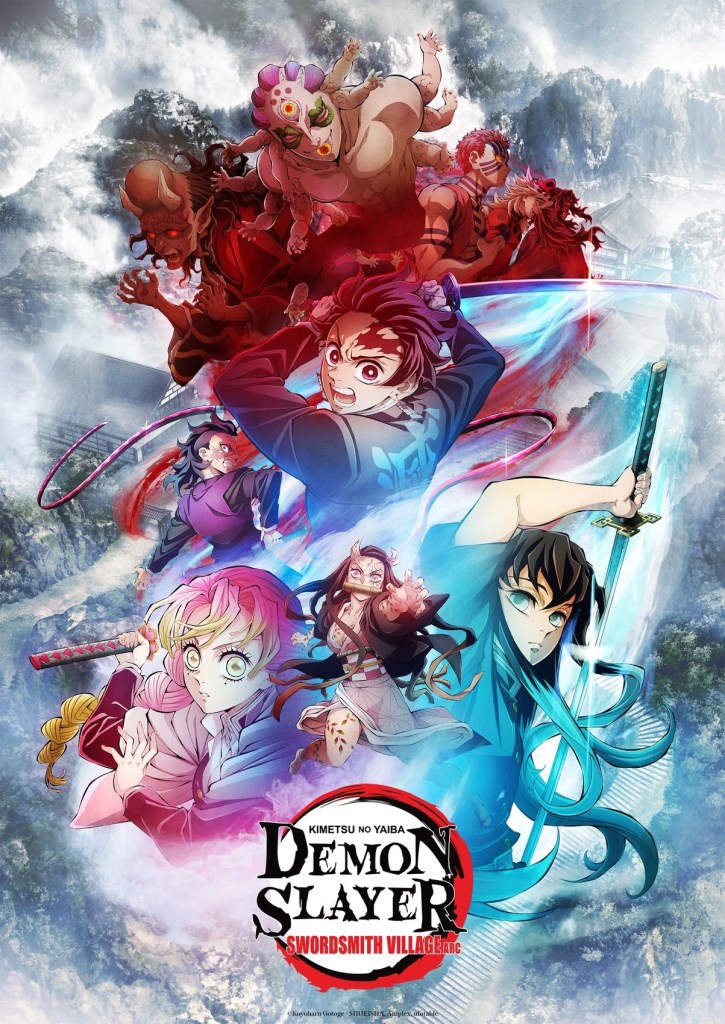
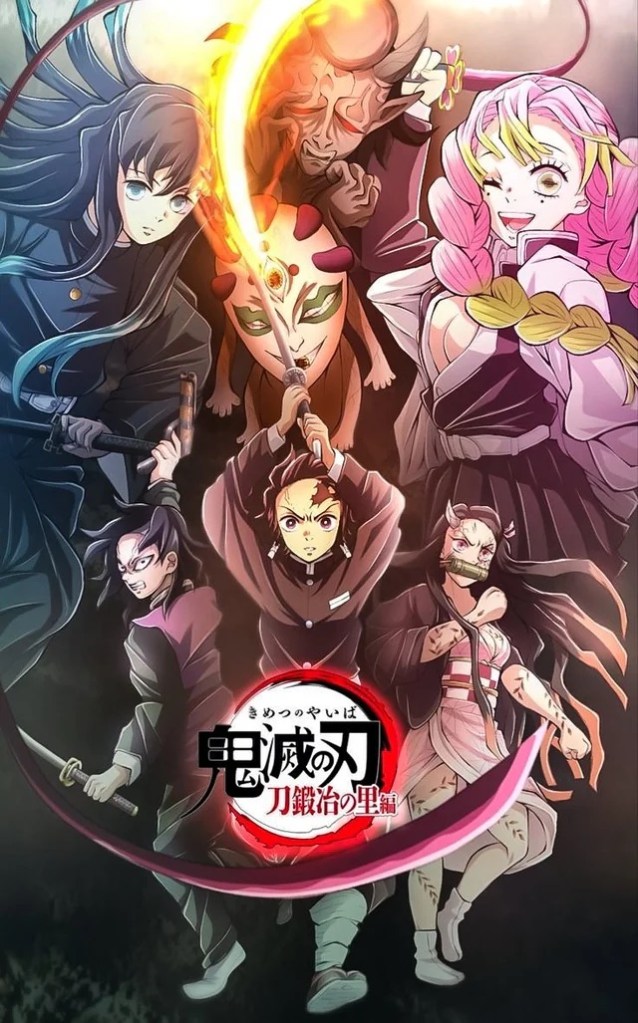
For centuries, the Demon Slayer Corps has sacredly kept the location of Swordsmith Village a secret. As the village of the greatest forgers, it provides Demon Slayers with the finest weapons, which allow them to fight night-crawling fiends and ensure the safety of humans. After his sword was chipped and deemed useless, Tanjirou Kamado, along with his precious little sister Nezuko, is escorted to the village to receive a new one.
Meanwhile, the death of an Upper Rank Demon disturbs the idle order in the demon world. As Tanjirou becomes acquainted with Mist Hashira Muichirou Tokitou and Love Hashira Mitsuri Kanroji, ferocious powers creep from the shadows and threaten to shatter the Demon Slayers’ greatest line of defense.
Genres & Themes
Action, Historical, Romance, Shounen, Supernatural
MyAnimeList Rating
R-17+ | Violence and Profanity
The Anime Momma Rating
PG-14+ | Parental discretion advised between ages 14-17
Section 2: Star Levels
Each category below is rated on a five-star scale:
⭐ = very little present | ⭐⭐⭐⭐⭐ = a lot present
- Action/Violence Level: ⭐⭐⭐⭐⭐ (5/5)
- Addiction Level: ⭐️⭐️⭐️⭐⭐ (5/5)
- Blood/Gore Level: ⭐⭐⭐⭐⭐ (5/5)
- Inappropriate, Heavy, or Mature Themes or Conduct: ⭐⭐☆☆☆ (2/5)
- Alternative Lifestyle Themes: ☆☆☆☆☆ (0/5)
- Level of Magical Elements: ⭐⭐⭐⭐⭐ (5/5)
- Level of Romance: ⭐⭐⭐⭐⭐ (5/5)
Section 3: Star Levels — Explained
Action/Violence Level
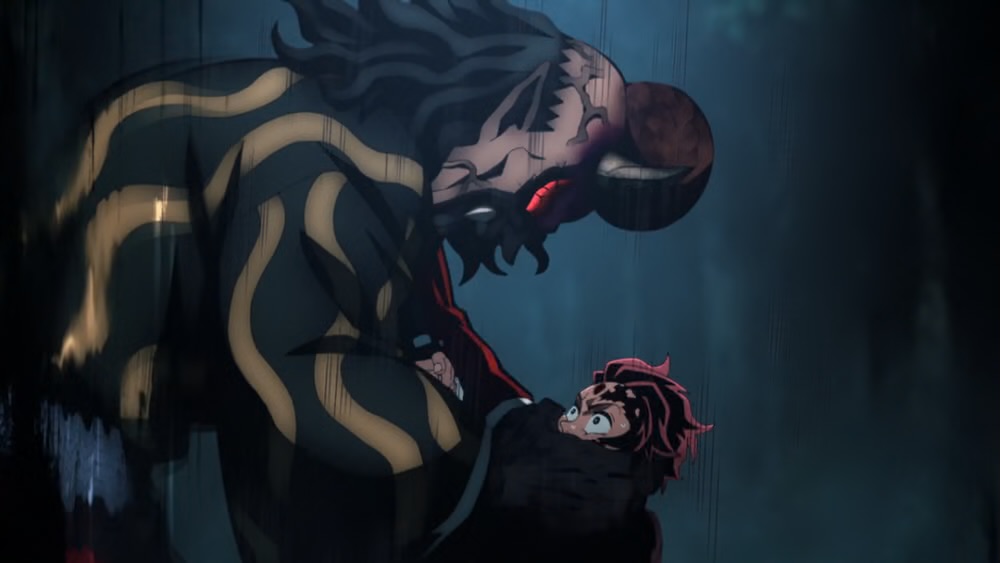
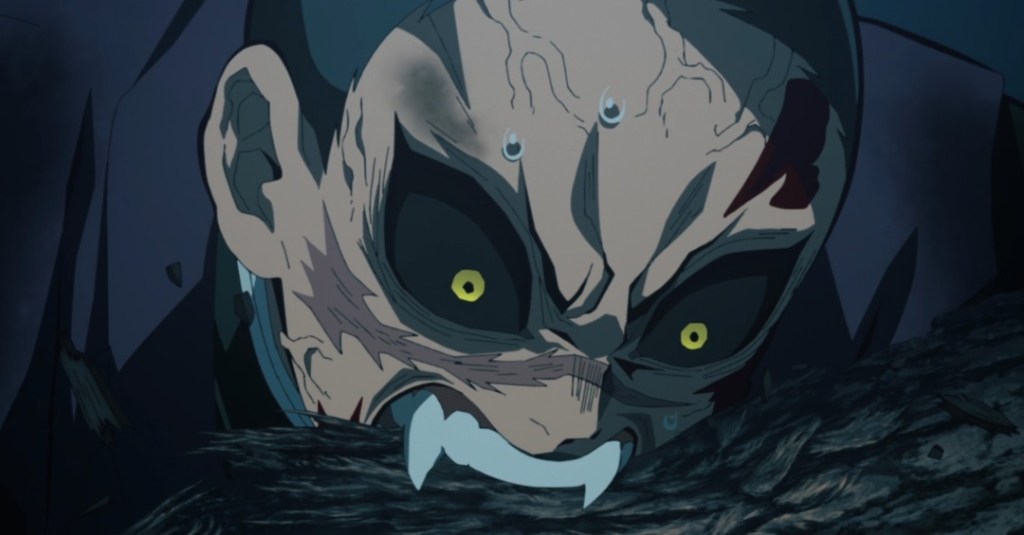
The Swordsmith Village Arc is one of the more intentionally cruel arcs in Demon Slayer. Rather than simply killing for survival, several demons seem to enjoy inflicting pain—terrorizing villagers and Demon Slayers alike. The violence here feels more calculated and sadistic than in previous arcs, with enemies using methods like drowning, bone-crushing force, and electrocution to overwhelm the Demon Slayer Corps.
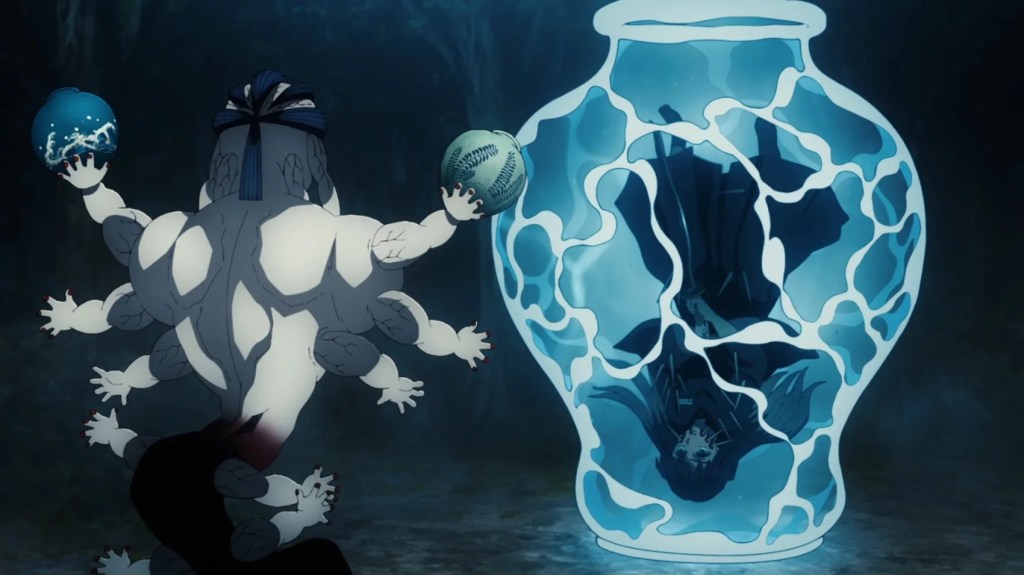
While the action is visually stunning and fast-paced, the tone is darker overall, especially for more sensitive viewers.
Addiction Level
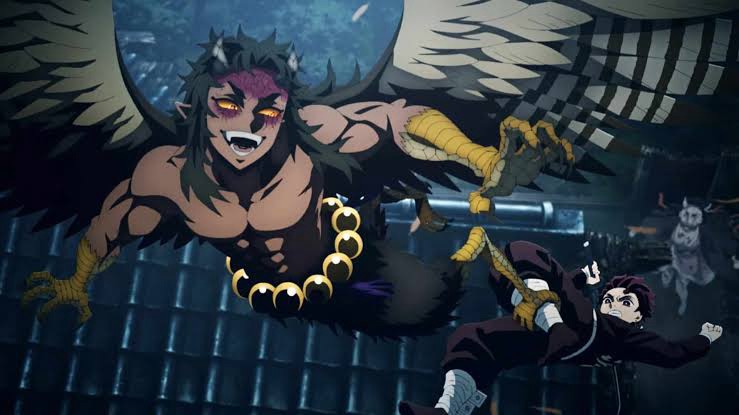
This arc was incredibly engaging—I finished it in just two days, and honestly, it would’ve been one sitting if life hadn’t intervened. Between the constant danger, emotional backstories, and high-stakes battles, it’s very easy to hit “next episode” without realizing how late it’s gotten.
Blood/Gore Level
As expected with Demon Slayer, defeating demons still requires decapitation, so blood is frequent throughout the arc.
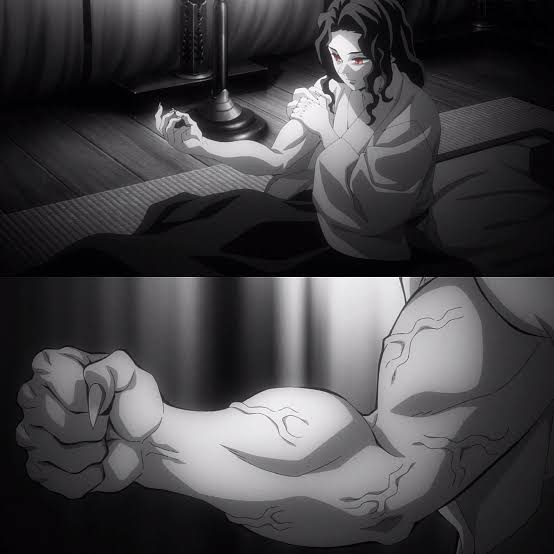
In the opening episode, we see Muzan confronting the remaining Upper Rank demons. His behavior is aggressive, cruel, and abusive, and he violently punishes his subordinates without hesitation—even decapitating them himself, only to restore them moments later.
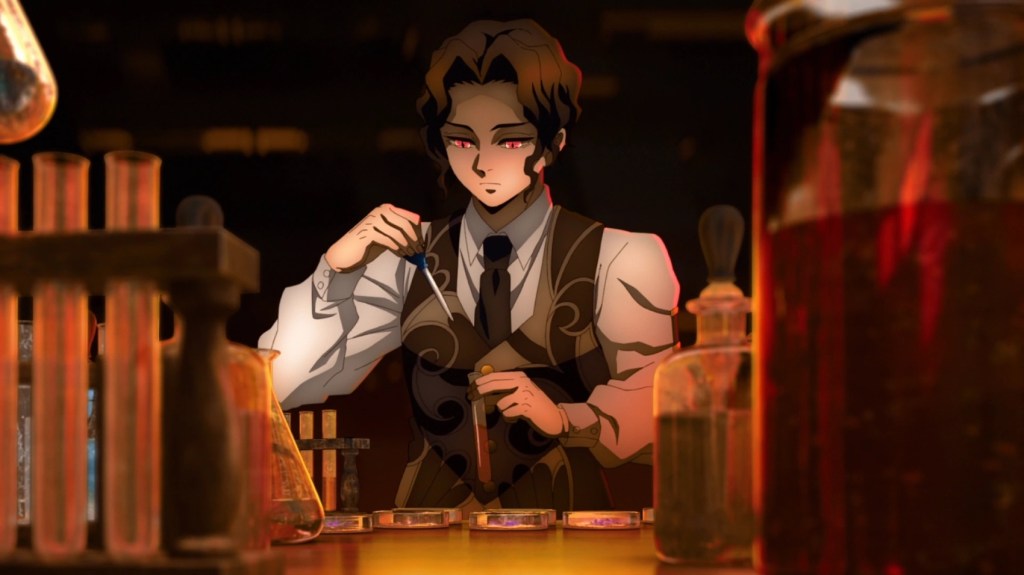
To ensure the Swordsmith Village’s destruction, Muzan sends two Upper Rank demons, raising the stakes significantly. The gore intensifies around Episode 3 with the introduction of Gyokko, whose methods are particularly disturbing. One swordsmith is killed and grotesquely contorted by Gyokko’s ability, and while the moment is brief, it’s definitely got shock value. Gyokko also refers to human victims as “art,” treating their suffering as entertainment.
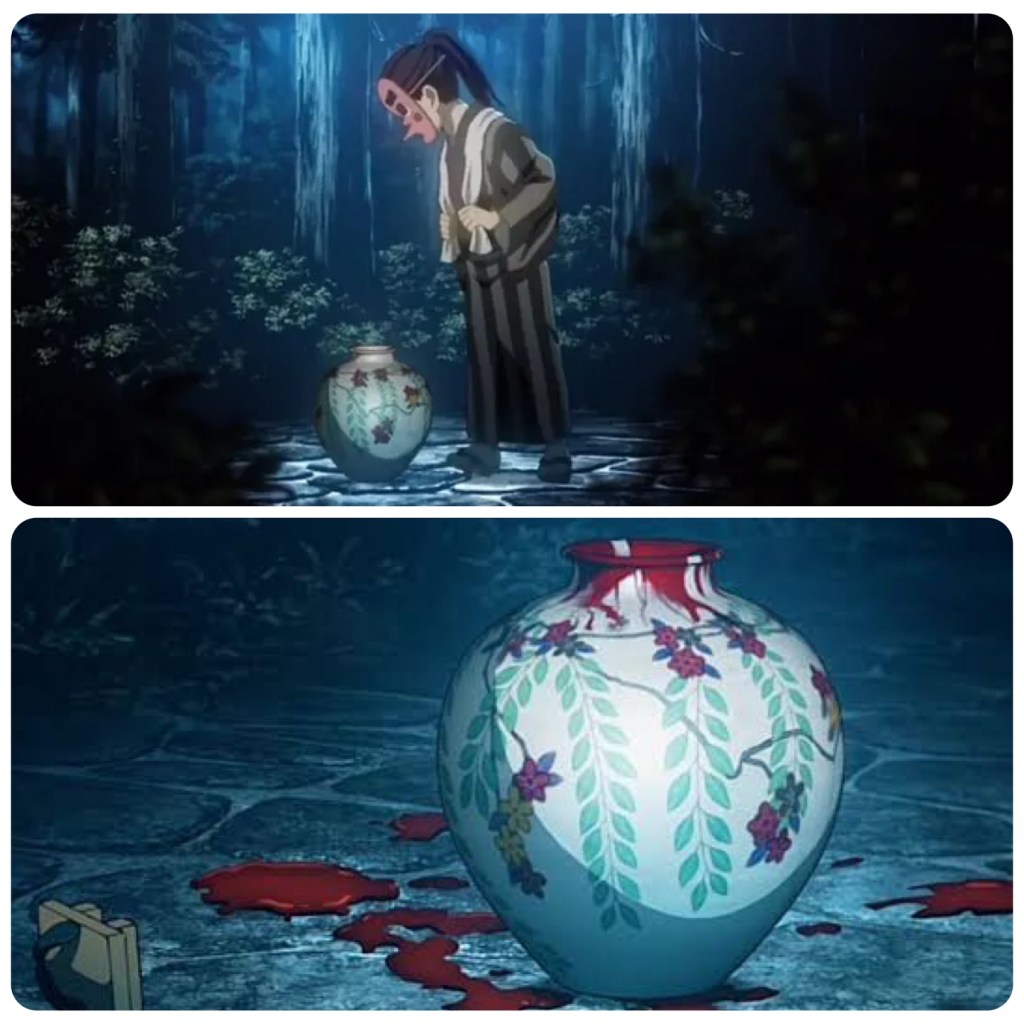
We see both Tokito’s and Genya’s backstories in this arc. Tokito’s is revealed during his battle with Gyokko, including the aftermath of a demon attack that leaves his only family, his twin brother, fatally wounded.
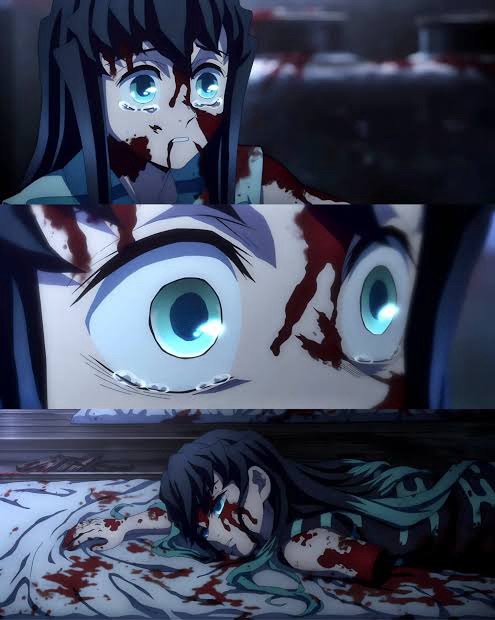
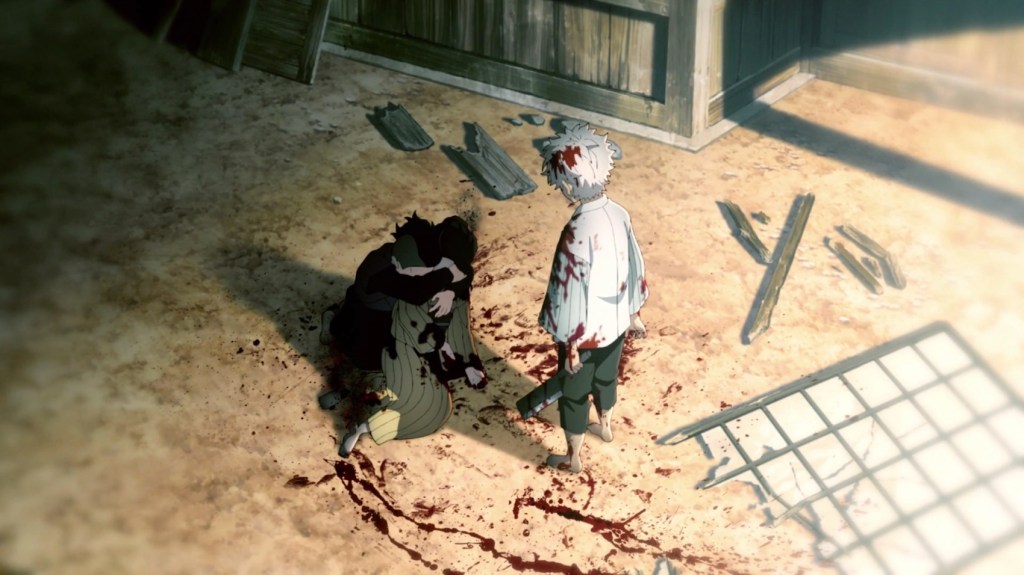
Genya’s backstory is especially heartbreaking. His mother is turned into a demon and, in her altered state, kills five of her seven children. To protect Genya, his older brother Sanemi is forced to kill their own mother. It’s an emotionally devastating reveal, handled briefly but with very big impact.
While much of the violence occurs off-screen, we do see lingering consequences, including imagery that may be upsetting to younger viewers.
The final battle against Hantengu is relentless. Each time his head is severed, he multiplies into new demons, creating a prolonged and exhausting fight.
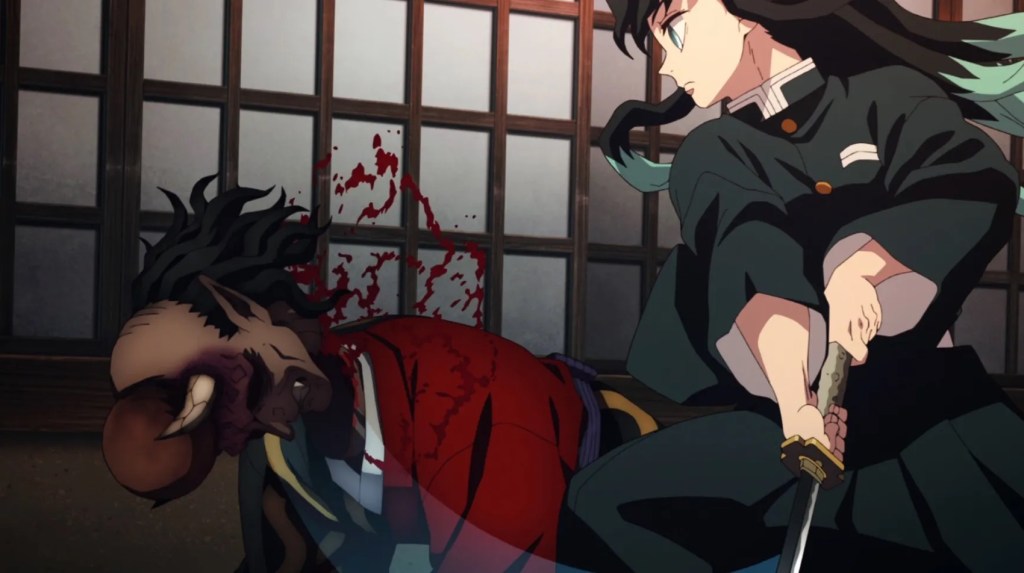
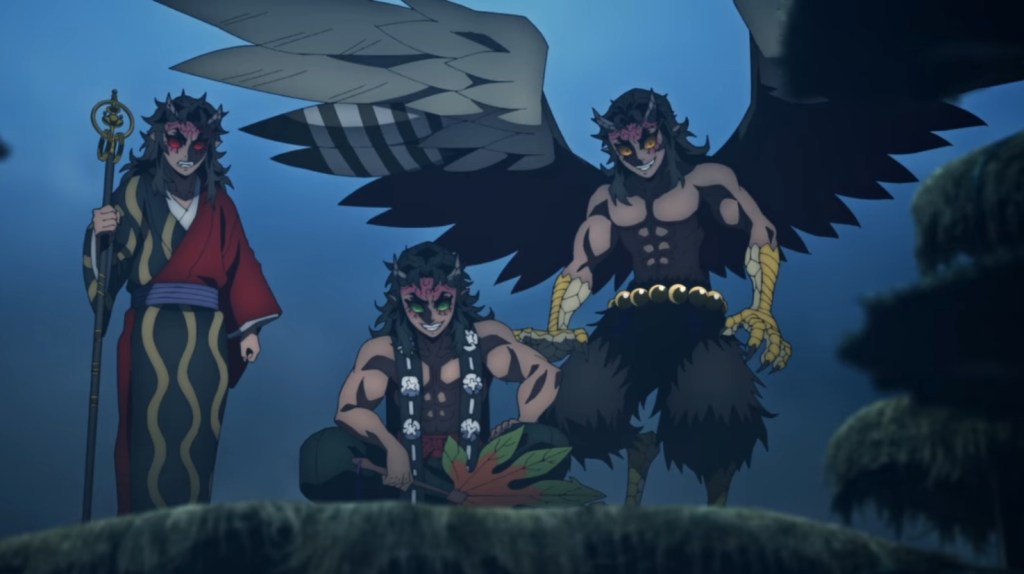
We also glimpse Muzan’s past, which includes references to cannibalism tied to his transformation into a demon.
Inappropriate, Heavy, or Mature Themes or Conduct
This arc contains a few moments parents may want to be aware of.
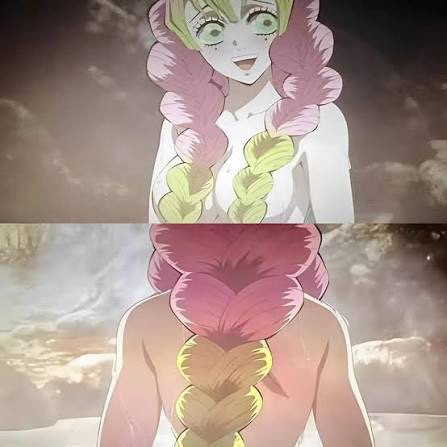
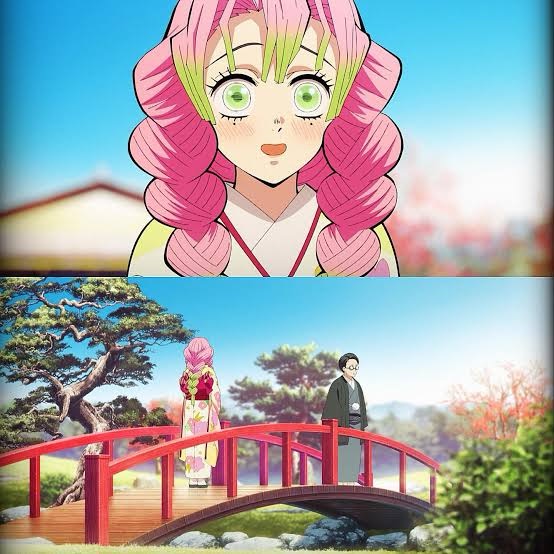
We see Mitsuri Kanroji, the Love Hashira, bathing in hot springs. She is mostly covered by her hair, but cleavage and brief rear nudity are visible.
Mitsuri’s revealing uniform and frequent emphasis on her body are recurring visual elements throughout the arc. In one lighthearted scene, Tanjiro helps keep her kimono closed as she is running to greet him.
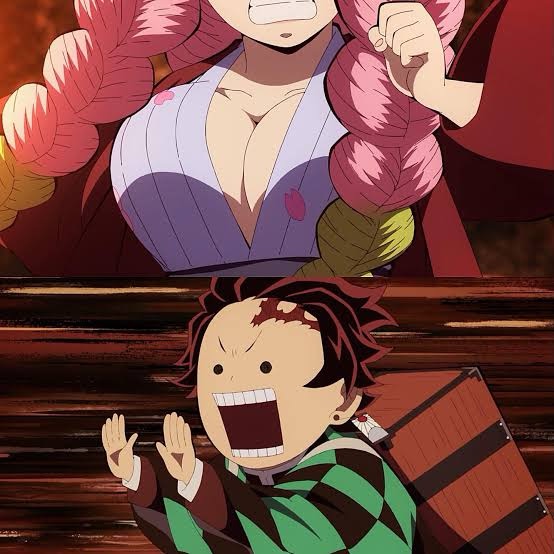
Later, after Mitsuri whispers in his ear a rumor about a secret weapon somewhere in the village, Tanjiro experiences a comedic nosebleed moment—a common anime trope implying immense flustered attraction.
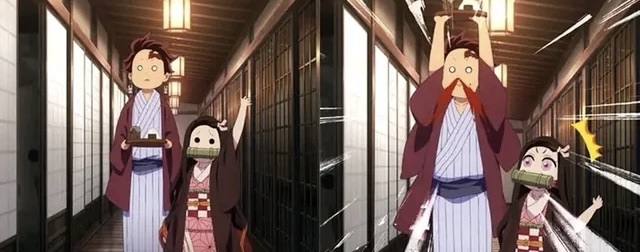
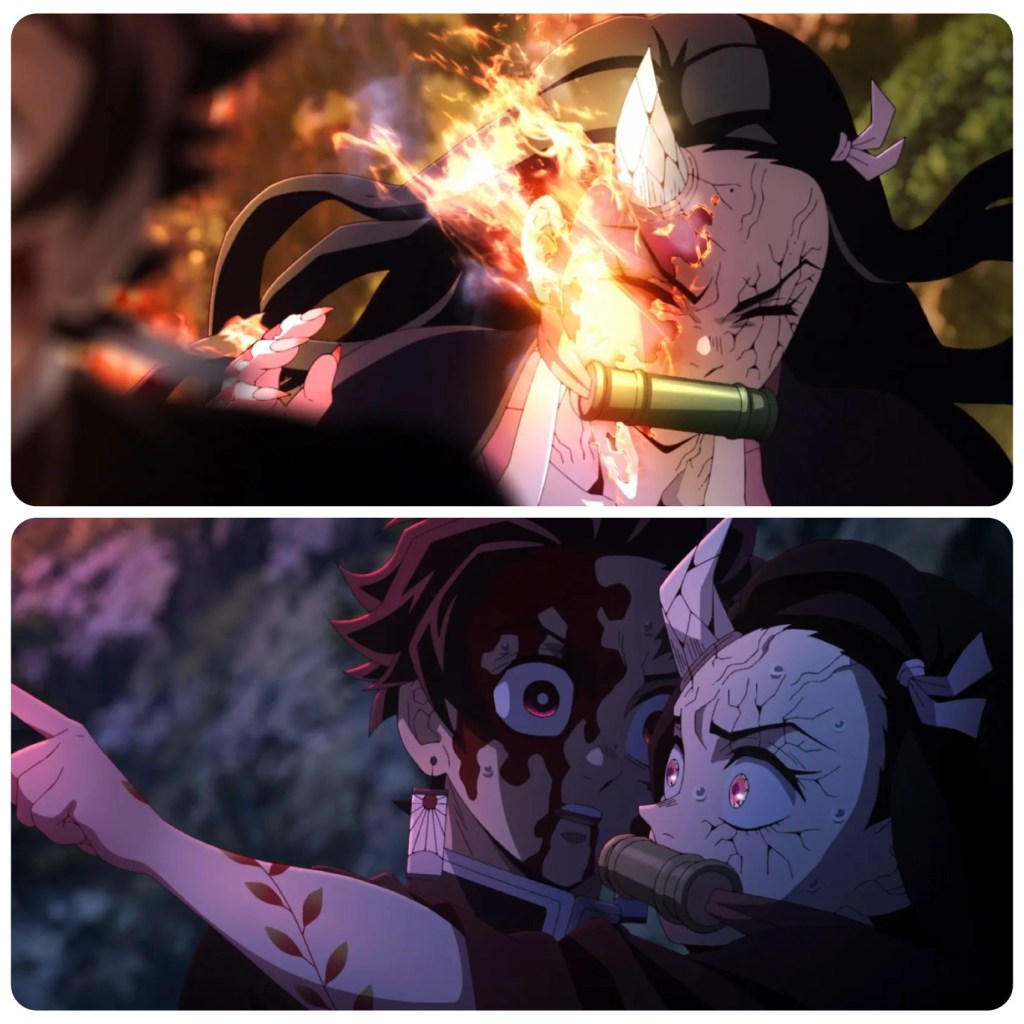
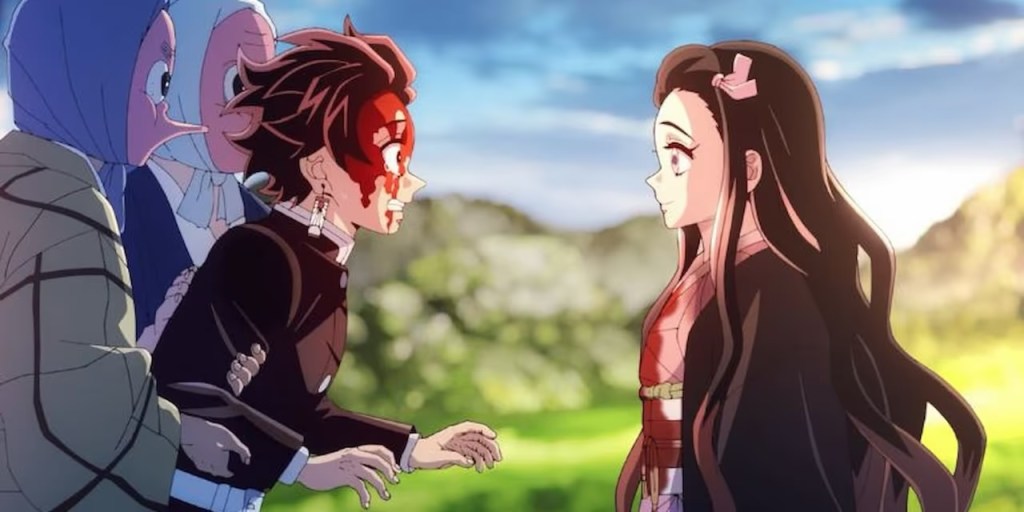
Emotionally, the heaviest moment comes in the finale. As the sun rises, Tanjiro is forced to choose between saving Nezuko—who is burning in the sunlight—or stopping Hantengu from killing fleeing villagers. Nezuko ultimately makes the choice for him, pushing Tanjiro away so he can finish the fight. This moment is heartbreaking but framed as sacrificial love rather than despair.
Alternative Lifestyle Themes
This arc does not contain any alternative lifestyle themes.
Level of Magical Elements
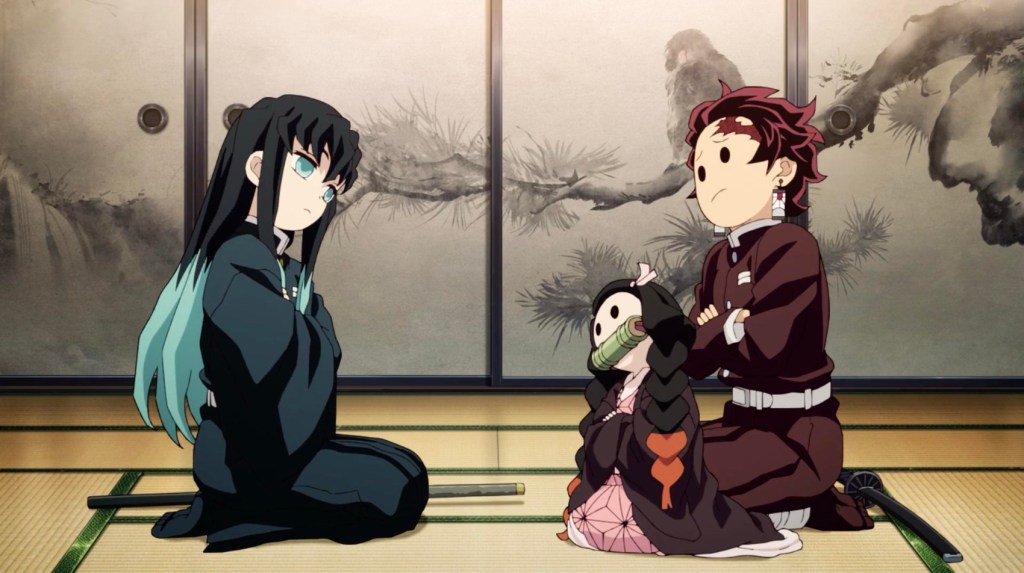
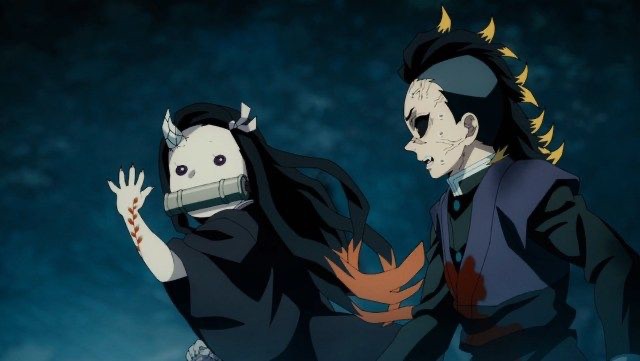
Magic remains stylized rather than traditional. Demon Slayers use breathing techniques that visually resemble elemental powers, while demons possess supernatural abilities such as regeneration, poison manipulation, and extreme physical strength gained through consuming blood.
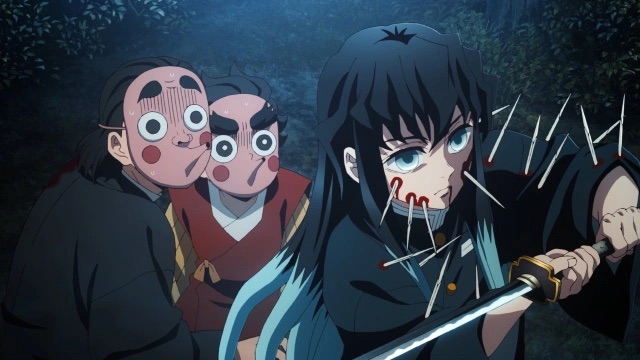
Genya’s unique ability—temporarily gaining healing and strength by consuming demon flesh—is also explored in this season.
Level of Romance
Romance plays a larger role here, primarily through Mitsuri. Her fighting style, dialogue, and personality are centered on love, emotional connection, and her desire to one day marry. While lighthearted on the surface, these themes are woven into serious battles and her character development.
Section 4: Special Notes for Parents & Guardians
This arc does not end tragically. After an intense battle and emotional climax, Nezuko is revealed to be unharmed by sunlight and even speaks again for the first time in a long while. This brings much-needed relief and joy after several heavy episodes.
Final Thoughts
This arc is powerful, emotional, and beautifully animated—but it’s also intense. I’d recommend it most for teens, especially those who have already handled earlier seasons well.
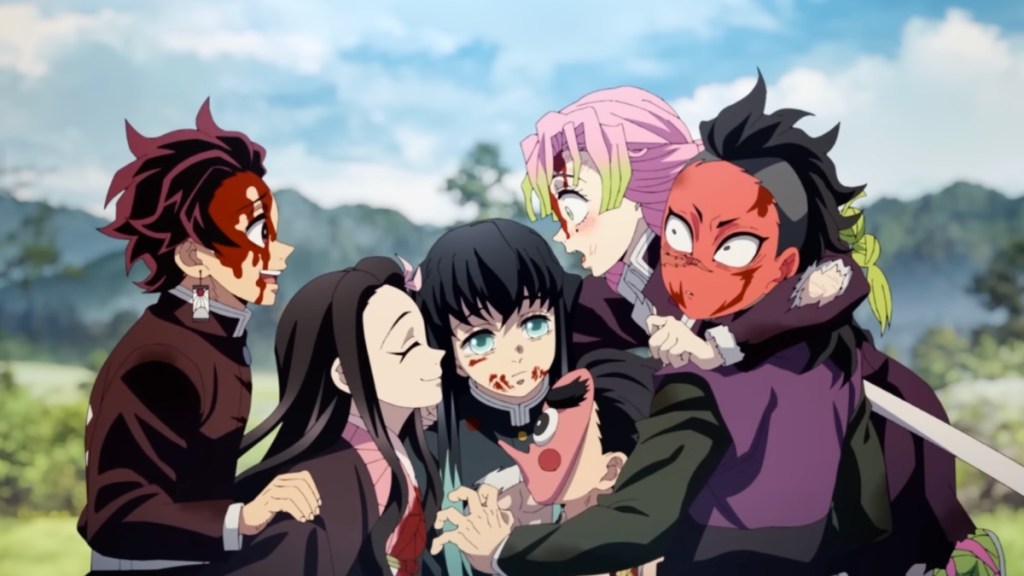
As always, watching together or discussing key moments afterward can go a long way in helping kids process what they’re seeing 💛
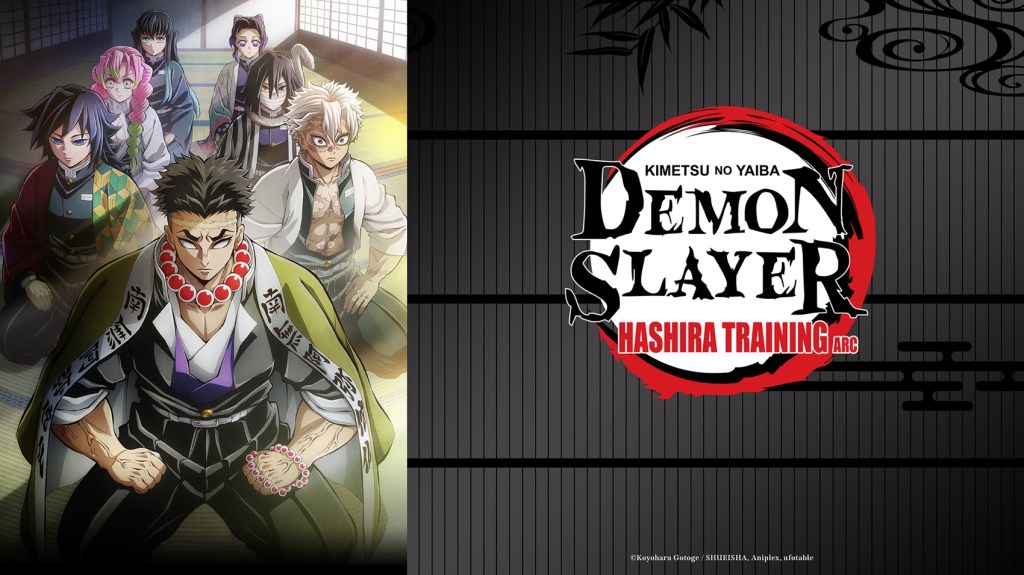
Read Next: Kimetsu no Yaiba / Demon Slayer (Hashira Training Arc) – Anime Review
At The Anime Momma Blog, my goal is simple: helping parents understand the anime their kids love so families can watch with wisdom, discernment, and great conversations along the way.
Check us out on social media ✨🩵


Leave a comment